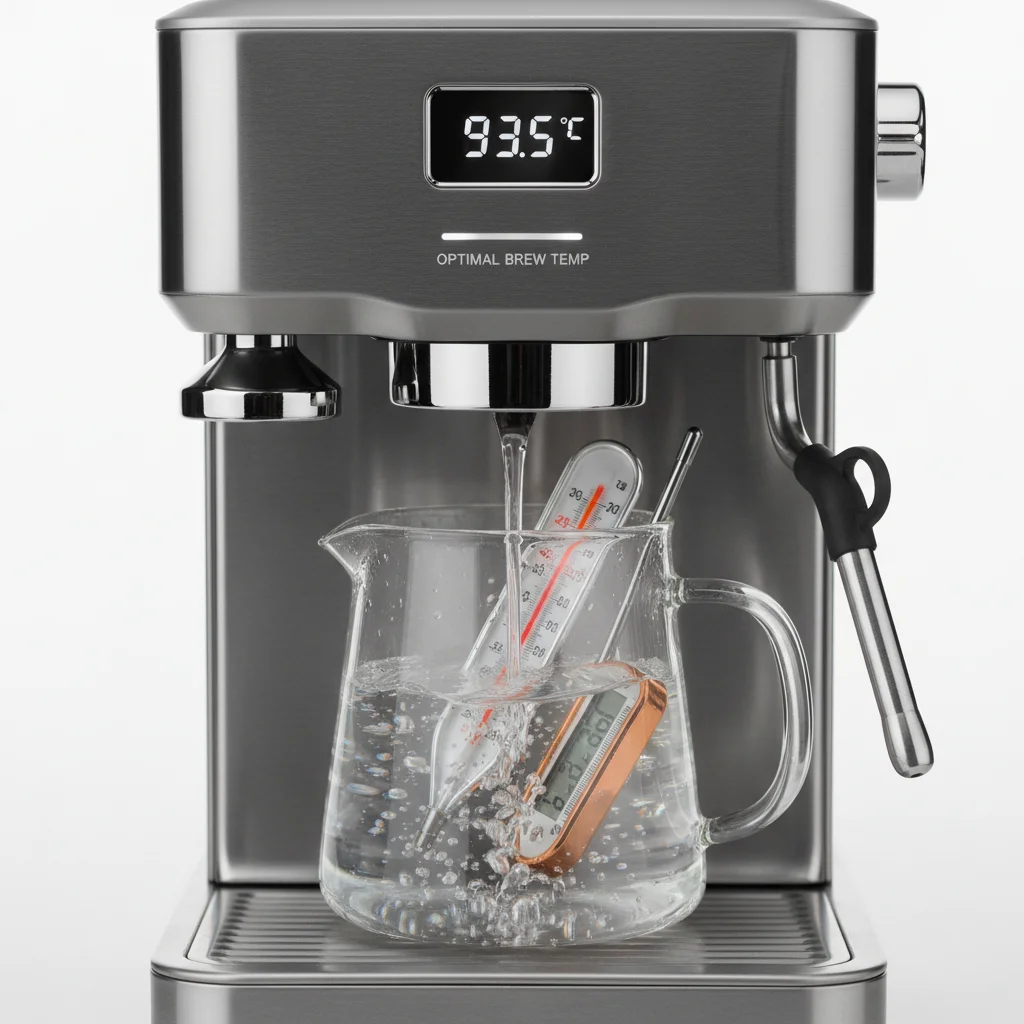
The ideal espresso machine water temperature for brewing is between 195°F and 205°F (90°C and 96°C). This narrow range is crucial for extracting the full spectrum of flavors and aromas from your coffee grounds, ensuring a balanced and delicious espresso. Water that is too cold will result in under-extraction, leading to a sour and weak shot, while water that is too hot will over-extract, producing a bitter and burnt taste.
Why Temperature Matters for Espresso Extraction
Water temperature directly influences the solubility of coffee compounds. When water at the optimal temperature passes through finely ground coffee, it efficiently dissolves the desirable acids, sugars, and oils that contribute to espresso’s complex flavor profile. Deviations from this range can significantly alter the extraction rate, impacting the final taste and aroma. Even a few degrees can make a noticeable difference in the cup.
Understanding Temperature Stability in Espresso Machines
High-quality espresso machines are designed with features to maintain consistent water temperature throughout the brewing process. This is known as temperature stability. Machines with PID (Proportional-Integral-Derivative) controllers are particularly adept at this, constantly monitoring and adjusting the heating element to keep the water within the desired range. Entry-level machines may have less precise temperature control, which can lead to more variable results.
How to Monitor and Adjust Your Machine’s Temperature
Many prosumer and commercial espresso machines include built-in thermometers or digital displays that show the brew water temperature. If your machine doesn’t have this feature, you can use an external thermometer designed for liquids to check the temperature at the group head. Some machines allow for manual temperature adjustment, while others are factory-set. For machines without direct control, ensuring proper warm-up time and descaling can help optimize temperature consistency.
- Allow your machine to fully preheat for at least 20-30 minutes.
- Perform a ‘flush’ by running a blank shot of water through the group head.
- Regularly descale your machine to prevent mineral buildup affecting heating.
- Consider a PID upgrade for machines that support it, if temperature stability is an issue.
- Use fresh, filtered water to avoid mineral deposits that can impact heating elements.
The Impact of Grind Size and Dose on Temperature Perception
|
Our Picks for the Best Espresso Machine in 2026
As an Amazon Associate I earn from qualifying purchases.
|
||
| Num | Product | Action |
|---|---|---|
| 1 | SHARDOR Espresso Machine 20 Bar, Professional Espresso Machine with Milk Frother and Touchscreen, Expresso Coffee Machines with Adjustable Temperature,for Cappuccino, Latte |

|
| 2 | 20Bar Espresso Machine, Compact Espresso Maker with Milk Frother, Stainless Steel Coffee Machine for Cappuccino&Latte, 42oz Water Tank, Visible Pressure Gauge, Home&Office, Silver |
|
| 3 | Espresso Machine, 20 BAR Pump Temperature Control, Compact Espresso Maker with Steam Milk Frother, Professional Coffee Makers for Home, Cappuccino, Latte, Gifts for Coffee Lover, Black |
|
| 4 | Gevi Commercial Espresso and Coffee Makers, Professional 20 Bar Espresso Maker with Milk Frother, Stainless Steel Expresso Coffee Machines for Home, Compact Cappuccino Machine, Great Gift |
|
| 5 | 20 Bar Espresso Coffee Machine with LED Touch Screen, Espresso Maker with Self-Cleaning Function & Milk Frother, Compact Cappuccino & Latte Maker for Home and Office |
|
| 6 | Espresso Machine 20 Bar with Milk Frother, Stainless Steel Coffee Maker with 42 oz Removable Water Tank for Cappuccino, Latte&Cold Brew, Home&Office, Silver |
|
| 7 | Espresso Machine with Milk Frother, 20 Bar Pressure Espresso Maker, with 44OZ Removable Tank, Compact Stainless Steel Coffee Machine for Home, Office, Latte, Cappuccino, Gift for Women or Men |
|
| 8 | Breville Barista Touch Espresso Machine BES880BSS, Brushed Stainless Steel |
|
| 9 | Espresso Machine, 20Bar Compact Stainless Espresso Maker, With Milk Frother Steam Wand, 57.5OZ Removable Water Tank, Displays Making Time & Water Temperature, Cold Brew & Cappuccino, Silver |
|
| 10 | Chefman CraftBrew Espresso Machine, 15-Bar Pump Digital Espresso Maker w/Steam Wand for Latte & Cappuccino, Compact Espresso Coffee Machine w/ 1.5L Removable Water Reservoir - Stainless Black |
|
While water temperature is critical, it interacts with other variables like grind size and coffee dose. A finer grind and higher dose can increase the contact time between water and coffee, potentially leading to over-extraction even at optimal temperatures. Conversely, a coarser grind or lower dose might result in under-extraction. It’s essential to find the right balance across all these factors to achieve the perfect shot. Experimentation with these variables, while keeping temperature consistent, is key to dialing in your espresso.
For home baristas looking to upgrade their temperature control, consider models with advanced PID systems.These machines offer superior consistency, allowing for more precise adjustments and a higher quality espresso experience. Investing in a machine with excellent temperature stability is one of the most impactful decisions for improving your home brewing.
Maintaining the correct water temperature is a cornerstone of excellent espresso. By understanding its importance and how to manage it, you can consistently pull shots that are rich, balanced, and free from unwanted bitterness or sourness. For further enhancements to your espresso setup, explore accessories like insulated portafilters or temperature-stabilizing group heads.These additions can further refine your brewing process and elevate your daily coffee ritual.
Frequently Asked Questions
What is the ideal water temperature for brewing espresso?
The ideal water temperature for brewing espresso is between 195u00b0F and 205u00b0F (90u00b0C and 96u00b0C). This specific range ensures optimal extraction of flavors and aromas from the coffee grounds, resulting in a balanced and delicious shot.
Why is consistent water temperature important for espresso?
Consistent water temperature is crucial because it directly influences the solubility of coffee compounds. Deviations from the optimal range can lead to under-extraction (sour taste) or over-extraction (bitter taste), significantly altering the final flavor profile of your espresso.
How do PID controllers improve espresso machine temperature stability?
PID (Proportional-Integral-Derivative) controllers enhance temperature stability by constantly monitoring and adjusting the heating element in an espresso machine. This precise control keeps the brew water within the desired temperature range, minimizing fluctuations during extraction.
Can grind size and coffee dose affect temperature perception in espresso?
Yes, grind size and coffee dose can affect how temperature influences extraction. A finer grind or higher dose increases water-coffee contact time, potentially leading to over-extraction even at optimal temperatures. Conversely, a coarser grind or lower dose might cause under-extraction.
What are some ways to monitor espresso machine water temperature?
Many prosumer and commercial espresso machines have built-in thermometers or digital displays. If your machine lacks this, you can use an external liquid thermometer at the group head. Ensuring proper preheating and descaling also helps optimize temperature consistency.
Optimize Your Espresso Machine's Water Temperature
Achieve perfect espresso shots by monitoring and adjusting your machine's water temperature for optimal extraction.
Allow your espresso machine to fully preheat for at least 20-30 minutes. This ensures all internal components, including the group head, reach a stable brewing temperature.
Before brewing, run a blank shot of water through the group head. This helps stabilize the temperature and clears any residual coffee grounds, preparing the machine for extraction.
Descale your espresso machine regularly to prevent mineral buildup. Limescale can impede the heating element's efficiency and affect temperature consistency, leading to inconsistent shots.
If your machine supports it and you experience temperature instability, consider a PID (Proportional-Integral-Derivative) controller upgrade. PID systems offer precise temperature monitoring and adjustment for superior consistency.
Always use fresh, filtered water in your espresso machine. This not only improves the taste of your coffee but also prevents mineral deposits that can impact the heating elements and overall temperature control.
Get our weekly buyer guide
Practical specs, not advice. Unsubscribe anytime.

I always wondered why my shots sometimes tasted a little off, even with good beans. This guide on the 195-205°F range was a game-changer! My espresso is consistently smoother and more balanced now. It really does make a huge difference in avoiding that bitter taste I used to get.
Good points about temperature, but I wish there was more advice on how to actually *control* the temperature on machines without precise digital readouts. My older Gaggia Classic is a bit finicky, and it’s hard to hit that 90-96°C consistently. Still, it’s a good reminder of why my espresso sometimes tastes burnt.
Great info here! I’ve been experimenting with my Breville and noticed a huge improvement once I started paying closer attention to the water temp. I used to just let it heat up, but now I’m aiming for that sweet spot to prevent under-extraction. My shots are definitely less sour these days.
This explained so much! I was getting really frustrated with weak, sour shots, and I thought it was my grind. Turns out, my water was probably too cold. Focusing on getting the water to the optimal temperature has made my morning routine so much better. Thanks for breaking down the science behind it.