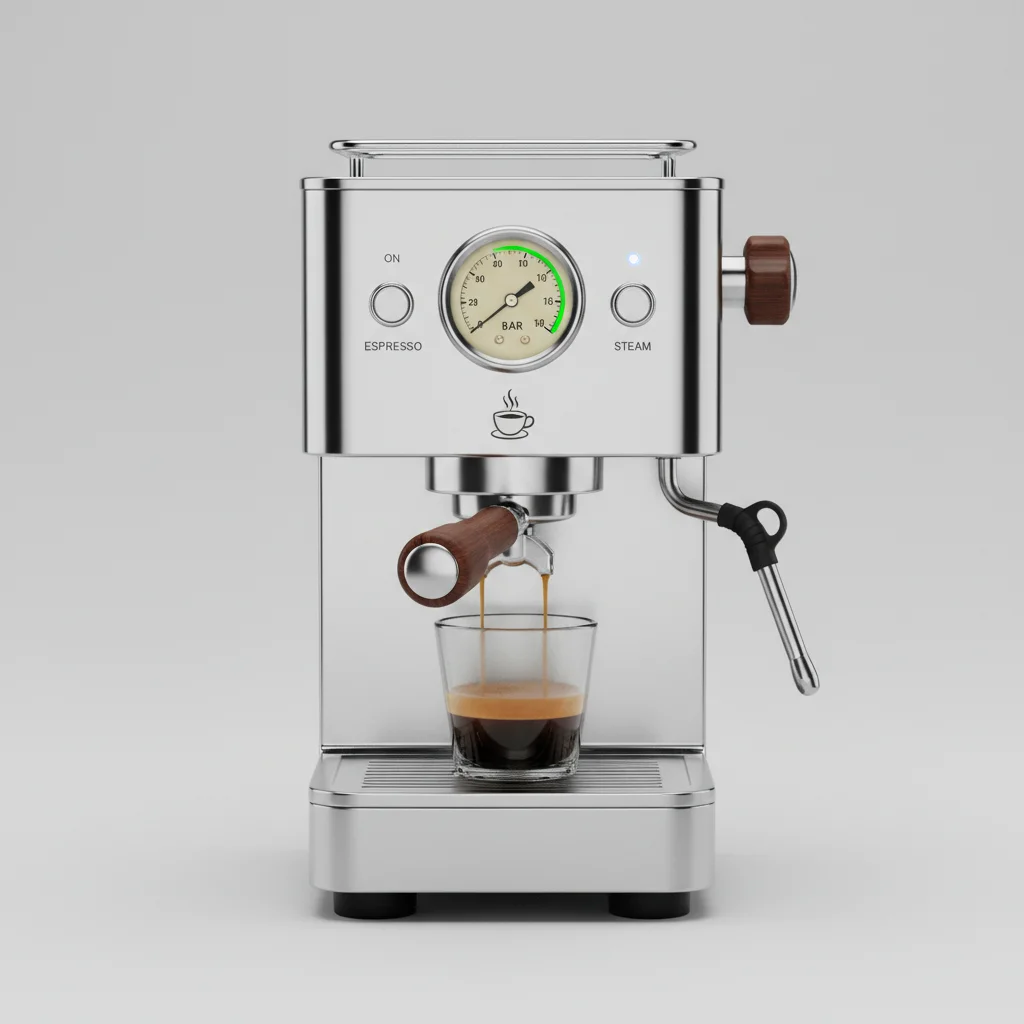
The ideal espresso machine pressure for a perfect shot typically falls between 9 and 10 bars. This range ensures optimal extraction of flavors and aromas from your coffee grounds, leading to a balanced and rich espresso. Understanding and maintaining this pressure is crucial for anyone looking to consistently pull high-quality shots at home.
Understanding Espresso Machine Pressure
Espresso machine pressure refers to the force with which hot water is pushed through compacted coffee grounds. This high pressure distinguishes espresso from other brewing methods, creating the characteristic crema and concentrated flavor. Most home and commercial machines are designed to operate within a specific pressure range, with 9 bars being the widely accepted standard for traditional espresso. For best home espresso roundups on this site.
While 9 bars is the benchmark, some baristas and manufacturers advocate for slight variations. For instance, some modern machines might allow for pre-infusion at lower pressures before ramping up to the full 9 bars, or even slightly higher pressures like 10 bars for specific bean types or desired flavor profiles. Experimenting within this narrow window can help you fine-tune your espresso to your personal taste.
How Pressure Affects Extraction
The pressure applied during brewing directly impacts the extraction process. Too little pressure, and the water might pass through the coffee too quickly, resulting in an under-extracted shot that tastes weak, sour, and lacks crema. Conversely, too much pressure can lead to over-extraction, producing a bitter, harsh, and sometimes burnt-tasting espresso. The goal is to find the sweet spot where the water extracts the desirable soluble compounds without pulling out the undesirable ones.
Factors like grind size, tamp force, and coffee dose also interact with pressure to influence extraction. A grind that’s too coarse, for example, will offer less resistance to the water, making it harder for the machine to build and maintain the necessary pressure. Similarly, an uneven tamp can create channels, allowing water to bypass the coffee bed and leading to inconsistent extraction despite correct pressure readings.
Adjusting and Monitoring Pressure
|
Our Picks for the Best Espresso Machine in 2026
As an Amazon Associate I earn from qualifying purchases.
|
||
| Num | Product | Action |
|---|---|---|
| 1 | Espresso Machine, 20 BAR Pump Temperature Control, Compact Espresso Maker with Steam Milk Frother, Professional Coffee Makers for Home, Cappuccino, Latte, Gifts for Coffee Lover, Black |

|
| 2 | Espresso Machine 20 Bar with Milk Frother, Stainless Steel Coffee Maker with 42 oz Removable Water Tank for Cappuccino, Latte&Cold Brew, Home&Office, Silver |
|
| 3 | 20 Bar Espresso Coffee Machine with LED Touch Screen, Espresso Maker with Self-Cleaning Function & Milk Frother, Compact Cappuccino & Latte Maker for Home and Office |
|
| 4 | Breville Barista Touch Espresso Machine BES880BSS, Brushed Stainless Steel |
|
| 5 | 20Bar Espresso Machine, Compact Espresso Maker with Milk Frother, Stainless Steel Coffee Machine for Cappuccino&Latte, 42oz Water Tank, Visible Pressure Gauge, Home&Office, Silver |
|
| 6 | Chefman CraftBrew Espresso Machine, 15-Bar Pump Digital Espresso Maker w/Steam Wand for Latte & Cappuccino, Compact Espresso Coffee Machine w/ 1.5L Removable Water Reservoir - Stainless Black |
|
| 7 | Espresso Machine with Milk Frother, 20 Bar Pressure Espresso Maker, with 44OZ Removable Tank, Compact Stainless Steel Coffee Machine for Home, Office, Latte, Cappuccino, Gift for Women or Men |
|
| 8 | Espresso Machine, 20Bar Compact Stainless Espresso Maker, With Milk Frother Steam Wand, 57.5OZ Removable Water Tank, Displays Making Time & Water Temperature, Cold Brew & Cappuccino, Silver |
|
| 9 | SHARDOR Espresso Machine 20 Bar, Professional Espresso Machine with Milk Frother and Touchscreen, Expresso Coffee Machines with Adjustable Temperature,for Cappuccino, Latte |
|
| 10 | Gevi Commercial Espresso and Coffee Makers, Professional 20 Bar Espresso Maker with Milk Frother, Stainless Steel Expresso Coffee Machines for Home, Compact Cappuccino Machine, Great Gift |
|
Many espresso machines, especially prosumer and commercial models, come equipped with a pressure gauge that allows you to monitor the brewing pressure in real-time. This gauge is an invaluable tool for diagnosing issues and ensuring consistent results. If your machine has an adjustable over-pressure valve (OPV), you can fine-tune the maximum brewing pressure. However, for most home users, the machine’s factory settings are usually optimized for the ideal range.
If you notice your pressure is consistently too high or too low, consider these troubleshooting steps:
- Check your grind size: A finer grind increases resistance and pressure; a coarser grind decreases it.
- Evaluate your tamp: Ensure an even and firm tamp to create a uniform puck.
- Verify your coffee dose: Too little coffee can lead to low pressure; too much can cause high pressure.
- Inspect your machine: Blockages or scale buildup can affect water flow and pressure.
- Consult your machine’s manual: It often provides specific guidance on pressure adjustment and maintenance.
The Role of Pre-infusion
Pre-infusion is a technique where a small amount of water is introduced to the coffee grounds at a lower pressure before the full brewing pressure is applied. This gently wets the coffee bed, allowing it to expand and become more uniform. The benefits of pre-infusion include more even extraction, reduced channeling, and a more forgiving brewing process, especially with fresh or light-roasted beans. Many modern espresso machines incorporate an automatic pre-infusion cycle, typically lasting a few seconds at 2-4 bars of pressure.
While not strictly part of the 9-bar extraction, pre-infusion plays a significant role in achieving optimal results. It helps prepare the coffee puck to receive the full brewing pressure effectively, contributing to a more balanced and flavorful shot.
Maintaining Optimal Pressure for Longevity
Consistent maintenance is key to ensuring your espresso machine continues to operate at its ideal pressure. Regular descaling prevents mineral buildup that can restrict water flow and affect pump performance. Cleaning the group head and backflushing regularly removes coffee oils and grounds that can also impede proper pressure. A well-maintained machine not only produces better espresso but also has a longer lifespan.
Investing in a quality water filter can also significantly reduce the need for frequent descaling, protecting your machine’s internal components and ensuring consistent water quality for your espresso.
Frequently Asked Questions
What is the ideal pressure for an espresso machine?
The ideal pressure for an espresso machine typically ranges between 9 and 10 bars. This specific pressure ensures optimal extraction of flavors and aromas from the coffee grounds, resulting in a balanced and rich espresso shot.
How does too much or too little pressure affect espresso?
Too little pressure can lead to under-extraction, producing a weak, sour shot with minimal crema. Conversely, too much pressure can cause over-extraction, resulting in a bitter, harsh, and sometimes burnt-tasting espresso. Maintaining the 9-10 bar range is crucial for quality.
Can I adjust the pressure on my home espresso machine?
Many prosumer and commercial espresso machines feature a pressure gauge and an adjustable over-pressure valve (OPV) for fine-tuning. For most home users, however, the machine's factory settings are usually optimized for the ideal pressure range. Consult your machine's manual for specific guidance.
What is pre-infusion and why is it important for espresso?
Pre-infusion is a technique where a small amount of water wets the coffee grounds at a lower pressure (typically 2-4 bars) before full brewing pressure is applied. This process allows the coffee bed to expand uniformly, leading to more even extraction, reduced channeling, and a more balanced, flavorful shot.
What factors influence espresso machine pressure during brewing?
Several factors influence espresso machine pressure, including grind size, tamp force, and coffee dose. A finer grind increases resistance and pressure, while a coarser grind decreases it. An even and firm tamp, along with the correct coffee dose, helps maintain consistent pressure.
Adjust and Monitor Espresso Machine Pressure
Learn how to troubleshoot and maintain optimal pressure in your espresso machine for consistent, high-quality shots.
A finer grind increases resistance and pressure, while a coarser grind decreases it. Adjust your grinder settings incrementally to see how it affects the pressure gauge reading during extraction.
Ensure an even and firm tamp to create a uniform coffee puck. An uneven tamp can lead to channeling, where water bypasses parts of the coffee bed, resulting in inconsistent pressure and extraction.
Too little coffee in the portafilter can lead to low pressure, as there isn't enough resistance. Conversely, too much coffee can cause excessively high pressure. Use a scale to measure your dose accurately.
Blockages or scale buildup within your espresso machine can restrict water flow and negatively affect pressure. Regularly descale and clean your group head to prevent these issues and ensure proper function.
Your espresso machine's manual often provides specific guidance on pressure adjustment, troubleshooting common issues, and recommended maintenance schedules. Refer to it for model-specific advice.
Get our weekly buyer guide
Practical specs, not advice. Unsubscribe anytime.

This was super helpful! I’ve been struggling with bitter shots and realized my machine was probably over-extracting. Focusing on maintaining the pressure within the recommended 9-10 bar range has completely transformed my espresso. Thanks for the clear explanation!
Good overview, but I wish there was more detail on how to actually measure and adjust the pressure on different types of home machines. My older Gaggia Classic doesn’t have a built-in gauge, so it’s still a bit of a guessing game for me to hit that 9-bar standard.
I always wondered why my shots weren’t consistent, and this really cleared things up. Adjusting my machine to hit that 9-bar sweet spot has made a huge difference. My morning lattes are finally tasting like they came from a cafe!
Great info on the ideal pressure range. I’ve been experimenting with my Breville Barista Express and found that staying between 9 and 10 bars really does produce a much better crema. It’s amazing how much impact such a small adjustment can have on the final taste.