Choosing the best super automatic espresso machine in 2026 involves aligning its capabilities with your specific needs, budget, and lifestyle. Top models like the Jura Z10 offer unparalleled customization and cold brew options for high-end users, while the Philips 3200 LatteGo provides excellent value and easy cleaning for beginners, with prices ranging from under $700 to over $3,000. Key considerations include grinder quality, milk system type, user interface, and maintenance features to ensure a perfect bean-to-cup experience.
What is an Espresso Machine?
An espresso machine is a specialized device designed to brew espresso by forcing pressurized hot water through finely ground coffee beans. This process extracts the rich, concentrated flavors and aromas that define a true espresso shot, characterized by its distinctive crema layer. While the fundamental principle remains the same, espresso machines have evolved significantly since their inception in the early 20th century, ranging from manual levers requiring skilled operation to fully automated systems that handle every step.
At its core, an espresso machine typically comprises several key components: a water reservoir to hold the water, a heating element (boiler or thermoblock) to bring it to the optimal temperature (around 195-205°F or 90-96°C), a pump to generate the necessary pressure (ideally 9 bars), and a brew group where the coffee extraction occurs. The portafilter holds the ground coffee, which is then tamped to create a compact puck. Hot, pressurized water is then forced through this puck, resulting in a perfectly extracted espresso shot. Super automatic machines integrate additional components like an integrated grinder and an automated milk system to handle all these steps with minimal user input.
The basic operation involves filling the water tank, adding fresh coffee beans to the hopper, and selecting your desired drink. The machine then grinds the beans to the precise fineness, doses and tamps the grounds, heats the water, and forces it through the coffee bed. For milk-based drinks, an integrated frothing system automatically steams or froths milk to the ideal texture, delivering a complete beverage from bean to cup in a matter of moments.
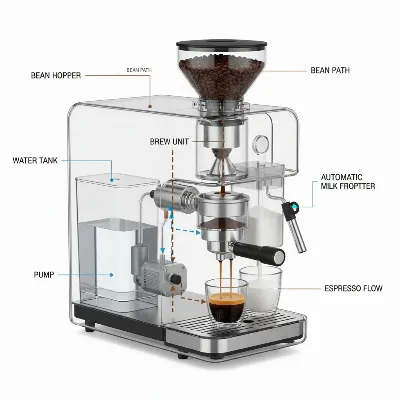 Detailed diagram of a super automatic espresso machine showing its internal components and flow path
Types of Espresso Machines
The world of espresso machines offers a spectrum of options, each catering to different levels of control, convenience, and skill. Understanding these distinctions is crucial for identifying the perfect fit for your coffee journey, especially when considering the ultimate ease of a super automatic model.
-
Manual Espresso Machines: These are for the true purists. Manual machines, often featuring a lever, require the user to control every variable: grind size, dose, tamp pressure, pre-infusion, and extraction pressure. They offer unparalleled control over the final shot, allowing for deep customization and a rewarding hands-on experience. However, they demand significant skill, practice, and time to master.
-
Semi-Automatic Espresso Machines: The most popular choice for home baristas, semi-automatic machines automate the pump for consistent brewing pressure but still require manual grinding, dosing, tamping, and often milk frothing via a steam wand. They strike a balance between control and convenience, allowing users to hone their barista skills while ensuring a reliable extraction.
-
Automatic Espresso Machines: Building on semi-automatics, automatic machines go a step further by automatically stopping the espresso shot once a pre-programmed volume is reached. Users still manage the grinding, dosing, tamping, and milk frothing. They offer more consistency in shot volume, ideal for those who want a repeatable espresso without constant monitoring.
-
Super-Automatic Espresso Machines: These are the focus of our guide, designed for ultimate convenience. Super automatic machines handle the entire “bean-to-cup” process: grinding, dosing, tamping, brewing, and often milk frothing, all at the push of a button. They feature integrated grinders, automatic milk systems, and user-friendly interfaces, making them ideal for anyone seeking café-quality drinks without any manual effort or specialized knowledge.
-
Capsule/Pod Espresso Machines: These machines use pre-ground coffee in sealed pods or capsules. They are incredibly convenient and mess-free, offering consistent results with minimal fuss. However, they limit bean choice, can be more expensive per cup, and often produce less intense espresso than freshly ground beans.
Super automatic machines remove the guesswork and manual labor, making gourmet coffee accessible to everyone. While they may offer less granular control over individual brewing parameters compared to manual or semi-automatic models, their consistency and ease of use are their undeniable strengths.
Comparison Table: Espresso Machine Types
|
Our Picks for the Best Espresso Machine in 2026
As an Amazon Associate I earn from qualifying purchases.
|
||
| Num | Product | Action |
|---|---|---|
| 1 | Espresso Machine, 20Bar Compact Stainless Espresso Maker, With Milk Frother Steam Wand, 57.5OZ Removable Water Tank, Displays Making Time & Water Temperature, Cold Brew & Cappuccino, Silver |

|
| 2 | 20Bar Espresso Machine, Compact Espresso Maker with Milk Frother, Stainless Steel Coffee Machine for Cappuccino&Latte, 42oz Water Tank, Visible Pressure Gauge, Home&Office, Silver |
|
| 3 | SHARDOR Espresso Machine 20 Bar, Professional Espresso Machine with Milk Frother and Touchscreen, Expresso Coffee Machines with Adjustable Temperature,for Cappuccino, Latte |
|
| 4 | Breville Barista Touch Espresso Machine BES880BSS, Brushed Stainless Steel |
|
| 5 | Espresso Machine, 20 BAR Pump Temperature Control, Compact Espresso Maker with Steam Milk Frother, Professional Coffee Makers for Home, Cappuccino, Latte, Gifts for Coffee Lover, Black |
|
| 6 | 20 Bar Espresso Coffee Machine with LED Touch Screen, Espresso Maker with Self-Cleaning Function & Milk Frother, Compact Cappuccino & Latte Maker for Home and Office |
|
| 7 | Espresso Machine 20 Bar with Milk Frother, Stainless Steel Coffee Maker with 42 oz Removable Water Tank for Cappuccino, Latte&Cold Brew, Home&Office, Silver |
|
| 8 | Gevi Commercial Espresso and Coffee Makers, Professional 20 Bar Espresso Maker with Milk Frother, Stainless Steel Expresso Coffee Machines for Home, Compact Cappuccino Machine, Great Gift |
|
| 9 | Chefman CraftBrew Espresso Machine, 15-Bar Pump Digital Espresso Maker w/Steam Wand for Latte & Cappuccino, Compact Espresso Coffee Machine w/ 1.5L Removable Water Reservoir - Stainless Black |
|
| 10 | Espresso Machine with Milk Frother, 20 Bar Pressure Espresso Maker, with 44OZ Removable Tank, Compact Stainless Steel Coffee Machine for Home, Office, Latte, Cappuccino, Gift for Women or Men |
|
| Feature | Manual | Semi-Automatic | Automatic | Super-Automatic | Capsule |
|---|---|---|---|---|---|
| Control Level | Very High | High | Medium | Very Low | Very Low |
| Complexity | High | Medium | Medium | Low | Very Low |
| Price | Medium to High | Low to High | Medium to High | High to Very High | Low to Medium |
| Maintenance | Difficult | Medium | Medium | Easy | Easy |
| Coffee Quality | Excellent | Very Good | Good | Good to Very Good | Good |
| Grinding | External | External/Built-in | Built-in | Built-in | Pre-ground (Pods) |
| Tamping | Manual | Manual | Automatic | Automatic | N/A |
| Milk Frothing | Manual Wand | Manual Wand | Manual Wand/Auto | Automatic | Automatic/Wand |
Super Automatic Espresso Machine Buying Guide
Choosing the right super automatic espresso machine involves more than just picking the most expensive model; it’s about aligning the machine’s capabilities with your specific needs, budget, and lifestyle. With the advancements in 2026, there are more features and options than ever before.
Determine Your Usage Needs
First, consider who will be using the machine and how often. Are you a single coffee enthusiast, a busy family, or a small office?
- For home use: A compact machine with a moderate water tank and bean hopper capacity might suffice. Consider features like user profiles for personalized drinks.
- For entertaining or office use: Look for larger capacities, faster brewing speeds, and potentially two bean hoppers for different coffee types. Robust construction and easy multi-user functionality are key.
Set Your Budget
Super automatic machines range widely in price, typically from under $700 to well over $3,000.
- Entry-level (under $1000): Often offer basic one-touch drinks (espresso, coffee) and simpler milk systems.
- Mid-range ($1000-$2000): Provide more drink options, advanced milk frothing, better grinders, and more customization.
- High-end ($2000+): Feature premium materials, large touchscreens, extensive drink menus, advanced connectivity (apps), dual grinders, and exceptional build quality. Your budget will significantly narrow down your choices, so establish it early.
Essential Features to Consider
- Grinder Quality: A high-quality ceramic or conical steel burr grinder is paramount for consistent grind size, which directly impacts espresso quality. Look for multiple grind settings to fine-tune extraction for different beans.
- Milk System:
- Automatic Milk Carafe/System: Many super automatics have integrated carafes (e.g., DeLonghi’s LatteCrema, Philips’ LatteGo) that froth milk directly into your cup and are often self-cleaning. This offers maximum convenience.
- Manual Steam Wand: Some models include a manual steam wand for those who prefer to texture their own milk for latte art.
- Cold Foam: Newer models, like the DeLonghi Eletta Explore, offer cold foam capabilities, expanding your drink menu.
- User Interface and Customization:
- Touchscreen Displays: Large, intuitive touchscreens are common, allowing easy selection and customization of drinks.
- Programmable Settings: The ability to adjust coffee strength, temperature, volume, and milk texture for each drink is a valuable feature.
- User Profiles: Allows multiple users to save their preferred drink settings.
- Water Reservoir Capacity: A larger tank means fewer refills, especially important for high-volume use.
- Bean Hopper Capacity: Similar to the water tank, a larger hopper requires less frequent refilling. Some high-end machines offer dual hoppers for different bean types.
- Cleaning and Maintenance: Look for machines with removable brew units (which are easier to rinse), automatic cleaning cycles (for the brew group and milk system), and descaling alerts. Easy cleaning is crucial for longevity and taste.
Brand Reputation and Warranty
Research reputable brands known for quality and reliability such as Jura, DeLonghi, Gaggia, Philips, Breville, and Miele. Check warranty policies and customer support reviews. A good warranty and responsive support can save you headaches down the line.
Size and Design
Consider your available counter space. Super automatic machines can be quite large. Also, think about the aesthetics – do you want a sleek, modern look or something more traditional? The machine should complement your kitchen.
Read Technical Specifications
Pay attention to details like pump pressure (15 bar is standard, though 9 bar is ideal during extraction), wattage, and materials. Higher wattage often means faster heat-up times.
Ultimately, the best super automatic espresso machine for you is one that balances convenience, performance, and features within your budget, ensuring you enjoy delicious coffee with minimal effort every day.
Top 5 Super Automatic Espresso Machines for 2026
The market for super automatic espresso machines continues to innovate, offering increasingly smart and capable devices. Based on expert reviews and consumer feedback for 2026, here are five standout models that offer a blend of performance, features, and value.
1. Jura Z10
The Jura Z10 consistently ranks as a top contender, often hailed as the “ultimate do-it-all” super automatic machine.
- Pros: Exceptional coffee quality, P.R.G. (Product Recognising Grinder) for optimal grind, Cold Brew specialty options (first of its kind for super-autos), 32 customizable drink options, intuitive touchscreen, Wi-Fi connectivity via J.O.E. app, excellent automatic milk frothing. Its quality, ease of use, and extensive customization are second to none.
- Cons: Premium price tag, large footprint.
- Price Range: High-end ($3,000 – $4,000)
- Who it’s for: Coffee aficionados seeking unparalleled customization and diverse drink options, including cold brew, and are willing to invest in a top-tier machine.
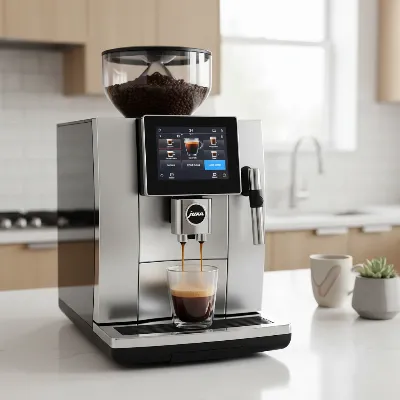 Sleek Jura Z10 super automatic espresso machine brewing a coffee with cold brew option displayed on screen
2. DeLonghi Dinamica Plus
Often cited as the best overall super automatic espresso machine for its balance of features, performance, and reasonable price.
- Pros: 16 one-touch drink recipes, LatteCrema system for perfectly textured milk, integrated conical burr grinder, easy-to-use 3.5-inch full-color touchscreen, connectivity via Coffee Link app, easy maintenance with removable brew unit. It offers a stellar performance without an exorbitant price.
- Cons: Some users find the milk carafe system slightly bulky.
- Price Range: Mid to High-end ($1,200 – $1,800)
- Who it’s for: Those looking for a comprehensive feature set and excellent milk-based drinks at a competitive price point, without sacrificing quality.
3. Gaggia Magenta Prestige
This machine is frequently recommended as the “best value for money” in the super automatic category.
- Pros: 12 one-touch beverages, integrated milk carafe for automatic frothing, ceramic burr grinder, modern full-color display, compact design, easy to clean. It delivers reliable performance and quality espresso drinks, making it a strong contender for its price.
- Cons: Fewer advanced customization options compared to high-end models, milk frothing might not be as refined as Jura.
- Price Range: Mid-range ($800 – $1,200)
- Who it’s for: Budget-conscious buyers who want a fully automatic experience with a good variety of drinks and solid performance without breaking the bank.
4. Breville Oracle Touch
While it leans more towards a highly automated semi-automatic, the Breville Oracle Touch is celebrated for bringing barista-quality control with significant automation, ideal for “perfectionists.”
- Pros: Automatic grinding, dosing, and tamping, automatic milk texturing, precise temperature control, intuitive touchscreen for drink customization, dual boiler system for simultaneous brewing and steaming. It offers more control than most super-automatics without the manual fuss.
- Cons: Requires more user interaction than a pure super automatic (e.g., moving the portafilter), higher price. It’s also quite large and heavy.
- Price Range: High-end ($2,500 – $3,000)
- Who it’s for: Enthusiasts who desire near-barista level control and quality but appreciate automation for consistency, especially with milk.
5. Philips 3200 LatteGo
Recognized as a leading budget-friendly bean-to-cup machine, the Philips 3200 LatteGo offers impressive features for its price point.
- Pros: 5 classic coffee varieties, intuitive touch display, durable ceramic burr grinder with 12 steps, innovative LatteGo milk system that’s incredibly easy to clean (two parts, no tubes), AquaClean filter for up to 5000 cups without descaling.
- Cons: Milk foam quality may not be as rich as higher-end models, fewer customization options.
- Price Range: Entry-level ($600 – $900)
- Who it’s for: Beginners or those on a tighter budget who want a reliable, easy-to-use super automatic machine, especially valuing simple milk system cleaning.
Using and Maintaining Your Super Automatic Espresso Machine
Owning a super automatic espresso machine is a joy, but to ensure it consistently delivers delicious coffee and stands the test of time, proper use and regular maintenance are crucial. These machines are designed for convenience, including their upkeep, but a little attention goes a long way.
Correct Usage Tips
- Read the Manual: This cannot be stressed enough. Every machine has unique features and specific instructions for optimal performance and maintenance. Familiarize yourself with your model’s guidelines.
- Use Fresh, Quality Beans: The quality of your beans directly impacts the taste of your coffee and the longevity of your grinder. Avoid oily beans if your machine uses a ceramic grinder, as they can cause clogging over time. Store beans in an airtight container away from light and heat.
- Fill with Filtered Water: Mineral deposits (scale) are the enemy of espresso machines. Using filtered water significantly reduces scale buildup, extending the intervals between descaling and improving coffee taste. Many machines have optional water filters to further enhance this.
- Adjust Grind Settings: Experiment with the grinder settings to find the sweet spot for your beans and desired drink. A finer grind is typically for espresso, while coarser grinds are for lungo or regular coffee. Make adjustments gradually and only when the grinder is running, as instructed by your manual.
- Customize Your Drinks: Don’t hesitate to use the programmable settings to tailor coffee strength, volume, and temperature to your exact preferences. Save these as user profiles if your machine supports it.
Essential Maintenance Practices
Consistent maintenance ensures your machine runs smoothly and your coffee always tastes great.
- Daily Cleaning:
- Empty Drip Tray and Grounds Container: Coffee grounds and water can quickly become moldy if left overnight.
- Rinse Milk System: If your machine has an automatic milk system, run the cleaning cycle immediately after each use to prevent milk residue buildup. If it has a manual wand, wipe and purge it after every use.
- Wipe Exterior: A quick wipe with a damp cloth keeps your machine looking pristine and prevents coffee splashes from drying.
- Weekly Cleaning:
- Clean the Brew Group: Most super automatics have a removable brew group. Remove it, rinse thoroughly under warm water, and allow it to air dry before reinserting. This prevents coffee oil and residue accumulation. Refer to your manual for exact steps.
- Clean Bean Hopper: Remove any old beans and wipe the inside of the hopper to prevent oil buildup.
- Deep Clean Milk System: Use a milk system cleaner to thoroughly flush out any hidden residues in automatic milk carafes or tubes.
- Monthly/As Needed (Descaling):
- Descale Regularly: This is critical for preventing mineral buildup that can damage internal components and affect heating and pressure. Your machine will likely alert you when it’s time to descale. Use a manufacturer-approved descaling solution and follow the machine’s automated descaling program precisely. The frequency depends on your water hardness and usage.
- Use Cleaning Tablets: Periodically, some machines require cleaning tablets to remove coffee oil buildup within the brew unit that simple rinsing might miss.
By adhering to these usage and maintenance guidelines, you’ll extend the lifespan of your super automatic espresso machine and continue to enjoy consistently excellent coffee, effortlessly, for years to come.
Essential Accessories for Your Super Automatic Espresso Machine
While a super automatic espresso machine handles most of the work, a few key accessories can enhance your coffee experience, improve maintenance, and ensure you get the most out of your investment.
- Water Filter: Even if your machine has a built-in filter, an external water filter (like a Brita pitcher) or an in-tank water filter cartridge can further reduce mineral content, protecting your machine from scale buildup and improving the taste of your coffee.
- Descaling Solution: An absolute must-have. Always keep a manufacturer-approved descaling solution on hand for when your machine signals it’s time for a descaling cycle.
- Coffee Machine Cleaning Tablets/Powder: These are designed to break down coffee oils and residues within the brew unit and internal components, ensuring optimal hygiene and flavor. Check your machine’s manual for recommended products.
- Milk System Cleaner: For machines with automatic milk frothers, a dedicated milk system cleaner is essential for thorough sanitization and preventing blockages from dried milk residue.
- Microfiber Cleaning Cloths: Soft, absorbent cloths are perfect for wiping down the exterior of your machine, cleaning the steam wand, and ensuring a streak-free finish.
- Small Brush/Vacuum: Useful for clearing stray coffee grounds from around the grinder area and bean hopper.
- Coffee Bean Storage Container: An airtight, opaque container helps keep your fresh coffee beans from degrading due to exposure to air, light, and moisture, preserving their flavor for longer.
- Espresso Glasses/Cups: High-quality glassware or ceramic cups enhance the visual and sensory experience of your coffee. Double-walled glasses are great for maintaining drink temperature.
- Knock Box (Optional): While super automatics typically deposit spent pucks internally, a small knock box can be useful for any manual components or for quickly disposing of grounds from an occasional external grinder.
Having these accessories on hand will streamline your cleaning routine, prolong your machine’s life, and allow you to fully enjoy the convenience and quality of your super automatic espresso maker.
Conclusion
Embracing a super automatic espresso machine in 2026 means stepping into a world where premium coffee is just a button press away, combining cutting-edge technology with the timeless pleasure of a perfectly crafted beverage. These innovative machines, from the customizable Jura Z10 to the budget-friendly Philips 3200 LatteGo, eliminate the complexities of traditional espresso making, offering unparalleled convenience without compromising on quality. By carefully considering your budget, usage needs, and key features like grinder quality, milk systems, and maintenance requirements, you can confidently select a model that will transform your daily coffee ritual into an effortless delight. Remember that consistent cleaning and using quality ingredients are key to ensuring your investment continues to deliver exceptional results for years to come. What kind of café-quality drink will you create at home first?
Choosing the Best Super Automatic Espresso Machine
Follow these steps to select the ideal super automatic espresso machine that fits your needs, budget, and lifestyle, ensuring delicious coffee with minimal effort.
Consider who will use the machine and how often. For home use, a compact model with moderate capacity might suffice, while entertaining or office use requires larger capacities and robust construction for multiple users.
Establish a budget, as prices range from under $700 for entry-level machines to over $3,000 for high-end models. Your budget will significantly narrow down choices and help prioritize features.
Prioritize features like grinder quality (ceramic or conical steel burr), milk system (automatic carafe or manual wand), user interface (touchscreen, programmable settings), and cleaning/maintenance ease (removable brew unit, automatic cycles).
Investigate reputable brands like Jura, DeLonghi, and Gaggia, checking warranty and customer support. Review technical specifications such as pump pressure (ideally 9 bars) and wattage for performance insights.
Measure your available counter space, as these machines can be large. Choose a design that complements your kitchen's aesthetic, whether modern or traditional.
Get our weekly buyer guide
Practical specs, not advice. Unsubscribe anytime.

The Philips 3200 LatteGo was exactly what I needed as a beginner. The easy cleaning feature is a huge plus, and it makes a surprisingly good latte for the price point. I was a bit worried about maintenance, but it’s been super straightforward. Great value for under $700.
I got a super automatic machine in the mid-range, around $1500, hoping for a significant upgrade. While the espresso is decent, I’m a little disappointed with the grinder quality. It’s not as consistent as I’d hoped, and sometimes the shots are a bit uneven. Still, it’s convenient for daily use.
My old semi-automatic was a pain to clean, so I focused on the milk system type when choosing my new machine. The one I picked has an integrated carafe that’s a breeze to rinse out. It makes my morning routine so much smoother, and the lattes are fantastic.
I finally pulled the trigger on the Jura Z10 after reading about its cold brew options, and it’s been a game-changer. The customization is truly unparalleled, letting me dial in my perfect drink every time. It’s definitely an investment, but for someone who loves experimenting with different coffee styles, it’s worth every penny.