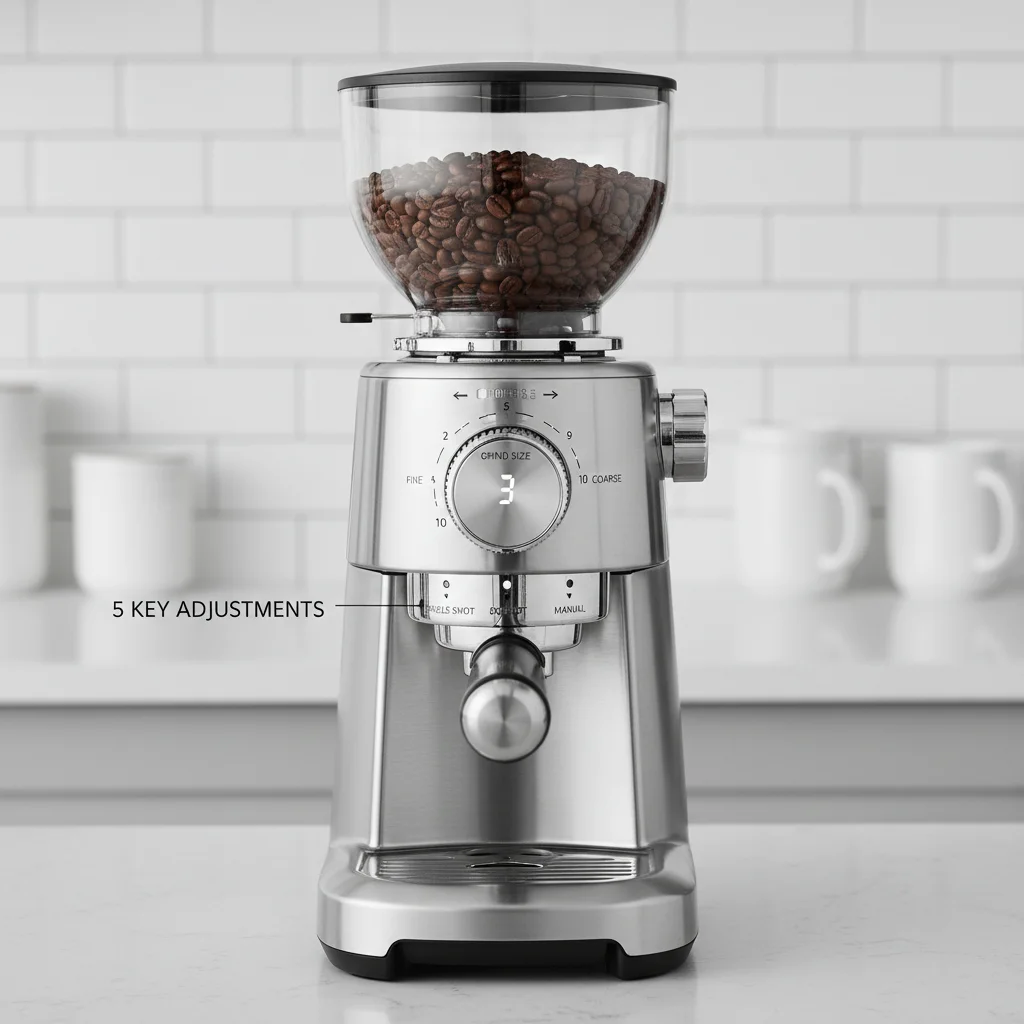
Achieving the perfect espresso shot requires precise adjustment of your espresso machine grinder settings. There are five key grind settings to master for optimal extraction, directly impacting water flow, flavor, crema, and overall shot quality. The ideal grind size allows for a steady, even flow, typically producing a double espresso shot in 25-30 seconds.
Understanding Grind Size and Its Impact
The size of your coffee grounds is paramount for espresso quality. If the grind is too coarse, water will pass through too quickly, resulting in an under-extracted, weak, and sour shot. Conversely, if the grind is too fine, water will struggle to pass, leading to an over-extracted, bitter, and often burnt-tasting espresso. Most espresso machines, especially those with integrated grinders, offer a range of settings from very fine to coarse. Experimentation is crucial, as different beans and roasts may require slight adjustments. A good starting point is often a medium-fine grind, resembling table salt.
Dialing In Your Espresso: A Step-by-Step Approach
To effectively dial in your espresso machine grinder settings, begin with a consistent dose of coffee. For a double shot, this is usually between 18-20 grams. Pull a shot and observe the flow. If it’s too fast (under 20 seconds), your grind is too coarse; adjust to a finer setting. If it’s too slow (over 35 seconds), your grind is too fine; adjust to a coarser setting. Make small, incremental changes, typically one click at a time, and pull another shot to assess the impact.
- Start with a medium-fine grind setting.
- Use a consistent coffee dose (e.g., 18g for a double shot).
- Observe the shot time and flow rate.
- Adjust grind size incrementally (one click at a time).
- Taste the espresso for bitterness or sourness.
The Role of Coffee Bean Freshness
|
Our Picks for the Best Espresso Machine in 2026
As an Amazon Associate I earn from qualifying purchases.
|
||
| Num | Product | Action |
|---|---|---|
| 1 | SHARDOR Espresso Machine 20 Bar, Professional Espresso Machine with Milk Frother and Touchscreen, Expresso Coffee Machines with Adjustable Temperature,for Cappuccino, Latte |

|
| 2 | Chefman CraftBrew Espresso Machine, 15-Bar Pump Digital Espresso Maker w/Steam Wand for Latte & Cappuccino, Compact Espresso Coffee Machine w/ 1.5L Removable Water Reservoir - Stainless Black |
|
| 3 | 20 Bar Espresso Coffee Machine with LED Touch Screen, Espresso Maker with Self-Cleaning Function & Milk Frother, Compact Cappuccino & Latte Maker for Home and Office |
|
| 4 | Gevi Commercial Espresso and Coffee Makers, Professional 20 Bar Espresso Maker with Milk Frother, Stainless Steel Expresso Coffee Machines for Home, Compact Cappuccino Machine, Great Gift |
|
| 5 | Espresso Machine, 20Bar Compact Stainless Espresso Maker, With Milk Frother Steam Wand, 57.5OZ Removable Water Tank, Displays Making Time & Water Temperature, Cold Brew & Cappuccino, Silver |
|
| 6 | Espresso Machine, 20 BAR Pump Temperature Control, Compact Espresso Maker with Steam Milk Frother, Professional Coffee Makers for Home, Cappuccino, Latte, Gifts for Coffee Lover, Black |
|
| 7 | Espresso Machine with Milk Frother, 20 Bar Pressure Espresso Maker, with 44OZ Removable Tank, Compact Stainless Steel Coffee Machine for Home, Office, Latte, Cappuccino, Gift for Women or Men |
|
| 8 | Breville Barista Touch Espresso Machine BES880BSS, Brushed Stainless Steel |
|
| 9 | Espresso Machine 20 Bar with Milk Frother, Stainless Steel Coffee Maker with 42 oz Removable Water Tank for Cappuccino, Latte&Cold Brew, Home&Office, Silver |
|
| 10 | 20Bar Espresso Machine, Compact Espresso Maker with Milk Frother, Stainless Steel Coffee Machine for Cappuccino&Latte, 42oz Water Tank, Visible Pressure Gauge, Home&Office, Silver |
|
The freshness of your coffee beans critically influences how your grinder settings perform. Freshly roasted beans, ideally within 2-3 weeks of their roast date, contain more CO2, which aids in crema formation and affects extraction. As beans age, they lose CO2 and may require a finer grind to achieve similar extraction times. Always store your beans in an airtight container away from light and heat to preserve their freshness.
Common Grinder Types and Their Adjustments
For espresso, a burr grinder is essential because it grinds coffee uniformly, which is crucial for consistent extraction. Blade grinders, conversely, chop coffee unevenly, leading to inconsistent particle sizes and poor espresso. Burr grinders come in conical and flat burr varieties, both offering precise adjustments. Many home espresso machines feature integrated conical burr grinders, which are excellent for beginners.
Troubleshooting Grind-Related Issues
If you’re consistently getting poor shots, consider these common grind-related issues. If your espresso is channeling (water finding paths of least resistance), your grind might be too fine, or your puck preparation is uneven. If your shots are consistently weak, your grind might be too coarse. Always ensure your grinder is clean, as old coffee oils can clog burrs and affect grind consistency. Regular cleaning, typically once a month with a grinder brush or specialized tablets, is recommended.
Advanced Grinding Techniques for Optimal Flavor
Beyond basic adjustments, consider factors like single dosing, where you weigh out beans for each shot, minimizing stale coffee in the hopper. Some enthusiasts also explore grind distribution tools to ensure an even bed of coffee in the portafilter, further enhancing extraction consistency. Ultimately, the goal is to find the sweet spot where your espresso machine grinder settings produce a balanced, flavorful, and aromatic shot every time.
Frequently Asked Questions
What is the ideal grind size for a perfect espresso shot?
The ideal grind size for espresso allows for a steady, even flow of water through the coffee grounds, typically producing a double shot in 25-30 seconds. This usually corresponds to a medium-fine grind, similar in texture to table salt.
How does coffee bean freshness affect grinder settings?
Coffee bean freshness significantly impacts grinder settings. Freshly roasted beans (within 2-3 weeks) contain more CO2, which aids crema formation. As beans age, they lose CO2 and may require a finer grind to achieve optimal extraction times and flavor.
What are the signs of an under-extracted espresso shot?
An under-extracted espresso shot typically results from a grind that is too coarse, causing water to rush through too quickly. This leads to a weak, sour, and watery taste, often with a shot time under 20 seconds for a double espresso.
How often should I clean my espresso grinder?
Regular cleaning of your espresso grinder is recommended, typically once a month. This prevents old coffee oils from clogging the burrs, which can negatively affect grind consistency and the quality of your espresso shots.
Why are burr grinders preferred over blade grinders for espresso?
Burr grinders are preferred for espresso because they grind coffee uniformly, which is essential for consistent extraction and a balanced flavor. Blade grinders, in contrast, chop coffee unevenly, leading to inconsistent particle sizes and poor espresso quality.
Dialing In Your Espresso Machine Grinder Settings
Follow these steps to adjust your espresso machine grinder for optimal extraction and a perfect shot.
Begin by setting your grinder to a medium-fine setting, which typically resembles table salt. This provides a good baseline for most espresso beans and roasts.
Measure out a consistent amount of coffee for each shot. For a double espresso, a dose of 18-20 grams is generally recommended to ensure repeatable results.
Pull an espresso shot and carefully observe how long it takes and the flow of the coffee. An ideal double shot should extract in 25-30 seconds with a steady, even stream.
If the shot is too fast (under 20 seconds), adjust your grinder to a finer setting. If it's too slow (over 35 seconds), adjust to a coarser setting. Make small, one-click adjustments and pull another shot to assess the impact.
After each adjustment, taste the espresso for bitterness (too fine) or sourness (too coarse). Continue making small adjustments until you achieve a balanced, flavorful, and aromatic shot.
Get our weekly buyer guide
Practical specs, not advice. Unsubscribe anytime.

I always struggled with getting a consistent shot, and this guide on espresso machine grinder settings was a game-changer. My shots used to be either too sour or way too bitter. Focusing on that 25-30 second extraction time really helped me dial in my Baratza Sette 270. Now my morning lattes are perfect every time!
This breakdown of how grind size impacts water flow was super helpful. I’ve been using the same settings for ages, but after reading this, I realized my shots were often running a bit too fast. Made a small adjustment to a finer setting, and the crema is noticeably better. Still experimenting with different beans, but it’s a solid improvement.
Finally, someone explained the difference between under-extracted and over-extracted in a way that clicked! I was always confused why my espresso tasted burnt sometimes. Adjusting my grind to be slightly coarser, as suggested for over-extraction, completely fixed it. My Breville Barista Express is pulling much better shots now.
Good info on the basics of espresso machine grinder settings, but I wish there was more specific advice for different types of beans. I roast my own, and sometimes a dark roast needs a slightly different approach than a light one. My shots are decent now, but I still feel like I’m guessing a bit with new beans.