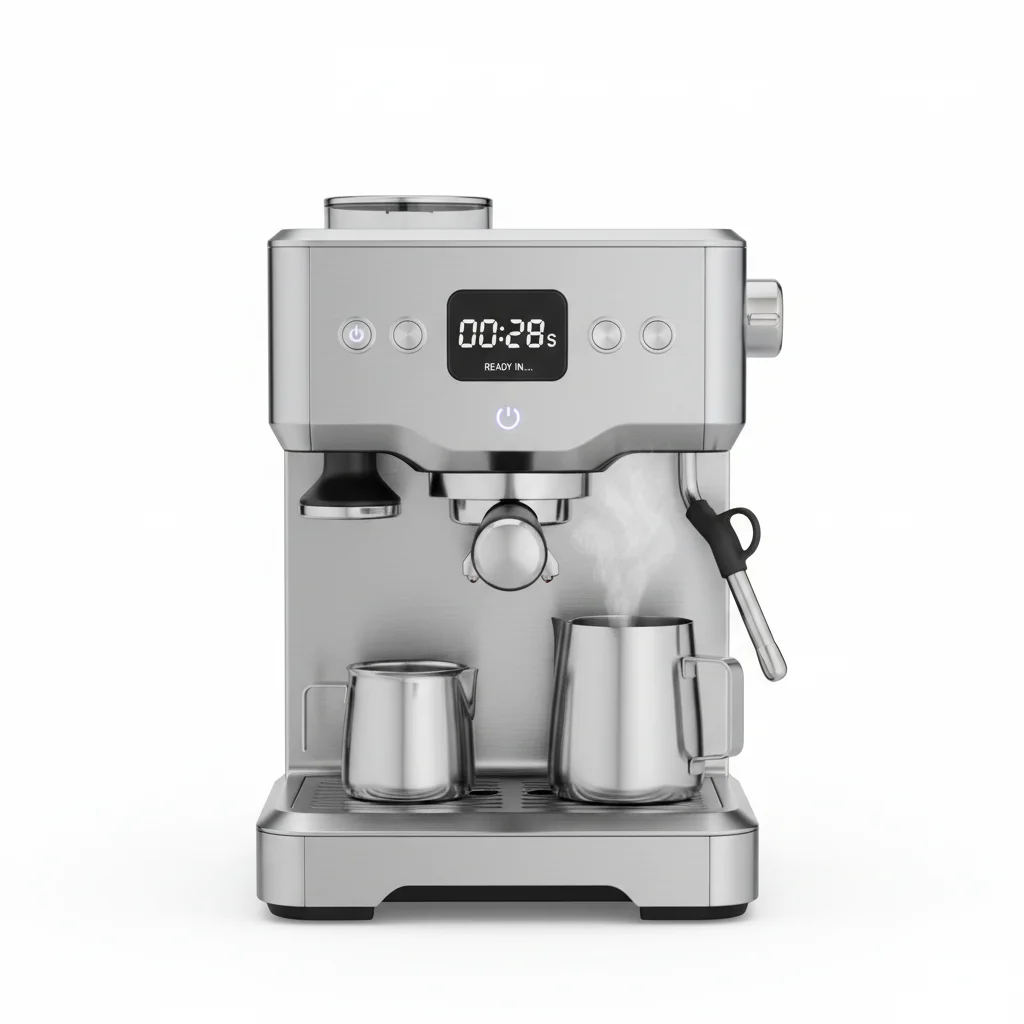
The heating time for an espresso machine varies significantly, typically ranging from 1 to 30 minutes, depending on the machine’s type, boiler size, and heating element wattage. Entry-level thermoblock machines can be ready in under 5 minutes, while high-end dual-boiler machines often require 20-30 minutes to reach optimal temperature stability for both brewing and steaming.
Factors Influencing Espresso Machine Heating Time
Several critical factors determine how quickly your espresso machine is ready for use. The type of heating element is paramount; thermoblock systems heat water on demand, leading to faster startup times, often under 5 minutes. In contrast, boiler-based systems, especially those with larger capacities, require more time to heat the entire volume of water and stabilize the temperature throughout the system. The wattage of the heating element also plays a direct role; higher wattage elements can heat water more rapidly. For see our home espresso recommendations on this site.
Single Boiler vs. Heat Exchanger vs. Dual Boiler Machines
Single boiler machines, common in entry-level models, typically take 5-15 minutes to heat up. They use one boiler for both brewing and steaming, requiring a temperature surf if you plan to do both. Heat exchanger (HX) machines, which have a single boiler but a separate tube for brew water, usually need 15-20 minutes to stabilize. Dual boiler machines, the most advanced for home use, feature separate boilers for brewing and steaming. While they offer superior temperature control, their larger water volume means they often require the longest heating times, frequently 20-30 minutes, to ensure both boilers are at their respective optimal temperatures.
Tips to Optimize Heating Time and Efficiency
|
Our Picks for the Best Espresso Machine in 2026
As an Amazon Associate I earn from qualifying purchases.
|
||
| Num | Product | Action |
|---|---|---|
| 1 | Breville Barista Touch Espresso Machine BES880BSS, Brushed Stainless Steel |

|
| 2 | 20Bar Espresso Machine, Compact Espresso Maker with Milk Frother, Stainless Steel Coffee Machine for Cappuccino&Latte, 42oz Water Tank, Visible Pressure Gauge, Home&Office, Silver |
|
| 3 | 20 Bar Espresso Coffee Machine with LED Touch Screen, Espresso Maker with Self-Cleaning Function & Milk Frother, Compact Cappuccino & Latte Maker for Home and Office |
|
| 4 | SHARDOR Espresso Machine 20 Bar, Professional Espresso Machine with Milk Frother and Touchscreen, Expresso Coffee Machines with Adjustable Temperature,for Cappuccino, Latte |
|
| 5 | Espresso Machine, 20Bar Compact Stainless Espresso Maker, With Milk Frother Steam Wand, 57.5OZ Removable Water Tank, Displays Making Time & Water Temperature, Cold Brew & Cappuccino, Silver |
|
| 6 | Chefman CraftBrew Espresso Machine, 15-Bar Pump Digital Espresso Maker w/Steam Wand for Latte & Cappuccino, Compact Espresso Coffee Machine w/ 1.5L Removable Water Reservoir - Stainless Black |
|
| 7 | Espresso Machine 20 Bar with Milk Frother, Stainless Steel Coffee Maker with 42 oz Removable Water Tank for Cappuccino, Latte&Cold Brew, Home&Office, Silver |
|
| 8 | Espresso Machine, 20 BAR Pump Temperature Control, Compact Espresso Maker with Steam Milk Frother, Professional Coffee Makers for Home, Cappuccino, Latte, Gifts for Coffee Lover, Black |
|
| 9 | Gevi Commercial Espresso and Coffee Makers, Professional 20 Bar Espresso Maker with Milk Frother, Stainless Steel Expresso Coffee Machines for Home, Compact Cappuccino Machine, Great Gift |
|
| 10 | Espresso Machine with Milk Frother, 20 Bar Pressure Espresso Maker, with 44OZ Removable Tank, Compact Stainless Steel Coffee Machine for Home, Office, Latte, Cappuccino, Gift for Women or Men |
|
While you can’t drastically alter your machine’s inherent heating time, there are ways to make the most of it. Many modern machines feature programmable timers, allowing you to set them to power on and pre-heat before you wake up. This ensures your machine is ready the moment you are. Additionally, keeping your machine clean and descaled can help maintain heating efficiency, as mineral buildup can impede heat transfer. Consider investing in a smart plug for older machines without built-in timers.
- Utilize programmable timers for automatic pre-heating.
- Keep your machine regularly descaled to prevent mineral buildup.
- Consider a smart plug for non-programmable models.
- Run a blank shot through the group head to warm it up faster.
- Ensure the water reservoir is always adequately filled.
The Importance of Temperature Stability
Beyond just reaching a hot temperature, true readiness for an espresso machine involves achieving temperature stability. This means the entire brew path, including the group head and portafilter, is at the correct temperature. Brewing with an insufficiently heated machine can lead to underextracted shots, characterized by sour flavors and a thin crema. Allowing your machine to fully heat and stabilize ensures consistent and delicious espresso.
When to Consider a Faster Heating Machine
If your morning routine is extremely time-sensitive, and you find yourself frequently waiting for your machine, it might be worth considering a model with a faster heating system. Thermoblock or thermocoil machines are excellent choices for speed, often ready in under 5 minutes. While they may not offer the same level of temperature stability as a large boiler machine, their convenience for quick, daily use is unmatched. For those who prioritize speed and don’t mind a slight compromise on ultimate temperature precision, these machines can be a game-changer.
Get our weekly buyer guide
Practical specs, not advice. Unsubscribe anytime.

This was super helpful! I was always confused why my friend’s machine was ready so fast compared to mine. Now I understand it’s all about the boiler size and heating element wattage. I’m considering an upgrade soon, and I’ll definitely keep the heating time in mind when looking at new models.
I used to dread making espresso in the mornings because my old machine took forever to heat up. Switching to a thermoblock system, as mentioned here, has been a game-changer. I can literally get my shot pulled in under 5 minutes now, which is perfect for my busy schedule. Highly recommend prioritizing that feature!
I appreciate the breakdown of heating times. My dual-boiler machine definitely takes its sweet time, usually around 25 minutes, to get fully stable. It makes a fantastic latte, but sometimes I wish it was quicker. I guess that’s the trade-off for temperature consistency.
I’ve always been a fan of getting the best possible shot, and I’ve learned that waiting for proper temperature stability is key. My machine takes about 20 minutes, and I use that time to grind my beans and warm my cups. It’s part of the ritual now, and the results are always worth the wait.