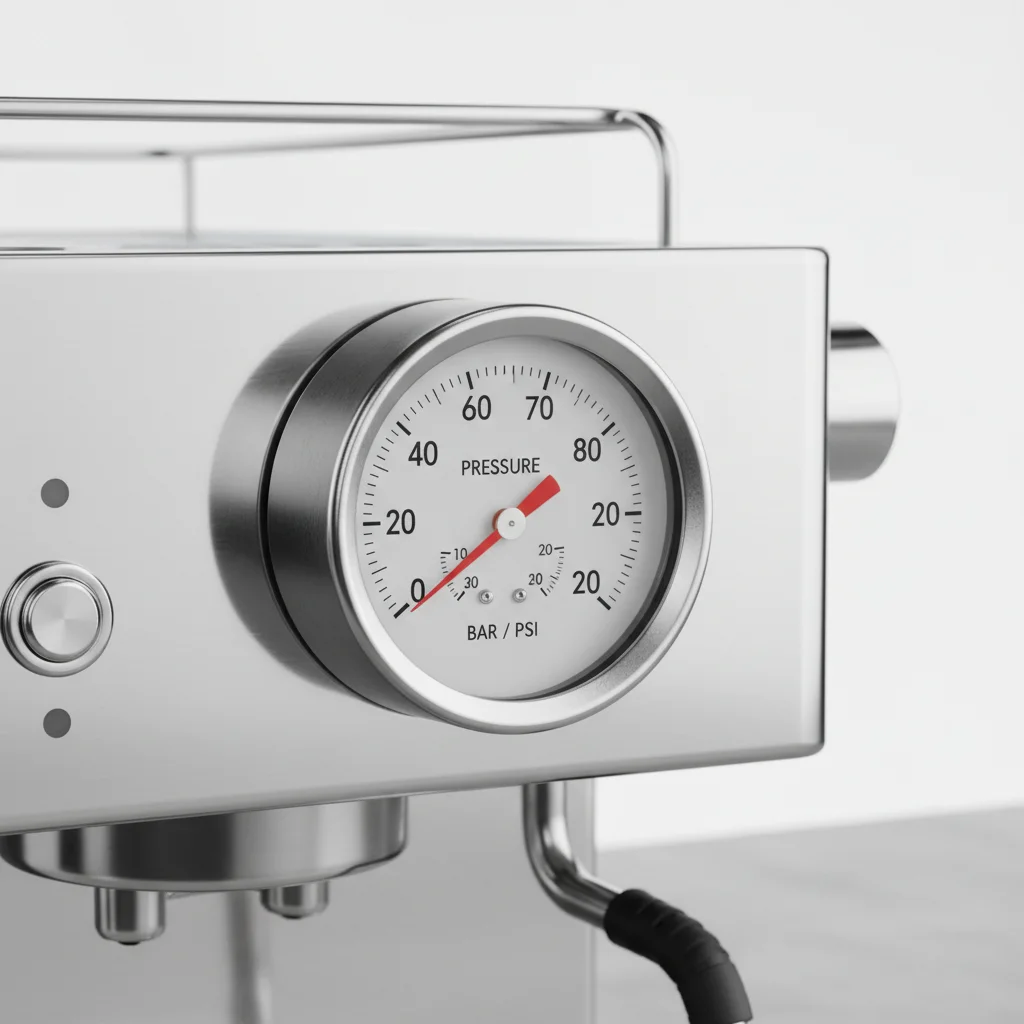
An espresso machine pressure gauge is essential for home baristas, providing critical feedback on extraction pressure. While not strictly necessary for every machine, a gauge helps you consistently pull better shots by indicating if your pressure is within the ideal 9-bar range. This allows for precise adjustments to grind size, tamping, and dose, leading to a more balanced and flavorful espresso.
Understanding Espresso Machine Pressure
Espresso extraction relies on pressurized hot water forcing its way through a compacted bed of coffee grounds. The ideal pressure for this process is widely accepted to be around 9 bars. Too little pressure can result in an under-extracted, weak, and sour shot, as the water doesn’t effectively strip the soluble compounds from the coffee. Conversely, too much pressure can lead to over-extraction, producing a bitter and astringent taste, and potentially channeling through the coffee puck. For more home espresso guides on this site.
A pressure gauge, typically located on the front panel of your espresso machine, provides a real-time visual representation of the pressure being applied during extraction. This immediate feedback is invaluable for diagnosing issues and fine-tuning your technique.
How a Pressure Gauge Improves Your Espresso
For home baristas, a pressure gauge acts as a crucial diagnostic tool. If your shot is pulling too fast and the gauge reads low, it suggests your grind might be too coarse or your dose too small. If the shot is struggling to come out and the pressure is too high, your grind is likely too fine or your tamp too hard. Without a gauge, these adjustments become a guessing game, making it difficult to replicate good shots consistently.
The ability to monitor pressure allows you to make incremental changes and observe their direct impact. This iterative process is fundamental to developing your skills and understanding the nuances of espresso extraction. It transforms a subjective experience into a more objective, data-driven one.
Types of Pressure Gauges on Espresso Machines
|
Our Picks for the Best Espresso Machine in 2026
As an Amazon Associate I earn from qualifying purchases.
|
||
| Num | Product | Action |
|---|---|---|
| 1 | Espresso Machine with Milk Frother, 20 Bar Pressure Espresso Maker, with 44OZ Removable Tank, Compact Stainless Steel Coffee Machine for Home, Office, Latte, Cappuccino, Gift for Women or Men |

|
| 2 | Espresso Machine, 20 BAR Pump Temperature Control, Compact Espresso Maker with Steam Milk Frother, Professional Coffee Makers for Home, Cappuccino, Latte, Gifts for Coffee Lover, Black |
|
| 3 | Espresso Machine 20 Bar with Milk Frother, Stainless Steel Coffee Maker with 42 oz Removable Water Tank for Cappuccino, Latte&Cold Brew, Home&Office, Silver |
|
| 4 | Espresso Machine, 20Bar Compact Stainless Espresso Maker, With Milk Frother Steam Wand, 57.5OZ Removable Water Tank, Displays Making Time & Water Temperature, Cold Brew & Cappuccino, Silver |
|
| 5 | SHARDOR Espresso Machine 20 Bar, Professional Espresso Machine with Milk Frother and Touchscreen, Expresso Coffee Machines with Adjustable Temperature,for Cappuccino, Latte |
|
| 6 | Breville Barista Touch Espresso Machine BES880BSS, Brushed Stainless Steel |
|
| 7 | Chefman CraftBrew Espresso Machine, 15-Bar Pump Digital Espresso Maker w/Steam Wand for Latte & Cappuccino, Compact Espresso Coffee Machine w/ 1.5L Removable Water Reservoir - Stainless Black |
|
| 8 | 20Bar Espresso Machine, Compact Espresso Maker with Milk Frother, Stainless Steel Coffee Machine for Cappuccino&Latte, 42oz Water Tank, Visible Pressure Gauge, Home&Office, Silver |
|
| 9 | 20 Bar Espresso Coffee Machine with LED Touch Screen, Espresso Maker with Self-Cleaning Function & Milk Frother, Compact Cappuccino & Latte Maker for Home and Office |
|
| 10 | Gevi Commercial Espresso and Coffee Makers, Professional 20 Bar Espresso Maker with Milk Frother, Stainless Steel Expresso Coffee Machines for Home, Compact Cappuccino Machine, Great Gift |
|
Most home espresso machines feature either a brew pressure gauge or a steam pressure gauge, and some advanced models include both. The brew pressure gauge, which is our focus here, measures the pressure at the group head during extraction. Steam pressure gauges, on the other hand, indicate the pressure within the steam boiler, which is important for milk frothing but not directly for espresso extraction.
Some machines might also have a pump pressure gauge, which measures the pressure directly from the pump before it reaches the coffee puck. While useful for diagnostics, the brew pressure gauge at the group head is generally more relevant for daily shot-pulling adjustments as it reflects the actual pressure the coffee is experiencing.
When is a Pressure Gauge Most Beneficial?
A pressure gauge is particularly beneficial for users of semi-automatic and manual espresso machines, where the barista has significant control over the extraction variables. For super-automatic machines, which automate most of the process, a gauge is less critical as the machine handles pressure regulation internally. However, even with some prosumer machines, a gauge can help identify if the machine’s internal components are performing optimally over time.
- Diagnosing grind size issues.
- Optimizing tamping force.
- Ensuring consistent shot quality.
- Troubleshooting channeling or uneven extraction.
- Learning the impact of different coffee beans.
For those serious about perfecting their home espresso, the investment in a machine with a reliable pressure gauge is highly recommended. It provides the feedback necessary to move beyond basic espresso making and into the realm of truly exceptional shots.
Maintaining Your Espresso Machine’s Pressure Gauge
While the pressure gauge itself typically requires little direct maintenance, ensuring the overall health of your espresso machine will help it function accurately. Regular descaling and backflushing prevent mineral buildup that could affect water flow and, consequently, pressure readings. If you suspect your gauge is inaccurate, it’s often a symptom of a larger issue within the machine, such as a failing pump or a clogged group head.
Always refer to your machine’s manual for specific maintenance instructions. A well-maintained machine ensures that the readings from your pressure gauge are reliable, allowing you to trust the feedback it provides for your daily brewing.Investing in a quality espresso machine with a precise pressure gauge can significantly elevate your home barista experience.
Get our weekly buyer guide
Practical specs, not advice. Unsubscribe anytime.

As a home barista, I can’t stress enough how much a pressure gauge has improved my espresso game. Being able to see if my pressure is too high or too low allows me to make immediate adjustments to my dose or tamp. It’s truly essential for consistently pulling perfect shots and getting that rich flavor.
This really clarified why a pressure gauge is important. I used to just guess with my grind size and tamping, but now I understand how crucial it is to hit that ideal pressure. It’s definitely helped me avoid those bitter, over-extracted shots. Wish I’d paid more attention to this detail when I bought my first machine.
I appreciate the info on avoiding under-extraction, but honestly, my current machine doesn’t have a gauge and I’m not ready to buy a new one just for that. I’ve been trying to adjust my grind based on taste, and it’s a slow process. Maybe for my next upgrade, I’ll prioritize a machine with a built-in gauge.
I always wondered why my shots were inconsistent, even with good beans. After reading about the 9-bar range, I realized my old machine was all over the place. Upgraded to one with a proper pressure gauge, and it’s made a world of difference. My espresso is so much more balanced now, no more sour surprises!