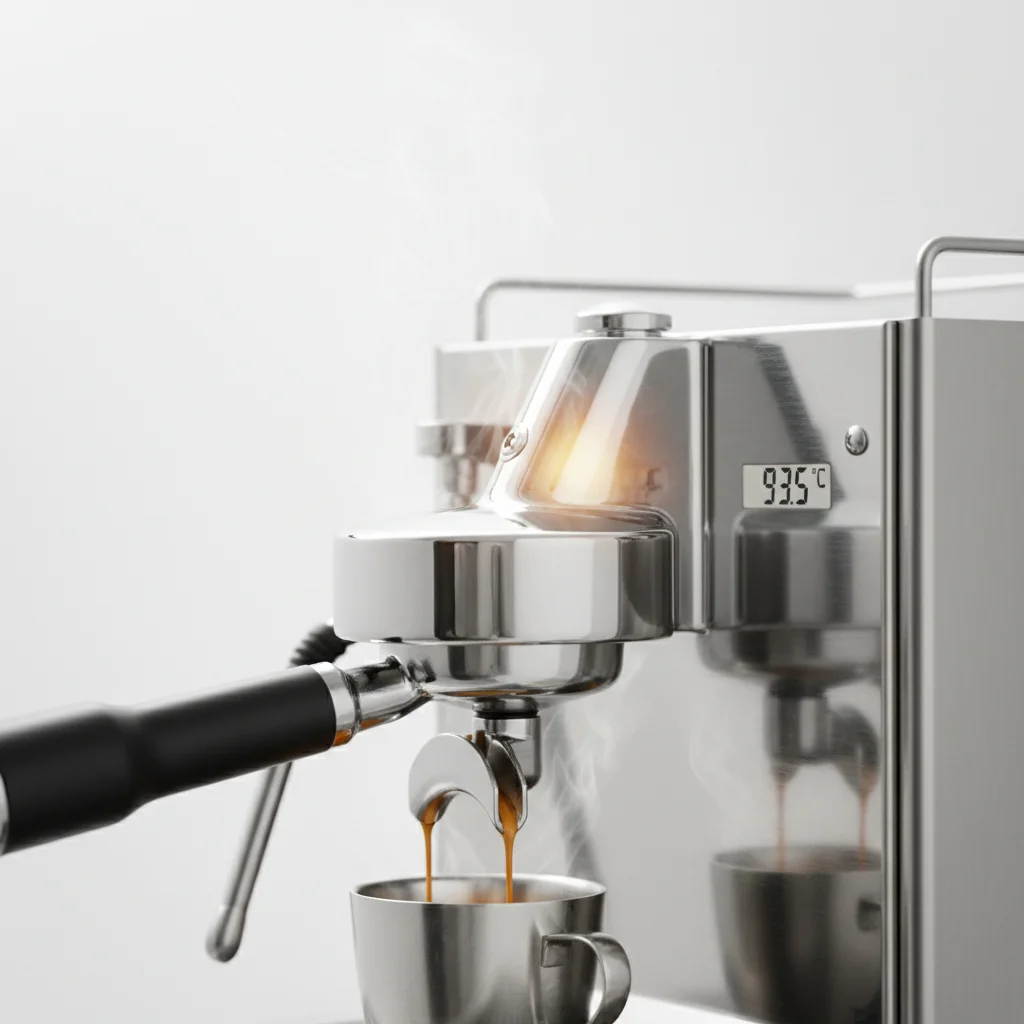
The ideal espresso machine group head temperature for optimal extraction typically falls between 195°F and 205°F (90°C and 96°C). Maintaining this precise temperature range is crucial for extracting the full flavor profile of your coffee beans without over-extracting bitter notes or under-extracting sour ones.
Why Group Head Temperature Matters for Espresso Quality
The group head is the final point of contact between your espresso machine and the coffee grounds before extraction. Its temperature directly influences the water temperature that hits the coffee puck. If the group head is too cold, it will cool the water flowing through it, leading to an under-extracted shot that tastes sour and thin. Conversely, a group head that is too hot can scald the coffee, resulting in a bitter, burnt taste. For compare top home espresso on this site.
Achieving thermal stability at the group head is a hallmark of high-quality espresso machines. This stability ensures consistent extraction from shot to shot, which is essential for any home barista aiming for professional-level results. Machines with advanced temperature control systems, like PID controllers, are designed to maintain this consistency.
Factors Influencing Group Head Temperature
Several factors can influence the actual temperature at your espresso machine’s group head. The most significant is the boiler temperature, as the water originates there. However, the material and design of the group head itself, the ambient room temperature, and even the frequency of use can play a role. Heavier, more thermally massive group heads, often made of brass or stainless steel, tend to retain heat better and provide greater stability.
Pre-heating your machine thoroughly is paramount. Many home baristas overlook the importance of allowing sufficient time for the entire brew path, including the group head, to reach the desired temperature. This can take anywhere from 15 to 30 minutes, depending on the machine’s design and heating element.
How to Monitor and Adjust Group Head Temperature
|
Our Picks for the Best Espresso Machine in 2026
As an Amazon Associate I earn from qualifying purchases.
|
||
| Num | Product | Action |
|---|---|---|
| 1 | 20Bar Espresso Machine, Compact Espresso Maker with Milk Frother, Stainless Steel Coffee Machine for Cappuccino&Latte, 42oz Water Tank, Visible Pressure Gauge, Home&Office, Silver |

|
| 2 | 20 Bar Espresso Coffee Machine with LED Touch Screen, Espresso Maker with Self-Cleaning Function & Milk Frother, Compact Cappuccino & Latte Maker for Home and Office |
|
| 3 | Chefman CraftBrew Espresso Machine, 15-Bar Pump Digital Espresso Maker w/Steam Wand for Latte & Cappuccino, Compact Espresso Coffee Machine w/ 1.5L Removable Water Reservoir - Stainless Black |
|
| 4 | Espresso Machine with Milk Frother, 20 Bar Pressure Espresso Maker, with 44OZ Removable Tank, Compact Stainless Steel Coffee Machine for Home, Office, Latte, Cappuccino, Gift for Women or Men |
|
| 5 | Gevi Commercial Espresso and Coffee Makers, Professional 20 Bar Espresso Maker with Milk Frother, Stainless Steel Expresso Coffee Machines for Home, Compact Cappuccino Machine, Great Gift |
|
| 6 | Breville Barista Touch Espresso Machine BES880BSS, Brushed Stainless Steel |
|
| 7 | Espresso Machine, 20Bar Compact Stainless Espresso Maker, With Milk Frother Steam Wand, 57.5OZ Removable Water Tank, Displays Making Time & Water Temperature, Cold Brew & Cappuccino, Silver |
|
| 8 | SHARDOR Espresso Machine 20 Bar, Professional Espresso Machine with Milk Frother and Touchscreen, Expresso Coffee Machines with Adjustable Temperature,for Cappuccino, Latte |
|
| 9 | Espresso Machine 20 Bar with Milk Frother, Stainless Steel Coffee Maker with 42 oz Removable Water Tank for Cappuccino, Latte&Cold Brew, Home&Office, Silver |
|
| 10 | Espresso Machine, 20 BAR Pump Temperature Control, Compact Espresso Maker with Steam Milk Frother, Professional Coffee Makers for Home, Cappuccino, Latte, Gifts for Coffee Lover, Black |
|
For machines without an integrated PID display, monitoring group head temperature can be challenging but not impossible. Some advanced home machines offer a brew temperature gauge. For others, a technique called ‘temperature surfing’ can be employed, where you learn your machine’s specific heating cycle and pull shots at the optimal point. This often involves flushing a small amount of water through the group head to stabilize the temperature.
More sophisticated machines, especially prosumer models, often include a PID controller that allows you to set and precisely maintain the brew temperature. This eliminates much of the guesswork and provides superior consistency.These features are a significant advantage for those serious about their espresso.
Signs of Incorrect Group Head Temperature
Recognizing the signs of incorrect group head temperature is key to diagnosing and improving your espresso. If your shots are consistently sour, lack body, and have a pale crema, your group head might be too cold. This indicates under-extraction. On the other hand, if your espresso tastes overly bitter, burnt, or astringent, with a dark, thin crema, the group head is likely too hot, leading to over-extraction.
- Sour, thin shots with pale crema: Group head too cold.
- Bitter, burnt, or astringent shots with dark, thin crema: Group head too hot.
- Inconsistent shot times and flow: Poor thermal stability.
- Lack of aromatic complexity: Suboptimal extraction due to temperature.
- Weak or watery espresso: Insufficient heat for proper extraction.
Maintaining Optimal Group Head Temperature
To ensure your group head maintains the ideal temperature, always allow your machine to fully warm up before brewing. This means not just waiting for the ‘ready’ light, but giving it extra time for all internal components to stabilize. Regularly descaling your machine also helps maintain heating efficiency, as mineral buildup can impede heat transfer.Additionally, consider the ambient temperature of your kitchen; a cold room can make it harder for your machine to maintain its set temperature.
For machines with a PID, experiment with small temperature adjustments (1-2 degrees at a time) to fine-tune the extraction for different beans. Lighter roasts often benefit from slightly higher temperatures, while darker roasts may perform better at slightly lower temperatures to avoid bitterness.
Get our weekly buyer guide
Practical specs, not advice. Unsubscribe anytime.
