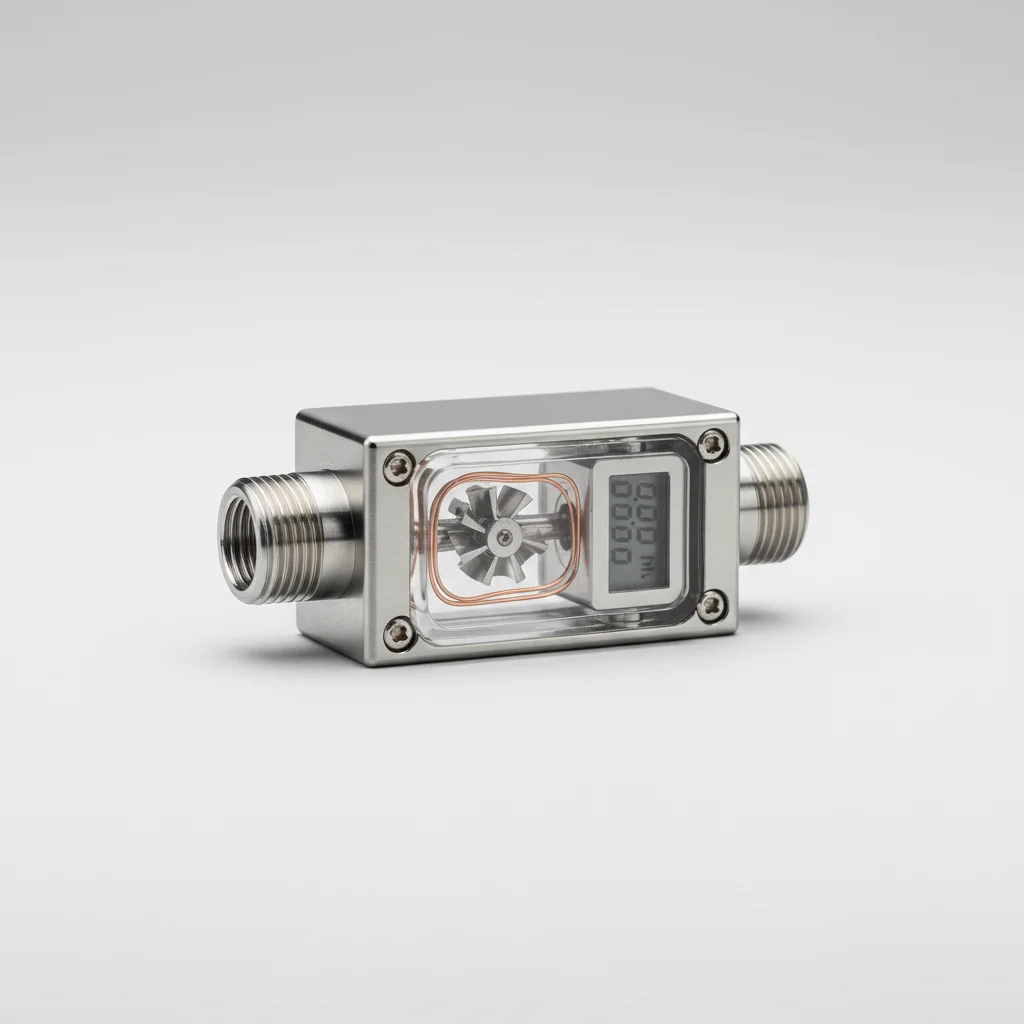
An espresso machine flow meter is a small device that measures the volume of water passing through your espresso machine, playing a crucial role in achieving consistent shot volumes. While not strictly essential for every home barista, it becomes increasingly important for those seeking precision and repeatability in their espresso extractions, especially with machines that lack volumetric programming.
What Does an Espresso Machine Flow Meter Do?
A flow meter works by counting the rotations of a small turbine as water flows past it. This data is then translated into a precise measurement of water volume. In espresso machines, this measurement is used to control the amount of water dispensed for each shot, ensuring that you get the same volume of espresso every time you brew. This consistency is vital for replicating your favorite recipes and understanding how different variables affect your final cup.
Types of Flow Meters in Espresso Machines
There are generally two main types of flow meters found in espresso machines: paddle wheel and turbine. Paddle wheel flow meters are common in many home and prosumer machines, offering reliable performance for most users. Turbine flow meters, often found in higher-end commercial machines, provide even greater accuracy and durability. Both types serve the same fundamental purpose: to precisely measure water volume for consistent brewing.
Benefits of a Flow Meter for Home Baristas
For the home barista, a flow meter offers several significant advantages. Firstly, it ensures shot consistency, meaning you can replicate your favorite espresso recipes with greater accuracy. This eliminates guesswork and helps you fine-tune your grind size, dose, and tamp with more confidence. Secondly, it aids in troubleshooting; if your shots are consistently off, the flow meter can help you determine if the water volume is the culprit. Finally, it can extend the life of your machine by preventing over-extraction due to excessive water flow.
- Achieve consistent espresso shot volumes.
- Eliminate guesswork in brewing.
- Aid in diagnosing extraction issues.
- Improve repeatability of recipes.
- Potentially extend machine longevity.
When is a Flow Meter Most Important?
|
Our Picks for the Best Espresso Machine in 2026
As an Amazon Associate I earn from qualifying purchases.
|
||
| Num | Product | Action |
|---|---|---|
| 1 | SHARDOR Espresso Machine 20 Bar, Professional Espresso Machine with Milk Frother and Touchscreen, Expresso Coffee Machines with Adjustable Temperature,for Cappuccino, Latte |

|
| 2 | 20 Bar Espresso Coffee Machine with LED Touch Screen, Espresso Maker with Self-Cleaning Function & Milk Frother, Compact Cappuccino & Latte Maker for Home and Office |
|
| 3 | Espresso Machine 20 Bar with Milk Frother, Stainless Steel Coffee Maker with 42 oz Removable Water Tank for Cappuccino, Latte&Cold Brew, Home&Office, Silver |
|
| 4 | Espresso Machine, 20 BAR Pump Temperature Control, Compact Espresso Maker with Steam Milk Frother, Professional Coffee Makers for Home, Cappuccino, Latte, Gifts for Coffee Lover, Black |
|
| 5 | Gevi Commercial Espresso and Coffee Makers, Professional 20 Bar Espresso Maker with Milk Frother, Stainless Steel Expresso Coffee Machines for Home, Compact Cappuccino Machine, Great Gift |
|
| 6 | Chefman CraftBrew Espresso Machine, 15-Bar Pump Digital Espresso Maker w/Steam Wand for Latte & Cappuccino, Compact Espresso Coffee Machine w/ 1.5L Removable Water Reservoir - Stainless Black |
|
| 7 | Breville Barista Touch Espresso Machine BES880BSS, Brushed Stainless Steel |
|
| 8 | Espresso Machine, 20Bar Compact Stainless Espresso Maker, With Milk Frother Steam Wand, 57.5OZ Removable Water Tank, Displays Making Time & Water Temperature, Cold Brew & Cappuccino, Silver |
|
| 9 | Espresso Machine with Milk Frother, 20 Bar Pressure Espresso Maker, with 44OZ Removable Tank, Compact Stainless Steel Coffee Machine for Home, Office, Latte, Cappuccino, Gift for Women or Men |
|
| 10 | 20Bar Espresso Machine, Compact Espresso Maker with Milk Frother, Stainless Steel Coffee Machine for Cappuccino&Latte, 42oz Water Tank, Visible Pressure Gauge, Home&Office, Silver |
|
A flow meter is most important for espresso enthusiasts who prioritize consistency and precision. If you frequently experiment with different beans, grind settings, or brewing ratios, a flow meter provides invaluable data for making informed adjustments. It’s also highly beneficial for machines without built-in volumetric dosing, allowing you to manually stop the shot at a precise volume. For casual users who are less concerned with minute variations, it might be less critical, but still a valuable tool for improving their espresso game.
Maintaining Your Espresso Machine Flow Meter
Maintaining your flow meter is relatively straightforward. Regular descaling of your espresso machine will help prevent mineral buildup that can impede the flow meter’s accuracy. If you notice inconsistent shot volumes despite consistent grind and dose, it might be time to inspect or clean the flow meter. Some machines allow for easy access to the flow meter for cleaning, while others may require professional servicing. Always refer to your machine’s manual for specific maintenance instructions.
Can You Add a Flow Meter to an Existing Machine?
Adding a flow meter to an existing espresso machine that doesn’t have one can be challenging and often requires significant technical expertise. It typically involves modifying the machine’s internal plumbing and electrical system to integrate the sensor and a display or control unit. While some advanced DIY enthusiasts might attempt this, it’s generally not recommended for the average home user. For most, it’s more practical to consider machines that come equipped with a flow meter if this feature is a priority.
Get our weekly buyer guide
Practical specs, not advice. Unsubscribe anytime.

I’ve been struggling with inconsistent shots for ages, and this really helped me understand why. My machine doesn’t have volumetric programming, so I was always guessing. Adding a flow meter has made a huge difference in getting the same volume of espresso every time. My morning routine is so much smoother now!
I appreciate the breakdown of how a flow meter works by counting turbine rotations. It’s good to know the mechanics. However, I found the installation process a bit more complicated than I anticipated for my specific machine. It’s definitely not for the faint of heart if you’re not comfortable with a little DIY.
This explained exactly what I needed to know about achieving consistent shot volumes. I was always eyeballing it, and my espresso was all over the place. Understanding that it controls the amount of water dispensed for each shot has been key. My espresso has never been better!
I always thought a flow meter was just for commercial setups, but after reading about how it measures water volume, I’m convinced. It’s a game-changer for replicating recipes. I’m definitely looking into installing one on my Gaggia Classic. The precision aspect is really appealing.