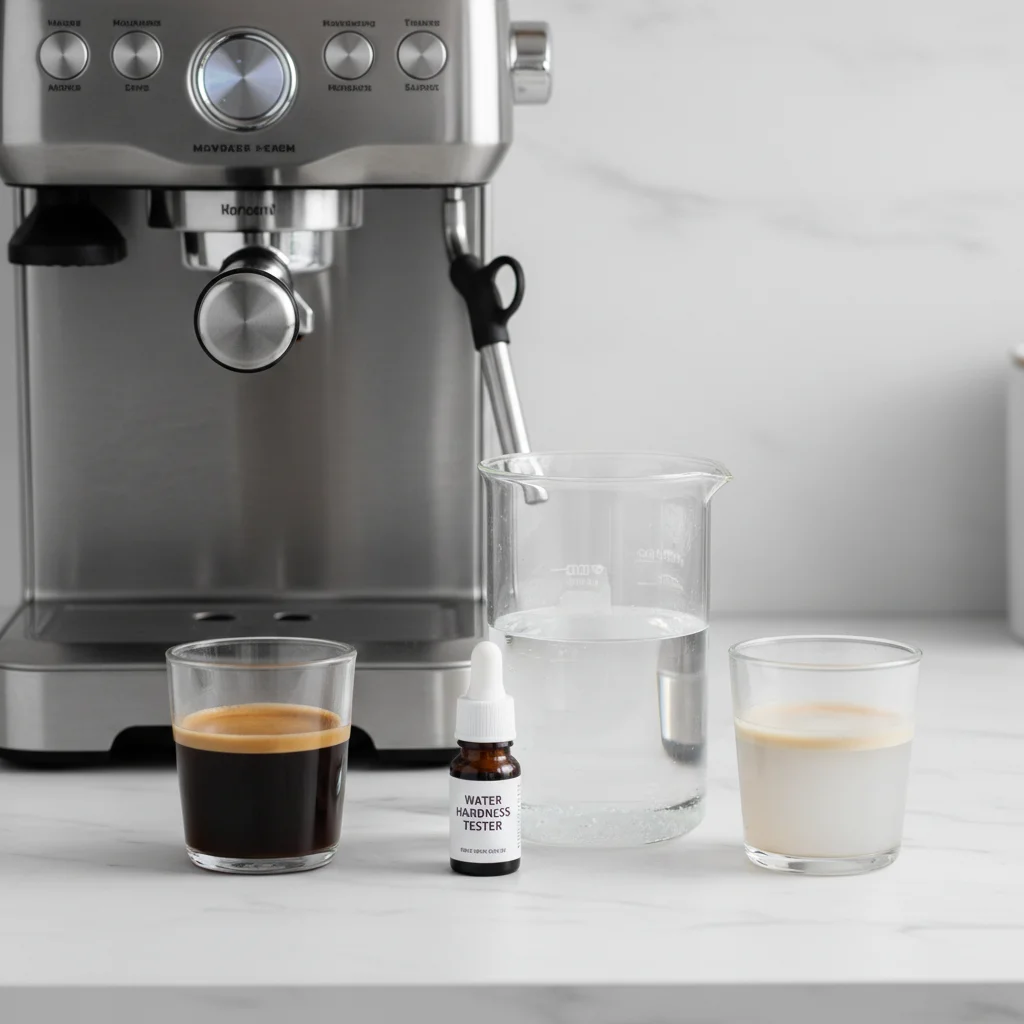
Espresso machine water hardness significantly impacts the taste of your espresso, primarily by affecting extraction and contributing to scale buildup. Specifically, water with a hardness level between 75-125 ppm (parts per million) is generally considered ideal for optimal flavor and machine longevity.
Understanding Water Hardness and Its Impact
Water hardness refers to the concentration of dissolved minerals, mainly calcium and magnesium. In espresso, these minerals play a crucial role in extracting soluble compounds from coffee grounds. Too soft water can lead to under-extraction, resulting in a sour or weak shot, as there aren’t enough minerals to bind with the coffee solids. Conversely, overly hard water can cause over-extraction, leading to bitter, chalky flavors and a dull crema. The ideal balance allows for a full-bodied, aromatic espresso with a rich, stable crema.
Beyond taste, hard water is the primary culprit behind limescale accumulation within your espresso machine. This scale can clog internal components, reduce heating efficiency, and ultimately shorten the lifespan of your machine. Regular testing and treatment of your water are essential for both flavor and maintenance.
Testing Your Water Hardness at Home
Determining your water hardness is the first step toward achieving better espresso. Several methods are available for home users. Simple test strips provide a quick, visual indication of hardness levels, typically showing results in ppm or grains per gallon (gpg). For more precise measurements, liquid test kits offer a titration method, allowing for a more accurate reading. You can also often find local water quality reports online from your municipal water provider, which will detail the average hardness of your tap water.
- Use a reliable water test strip for a quick assessment.
- Opt for a liquid titration kit for greater accuracy.
- Check your local water utility’s annual water quality report.
- Consider a professional water test if you suspect complex issues.
- Regularly re-test, especially if you notice changes in espresso taste.
Adjusting Water Hardness for Optimal Espresso
|
Our Picks for the Best Espresso Machine in 2026
As an Amazon Associate I earn from qualifying purchases.
|
||
| Num | Product | Action |
|---|---|---|
| 1 | Breville Barista Touch Espresso Machine BES880BSS, Brushed Stainless Steel |

|
| 2 | SHARDOR Espresso Machine 20 Bar, Professional Espresso Machine with Milk Frother and Touchscreen, Expresso Coffee Machines with Adjustable Temperature,for Cappuccino, Latte |
|
| 3 | 20Bar Espresso Machine, Compact Espresso Maker with Milk Frother, Stainless Steel Coffee Machine for Cappuccino&Latte, 42oz Water Tank, Visible Pressure Gauge, Home&Office, Silver |
|
| 4 | Espresso Machine, 20Bar Compact Stainless Espresso Maker, With Milk Frother Steam Wand, 57.5OZ Removable Water Tank, Displays Making Time & Water Temperature, Cold Brew & Cappuccino, Silver |
|
| 5 | Espresso Machine with Milk Frother, 20 Bar Pressure Espresso Maker, with 44OZ Removable Tank, Compact Stainless Steel Coffee Machine for Home, Office, Latte, Cappuccino, Gift for Women or Men |
|
| 6 | Chefman CraftBrew Espresso Machine, 15-Bar Pump Digital Espresso Maker w/Steam Wand for Latte & Cappuccino, Compact Espresso Coffee Machine w/ 1.5L Removable Water Reservoir - Stainless Black |
|
| 7 | Gevi Commercial Espresso and Coffee Makers, Professional 20 Bar Espresso Maker with Milk Frother, Stainless Steel Expresso Coffee Machines for Home, Compact Cappuccino Machine, Great Gift |
|
| 8 | Espresso Machine, 20 BAR Pump Temperature Control, Compact Espresso Maker with Steam Milk Frother, Professional Coffee Makers for Home, Cappuccino, Latte, Gifts for Coffee Lover, Black |
|
| 9 | 20 Bar Espresso Coffee Machine with LED Touch Screen, Espresso Maker with Self-Cleaning Function & Milk Frother, Compact Cappuccino & Latte Maker for Home and Office |
|
| 10 | Espresso Machine 20 Bar with Milk Frother, Stainless Steel Coffee Maker with 42 oz Removable Water Tank for Cappuccino, Latte&Cold Brew, Home&Office, Silver |
|
Once you know your water hardness, you can take steps to adjust it. For water that is too hard, filtration systems are the most common solution. Activated carbon filters can remove some minerals, but ion-exchange filters (like those found in many water pitchers or inline filters) are more effective at reducing hardness. Reverse osmosis (RO) systems provide the most significant reduction in minerals, often requiring re-mineralization to achieve the ideal hardness for espresso. For water that is too soft, adding specific mineral blends designed for coffee brewing can help achieve the desired balance.
The Role of Water Filters in Espresso Machines
Many home espresso machines come with or can accommodate internal water filters. These filters are designed to reduce impurities, chlorine, and often, some level of hardness. While convenient, it’s important to understand their limitations. Most internal filters are not designed to drastically alter very hard water; they primarily serve to maintain water quality and offer a moderate reduction in scale-forming minerals. For consistently hard water, an external filtration system or a dedicated water softener may be necessary to protect your machine and enhance flavor. Regular replacement of these filters is crucial for their effectiveness.
Long-Term Machine Health and Water Quality
Maintaining proper water hardness is not just about the taste of your daily shot; it’s fundamental to the longevity and performance of your espresso machine. Limescale buildup from hard water can lead to numerous problems, including reduced boiler efficiency, clogged group heads, and damaged pumps. These issues can result in costly repairs or even premature machine failure. By actively managing your water hardness through testing, filtration, and regular descaling, you ensure your machine operates at its best, producing delicious espresso for years to come.
Get our weekly buyer guide
Practical specs, not advice. Unsubscribe anytime.
