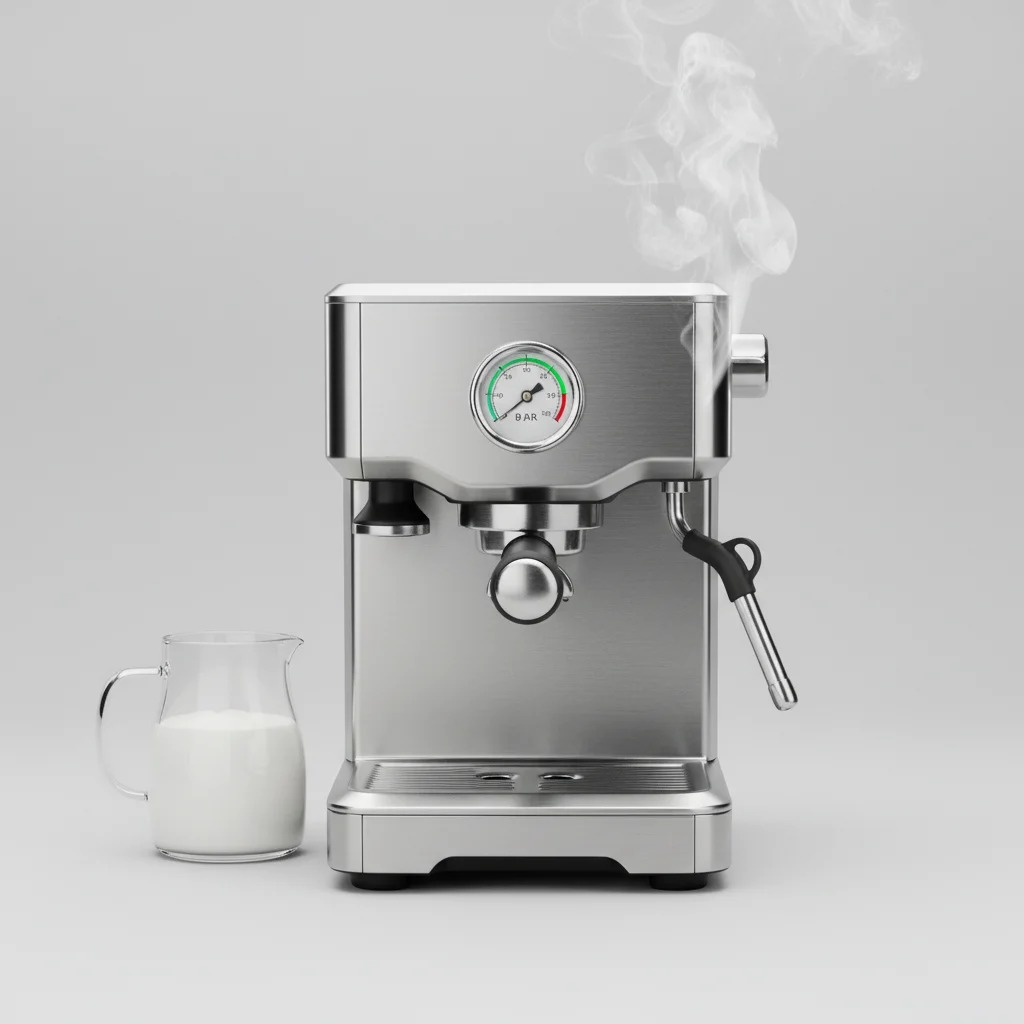
The ideal steam pressure for an espresso machine typically ranges between 1.0 and 1.5 bar. This range provides sufficient power for quickly and effectively steaming milk to create creamy microfoam, essential for lattes and cappuccinos. Achieving this specific pressure ensures proper aeration and heating without scalding the milk or taking too long.
Why Steam Pressure Matters for Milk Frothing
Steam pressure directly impacts the quality of your frothed milk. Too low a pressure will result in weak, watery steam that struggles to incorporate air into the milk, leading to flat, lifeless foam. Conversely, excessively high pressure can be difficult to control, potentially overheating the milk too quickly or creating large, undesirable bubbles. A consistent pressure within the 1.0-1.5 bar range allows for precise control, enabling baristas to stretch and texture milk to perfection. For compare top home espresso on this site.
Understanding and managing your machine’s steam pressure is a fundamental skill for any home barista aiming to replicate cafe-quality drinks. It’s not just about heating the milk; it’s about transforming its texture into a velvety, pourable microfoam that integrates beautifully with espresso.
How to Monitor and Adjust Steam Pressure
Most espresso machines with dedicated steam boilers will have a pressure gauge that displays the current steam pressure. This gauge is your primary tool for monitoring. While many home machines have fixed steam pressure settings, some prosumer and commercial models allow for adjustment. If your machine offers this feature, consult your user manual for specific instructions on how to modify the pressure. Often, this involves adjusting a pressurestat or PID controller setting.
For machines without adjustable pressure, consistency is key. Allow your machine to fully heat up and stabilize before steaming. This ensures the boiler has reached its optimal temperature and pressure.
Impact of Boiler Size on Steam Pressure
|
Our Picks for the Best Espresso Machine in 2026
As an Amazon Associate I earn from qualifying purchases.
|
||
| Num | Product | Action |
|---|---|---|
| 1 | SHARDOR Espresso Machine 20 Bar, Professional Espresso Machine with Milk Frother and Touchscreen, Expresso Coffee Machines with Adjustable Temperature,for Cappuccino, Latte |

|
| 2 | Chefman CraftBrew Espresso Machine, 15-Bar Pump Digital Espresso Maker w/Steam Wand for Latte & Cappuccino, Compact Espresso Coffee Machine w/ 1.5L Removable Water Reservoir - Stainless Black |
|
| 3 | Breville Barista Touch Espresso Machine BES880BSS, Brushed Stainless Steel |
|
| 4 | Espresso Machine, 20Bar Compact Stainless Espresso Maker, With Milk Frother Steam Wand, 57.5OZ Removable Water Tank, Displays Making Time & Water Temperature, Cold Brew & Cappuccino, Silver |
|
| 5 | Espresso Machine, 20 BAR Pump Temperature Control, Compact Espresso Maker with Steam Milk Frother, Professional Coffee Makers for Home, Cappuccino, Latte, Gifts for Coffee Lover, Black |
|
| 6 | 20 Bar Espresso Coffee Machine with LED Touch Screen, Espresso Maker with Self-Cleaning Function & Milk Frother, Compact Cappuccino & Latte Maker for Home and Office |
|
| 7 | 20Bar Espresso Machine, Compact Espresso Maker with Milk Frother, Stainless Steel Coffee Machine for Cappuccino&Latte, 42oz Water Tank, Visible Pressure Gauge, Home&Office, Silver |
|
| 8 | Gevi Commercial Espresso and Coffee Makers, Professional 20 Bar Espresso Maker with Milk Frother, Stainless Steel Expresso Coffee Machines for Home, Compact Cappuccino Machine, Great Gift |
|
| 9 | Espresso Machine 20 Bar with Milk Frother, Stainless Steel Coffee Maker with 42 oz Removable Water Tank for Cappuccino, Latte&Cold Brew, Home&Office, Silver |
|
| 10 | Espresso Machine with Milk Frother, 20 Bar Pressure Espresso Maker, with 44OZ Removable Tank, Compact Stainless Steel Coffee Machine for Home, Office, Latte, Cappuccino, Gift for Women or Men |
|
The size and type of your espresso machine’s boiler significantly influence its steam pressure capabilities. Single-boiler machines, which use the same boiler for brewing and steaming, often struggle to maintain consistent steam pressure as they switch between functions. Heat exchange (HX) machines offer better steam performance, but dual-boiler machines provide the most stable and powerful steam pressure because they have a dedicated boiler solely for steaming, allowing for simultaneous brewing and steaming without compromise.
Larger steam boilers generally offer more sustained steam power, which is beneficial when steaming larger quantities of milk or for multiple drinks in a row. This is a key consideration for those who frequently entertain or make several milk-based drinks daily.
Tips for Achieving Optimal Microfoam with Correct Pressure
- Always purge your steam wand briefly before steaming to clear any condensed water.
- Position the steam wand just below the surface of the milk to introduce air, then submerge it slightly to create a swirling vortex for texturing.
- Listen for a gentle tearing sound during the aeration phase, indicating proper air incorporation.
- Aim for a final milk temperature of 140-150°F (60-65°C) to preserve sweetness and avoid scalding.
- Clean your steam wand immediately after each use to prevent milk residue buildup.
Mastering steam pressure is a journey, but with practice and attention to detail, you’ll consistently produce delicious, perfectly textured milk for your espresso beverages.
Common Issues Related to Steam Pressure
If your espresso machine is producing weak steam, it could be due to several factors. A common culprit is a clogged steam wand tip, which can restrict flow. Regular cleaning is essential. Another issue might be insufficient boiler temperature; ensure your machine is fully heated. For machines with adjustable pressure, an incorrect pressurestat setting could be the cause. Conversely, if steam pressure is too high and uncontrollable, it might indicate a faulty pressure relief valve or a miscalibrated pressurestat. Addressing these issues promptly will restore your machine’s steaming performance and improve your milk frothing results.
Get our weekly buyer guide
Practical specs, not advice. Unsubscribe anytime.

This explained so much about why my milk was either too watery or had huge bubbles. I used to just blast it with steam, thinking more pressure was better. Understanding that consistent pressure within the 1.0-1.5 bar range is key for proper aeration has completely changed my technique. My flat whites are finally smooth and creamy!
My current machine struggles to maintain consistent pressure, often dipping below 1.0 bar, and it’s clear now why my milk foam is always so weak. It’s frustrating when you’re trying to make a decent latte and the steam just isn’t powerful enough. I appreciate knowing the ideal range, but it just highlights that I probably need to invest in a better quality machine soon.
I always struggled with getting good microfoam for my lattes, and I never really understood why. This guide on steam pressure was a game-changer! My old machine was definitely on the lower end, and upgrading to one that consistently hits the 1.0-1.5 bar range has made such a difference. My cappuccinos finally look and taste professional.
Great info here. I’ve been making espresso at home for years, and while I knew pressure was important, I didn’t realize the specific 1.0 to 1.5 bar range was so critical for milk steaming. I’ve been experimenting with my machine’s settings, and focusing on that range has definitely improved my milk texture. Still takes practice to get it perfect every time, but this gave me a solid target.