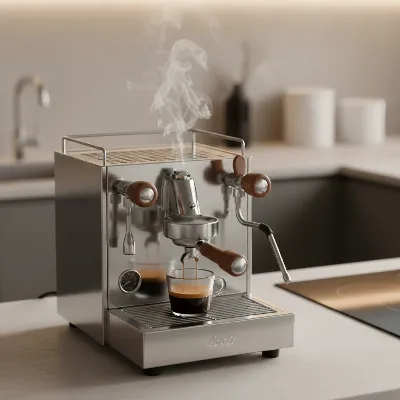
The allure of a perfectly crafted espresso, with its rich aroma and velvety crema, is undeniable. For many coffee aficionados, the dream of replicating that café experience at home is a powerful one. However, navigating the vast world of espresso machines can be daunting, with countless models promising to deliver barista-quality results. Whether you’re a beginner seeking convenience or a seasoned home barista craving ultimate control, choosing the right machine is key to unlocking your ideal coffee ritual. This comprehensive guide will explore everything you need to know about home espresso machines, from their fundamental types and essential features to a curated list of the top models expected to excel in 2026.
What is an Espresso Machine?
An espresso machine is a specialized coffee maker designed to brew concentrated coffee by forcing hot, pressurized water through finely-ground coffee beans. This process, typically involving 9 bars of pressure, extracts a small, potent shot known as espresso, characterized by its intense flavor and a distinctive reddish-brown foam layer called crema. The history of espresso machines dates back to the early 20th century in Italy, evolving from steam-powered behemoths to the sleek, sophisticated devices we see today.
At its core, an espresso machine comprises several key components working in harmony. The boiler or thermoblock heats the water to the optimal brewing temperature, typically between 195-205°F. A pump generates the necessary pressure, while the group head is where the hot water disperses over the coffee grounds. The portafilter, a handle with a basket, holds the ground coffee, which is then tamped down to create a compact “puck.” Many machines also feature a steam wand for frothing milk, essential for lattes and cappuccinos. The basic principle involves the pump pushing hot water through the tightly packed coffee, extracting soluble flavors and oils under high pressure in a short time, usually 20-30 seconds.
Types of Espresso Machines for Home
Espresso machines for home use come in various configurations, each offering a different balance of control, convenience, and cost. Understanding these types is crucial for making an informed decision that aligns with your skill level and daily routine.
Manual Espresso Machine
Manual espresso machines, often called lever machines, offer the most hands-on brewing experience. They require the user to physically pull a lever to generate the pressure needed for extraction. This means complete control over pre-infusion, pressure profiling, and water flow, allowing for unparalleled customization of each shot.
- Pros: Exceptional control over extraction variables, rewarding for purists, often beautiful craftsmanship.
- Cons: High skill requirement, inconsistent results without practice, generally slower to operate.
- Best For: Experienced home baristas, coffee enthusiasts who enjoy the craft, those prioritizing tactile feedback.
|
Our Picks for the Best Espresso Machine in 2026
As an Amazon Associate I earn from qualifying purchases.
|
||
| Num | Product | Action |
|---|---|---|
| 1 | Espresso Machine 20 Bar with Milk Frother, Stainless Steel Coffee Maker with 42 oz Removable Water Tank for Cappuccino, Latte&Cold Brew, Home&Office, Silver |

|
| 2 | Espresso Machine, 20 BAR Pump Temperature Control, Compact Espresso Maker with Steam Milk Frother, Professional Coffee Makers for Home, Cappuccino, Latte, Gifts for Coffee Lover, Black |
|
| 3 | 20 Bar Espresso Coffee Machine with LED Touch Screen, Espresso Maker with Self-Cleaning Function & Milk Frother, Compact Cappuccino & Latte Maker for Home and Office |
|
| 4 | 20Bar Espresso Machine, Compact Espresso Maker with Milk Frother, Stainless Steel Coffee Machine for Cappuccino&Latte, 42oz Water Tank, Visible Pressure Gauge, Home&Office, Silver |
|
| 5 | Gevi Commercial Espresso and Coffee Makers, Professional 20 Bar Espresso Maker with Milk Frother, Stainless Steel Expresso Coffee Machines for Home, Compact Cappuccino Machine, Great Gift |
|
| 6 | Espresso Machine, 20Bar Compact Stainless Espresso Maker, With Milk Frother Steam Wand, 57.5OZ Removable Water Tank, Displays Making Time & Water Temperature, Cold Brew & Cappuccino, Silver |
|
| 7 | SHARDOR Espresso Machine 20 Bar, Professional Espresso Machine with Milk Frother and Touchscreen, Expresso Coffee Machines with Adjustable Temperature,for Cappuccino, Latte |
|
| 8 | Breville Barista Touch Espresso Machine BES880BSS, Brushed Stainless Steel |
|
| 9 | Espresso Machine with Milk Frother, 20 Bar Pressure Espresso Maker, with 44OZ Removable Tank, Compact Stainless Steel Coffee Machine for Home, Office, Latte, Cappuccino, Gift for Women or Men |
|
| 10 | Chefman CraftBrew Espresso Machine, 15-Bar Pump Digital Espresso Maker w/Steam Wand for Latte & Cappuccino, Compact Espresso Coffee Machine w/ 1.5L Removable Water Reservoir - Stainless Black |
|
Semi-Automatic Espresso Machine
Semi-automatic machines are perhaps the most popular type for home users, striking a balance between manual control and automated convenience. They use an electric pump to generate pressure but give the user control over grinding, tamping, and manually starting and stopping the shot. Many modern semi-automatics include features like PID temperature control for stability.
- Pros: Good control over key brewing variables, consistent results with practice, wide range of models and price points, suitable for learning barista skills.
- Cons: Requires a separate grinder, a learning curve for technique.
- Best For: Serious home enthusiasts, those wanting to develop their barista skills, daily milk-based drink makers.
Automatic Espresso Machine
Automatic espresso machines take convenience a step further by automating the shot volume. After grinding and tamping (which the user still performs), you press a button, and the machine dispenses a pre-programmed amount of water, stopping automatically when the shot is complete.
- Pros: Consistent shot volume, user-friendly, good for busy mornings.
- Cons: Less control over extraction compared to semi-automatic, typically higher price than entry-level semi-automatics.
- Best For: Users prioritizing consistency and convenience over granular control, those who make standard espresso shots frequently.
Super-Automatic Espresso Machine
Super-automatic machines offer the ultimate in convenience, handling every step from bean to cup with the push of a button. They typically feature an integrated burr grinder, automatic tamping, and often automatic milk frothing systems.
- Pros: One-touch operation, minimal effort, consistent results, ideal for busy households.
- Cons: Least control over brewing variables, often the most expensive, complex internal cleaning, can be noisy.
- Best For: Beginners, busy individuals, offices, those who want minimal fuss and effort.
Capsule Espresso Machine
Capsule or pod espresso machines use pre-packaged coffee capsules for quick and easy brewing. These machines are known for their simplicity and consistency.
- Pros: Extremely easy to use, consistent results, fast heat-up, minimal cleaning.
- Cons: Limited coffee selection, higher cost per cup, environmental impact of capsules, generally lower quality espresso compared to bean-based machines.
- Best For: Casual coffee drinkers, those prioritizing speed and convenience, small spaces.
Boiler Systems: Single vs. Dual vs. Heat Exchanger
Beyond the core types, understanding boiler systems is vital:
- Single Boiler Dual Use (SBDU): One boiler for both brewing and steaming. Requires temperature surfing—waiting for the boiler to reach different temperatures for each task. Budget-friendly, but slower for milk drinks.
- Heat Exchanger (HX): One large boiler keeps water at steaming temperature, with a copper tube running through it to heat brew water on demand. Allows simultaneous brewing and steaming, faster workflow than SBDU.
- Dual Boiler (DB): Two separate boilers, one for brewing and one for steaming. Offers the most precise temperature control and allows simultaneous, perfectly regulated brewing and steaming without compromise. Generally found in higher-end semi-automatic or prosumer machines.
Comparison of Espresso Machine Types
| Feature | Manual | Semi-Automatic | Automatic | Super-Automatic | Capsule |
|---|---|---|---|---|---|
| Control Level | Very High | High | Medium | Low | Very Low |
| Complexity | High | Medium | Medium | Low | Very Low |
| Price Range | Medium | Low to High | Medium to High | High to Very High | Low to Medium |
| Maintenance | Medium | Medium | Medium | Low (daily), High (internal) | Very Low |
| Coffee Quality | Potentially Very High | High | Medium to High | Medium | Medium |
| Integrated Grinder | No | Rarely | Rarely | Yes | No |
| Milk Frothing | Manual wand (optional) | Manual wand | Manual/Auto wand | Automatic | Rarely |
Espresso Machine Buying Guide
Choosing the right espresso machine involves a careful assessment of your needs, budget, and desired level of involvement. Here’s a detailed guide to help you make the best choice.
Determine Your Usage Needs
Consider how often you’ll use the machine and what types of drinks you prefer.
- Home Use (Casual): If you make 1-2 espressos a day, primarily for straight shots or simple milk drinks, a compact semi-automatic or a user-friendly automatic might suffice.
- Home Use (Enthusiast): For multiple daily drinks, experimenting with beans, and a desire to master latte art, a higher-end semi-automatic with good temperature control and a robust steam wand is ideal.
- Home Use (Busy/Convenience): If speed and minimal effort are paramount, a super-automatic or capsule machine offers bean-to-cup convenience.
Set Your Budget
Espresso machine prices vary widely.
- Entry-level ($150-$400): Often single-boiler semi-automatics or basic automatics. Good for beginners, but may have limitations in steam power or consistency.
- Mid-range ($400-$800): Better build quality, improved temperature control (PID), more robust steam wands, and sometimes integrated grinders.
- High-end ($800-$1,500+): Prosumer-grade semi-automatics, often with dual boilers or heat exchangers, commercial-grade components, and advanced features for ultimate control and durability. Super-automatic machines typically start in this range.
Essential Features to Look For
- Steam Wand: If you enjoy milk-based drinks, a powerful steam wand that produces fine microfoam is essential. Manual wands offer more control for latte art, while some automatic models offer hands-free frothing.
- Integrated Grinder: An all-in-one machine saves counter space and ensures fresh grounds. However, a dedicated external grinder often offers better quality and consistency.
- Programmability: Features like programmable shot volumes, customizable brew temperatures, and pre-infusion settings can enhance your brewing experience and consistency.
- PID Temperature Control: This electronic system precisely regulates water temperature, crucial for consistent espresso extraction and avoiding bitter or sour shots.
- Water Reservoir Capacity: Larger reservoirs mean less frequent refilling, especially important if you make multiple drinks.
- Portafilter Size: Standard home machines typically use 51mm or 54mm portafilters, while prosumer models often adopt the commercial 58mm standard, offering more accessory options.
Brand Reputation
Researching reputable brands known for quality and customer support is vital. Brands like Breville, De’Longhi, Gaggia, Lelit, and Jura are consistently praised in the home espresso market.
Size and Design
Measure your counter space and consider the machine’s footprint. The design should also complement your kitchen aesthetic. Compact machines are great for smaller kitchens.
Warranty and Support
A good warranty and accessible customer support are invaluable, especially for more complex machines. Ensure parts and service are readily available.
> “The best espresso machine isn’t the most expensive one. It’s the one that fits your workflow, your budget, and your commitment to the craft.” – Espresso Aficionado
Top 10 Best Espresso Machines for Home Use in 2026
Here’s a curated list of top-performing espresso machines for home use, considering factors like ease of use, performance, durability, and innovation, reflecting trends and reviews for 2026.
1. Breville Bambino Plus
This compact semi-automatic machine is a perennial favorite for beginners and those with small kitchens. It boasts a 3-second heat-up time, automatic milk frothing, and consistent temperature and pressure, making real espresso accessible.
- Pros: Fast heat-up, automatic milk texturing, compact, easy to use, excellent value.
- Cons: Smaller water reservoir, less manual control than higher-end models, not designed for lifetime repairability.
- Ideal For: Beginners, busy routines, small kitchens.
2. Breville Barista Express
An all-in-one marvel, the Barista Express integrates a conical burr grinder and a semi-automatic espresso machine into one stainless steel body. It offers manual control over grind size and shot volume, making it a popular choice for aspiring home baristas.
- Pros: Integrated grinder, manual control, durable stainless steel build, good for learning.
- Cons: Grinder can be inconsistent, learning curve for dialing in shots, higher price.
- Ideal For: Those seeking an all-in-one setup, intermediate users ready to experiment.
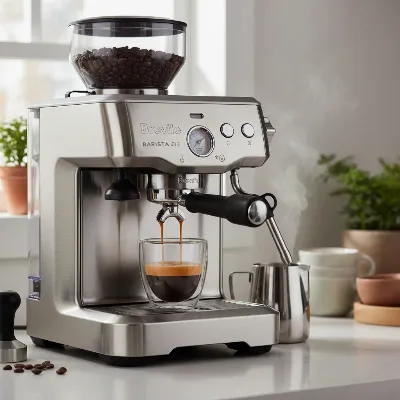 Breville Barista Express espresso machine with integrated grinder in a modern kitchen setting
3. De’Longhi Dedica Maestro Plus EC950.M
The Dedica Maestro Plus is lauded for its compact footprint and impressive performance for its price point. It offers automatic milk preparation, consistency, and a quick heat-up, making it a strong contender for those on a budget.
- Pros: Very slim design, fast heat-up, automatic milk options, consistent.
- Cons: Smaller portafilter (51mm), some plastic components.
- Ideal For: Small kitchens, budget-conscious buyers, beginners wanting an easy experience.
4. Sage (Breville) Barista Express™ Impress
Building on the success of the Barista Express, the Impress model adds intelligent dosing and assisted tamping, guiding users to a perfect puck every time. This semi-automatic machine is designed to reduce the learning curve significantly.
- Pros: Assisted tamping for consistency, integrated grinder, easy for beginners to get good results.
- Cons: Still a significant investment, grinder quality may not match dedicated external grinders.
- Ideal For: Beginners wanting precision and guidance, those seeking an all-in-one with smart features.
5. De’Longhi Dinamica Plus
This super-automatic machine is a “clear winner for busy mornings.” It offers bean-to-cup convenience with a wide range of customizable drinks at the touch of a button, including automatic milk frothing with LatteCrema technology.
- Pros: Fully automatic, extensive drink menu, automatic milk frothing, user-friendly touchscreen.
- Cons: High price, less control over extraction, complex internal cleaning.
- Ideal For: Ultimate convenience, busy households, those who prefer super-automatic simplicity.
6. Gaggia Classic Pro
A beloved entry-level prosumer machine, the Gaggia Classic Pro is known for its durable construction and ability to produce high-quality espresso. It’s a single boiler machine that, with practice, can yield excellent results.
- Pros: Robust build quality, high-quality espresso potential, easy to repair and modify, great for learning.
- Cons: Manual steam wand requires skill, no integrated grinder, temperature surfing needed for milk drinks.
- Ideal For: Aspiring home baristas who want to practice and upgrade, those seeking durability.
7. Lelit Mara X V2
The Mara X is a compact heat exchanger (HX) machine that brings prosumer-level performance to home kitchens. Its intelligent temperature management system provides excellent brew temperature stability, allowing simultaneous brewing and steaming.
- Pros: Excellent temperature stability (HX system), allows simultaneous brewing and steaming, compact prosumer design, quiet.
- Cons: Higher price point, requires a dedicated grinder, learning curve for HX machines.
- Ideal For: Enthusiasts wanting a prosumer experience without the bulk, frequent milk drink makers.
8. Lelit Victoria
For those wanting precise control in a smaller footprint without the dual boiler complexity, the Lelit Victoria is an excellent single-boiler, PID-controlled machine. It offers great temperature stability and a powerful steam wand.
- Pros: PID temperature control, powerful steam wand for a single boiler, compact, good control.
- Cons: Single boiler means “temperature surfing” for brewing and steaming (though fast), no integrated grinder.
- Ideal For: Home baristas primarily drinking straight espresso or occasional milk drinks, maximizing control for the size.
9. Lelit Bianca V3
Often considered a top-tier home espresso machine, the Bianca V3 is a dual boiler, E61 group head machine offering unparalleled control, including flow profiling with a paddle. It’s built for the ultimate home barista experience.
- Pros: Dual boiler, flow profiling, commercial-grade components, exceptional temperature stability, allows ultimate customization.
- Cons: Very high price, large footprint, significant learning curve.
- Ideal For: Advanced home baristas, those seeking ultimate control and performance, long-term investment.
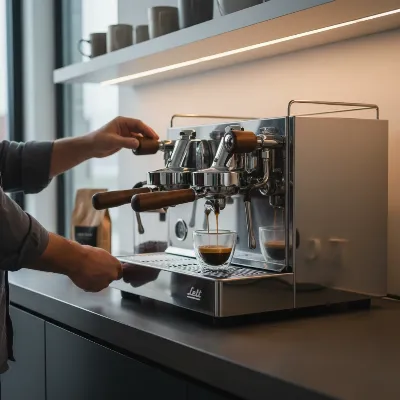 High-end Lelit Bianca V3 espresso machine in a sophisticated home coffee bar setup
10. Jura Z10
Representing the pinnacle of super-automatic innovation, the Jura Z10 offers exceptional beverage variety with its Cold Extraction Process for cold brew specialties. It features a Product Recognising Grinder (P.R.G.) and a wide array of programmable options.
- Pros: Very high convenience, wide range of hot and cold drinks, advanced grinding technology, premium design.
- Cons: Very expensive, fully automated means limited manual control, complex internal systems.
- Ideal For: Tech-savvy users, those prioritizing convenience and variety, luxury home coffee setup.
How to Use and Maintain Your Espresso Machine
Proper usage and maintenance are critical for both the quality of your espresso and the longevity of your machine. A well-maintained machine prevents bitter flavors, clogs, and costly repairs.
Correct Usage Tips
- Grind Fresh: Always use freshly roasted and freshly ground coffee beans. Espresso is highly sensitive to stale coffee, which results in weak and poor-tasting shots. Invest in a quality burr grinder if your machine doesn’t have one.
- Proper Tamping: Tamp your coffee grounds evenly and consistently with adequate pressure to create a uniform puck for optimal extraction.
- Pre-heat: Allow your machine to fully heat up before pulling a shot. Consistent temperature is crucial for flavor balance.
- Purge Steam Wand: Before and after steaming milk, purge the steam wand to remove any condensed water and milk residue.
Cleaning and Maintenance Schedule
-
Daily:
- Flush Group Head: After each shot, run hot water through the group head to rinse away loose coffee grounds and oils.
- Clean Portafilter & Basket: Rinse and brush to clear coffee oils and fines.
- Wipe & Purge Steam Wand: Immediately wipe the steam wand with a dedicated damp cloth after each use and purge a short burst of steam to clear milk residue.
- Empty Drip Tray & Water Tank: Prevents mold and stale odors.
- Wipe Exterior: Keep the machine looking clean and professional.
-
Weekly/Bi-Weekly:
- Backflush (if supported): Use a blind filter and espresso machine detergent to backflush the group head, clearing internal oils and residues.
- Soak Parts: Soak portafilters, baskets, and shower screens in a cleaning solution, then rinse thoroughly.
- Clean Grinder: Use a brush or grinder cleaning pellets to remove coffee oils and fines from your grinder.
- Check Water Quality: Use filtered water to minimize scale buildup.
-
Bi-Annual/Annual:
- Descaling: Remove mineral scale buildup using a manufacturer-approved descaling solution. Follow instructions carefully, as incorrect descaling can damage components. This is essential for heating element efficiency.
- Replace Gaskets & Seals: Inspect and replace worn-out group head gaskets and portafilter seals to prevent leaks.
Common Issues and Troubleshooting
- Weak or Sour Espresso: Often due to too coarse a grind, insufficient dose, or low brew temperature. Adjust grind finer, increase dose, or allow machine to heat up longer.
- Bitter or Burnt Espresso: Can be caused by too fine a grind, excessive dose, or high brew temperature. Adjust grind coarser, reduce dose, or ensure machine isn’t overheating.
- No Crema: Usually indicates stale coffee, incorrect grind, or insufficient pressure. Use fresh beans, adjust grind, and ensure machine is functioning correctly.
- Steam Wand Blocked: Almost always due to dried milk residue. Regularly wipe and purge the wand. If blocked, soak the tip in a cleaning solution.
Essential Accessories for Your Espresso Machine
While your espresso machine is the star, a few key accessories can significantly enhance your brewing workflow and the quality of your final cup.
- Tamper: A high-quality tamper is crucial for compressing coffee grounds evenly into a dense puck, essential for consistent extraction. Look for one with a comfortable grip and the correct diameter for your portafilter.
- Milk Pitcher: If you make milk drinks, a stainless steel milk frothing pitcher is a must. Various sizes are available, and those with a pointed spout are ideal for latte art.
- Knock Box: This allows for easy and clean disposal of spent coffee pucks from your portafilter, keeping your workspace tidy.
- Coffee Scale: Precision is key in espresso. A scale helps you accurately measure your coffee dose (in grams) and the espresso yield for consistent results.
- WDT (Weiss Distribution Technique) Tool: A tool with thin needles used to break up clumps in the coffee grounds before tamping, ensuring an even distribution and preventing channeling.
- Puck Screen: Placed on top of the coffee puck before brewing, a puck screen helps distribute water more evenly and keeps the group head cleaner.
- Dosing Funnel: A funnel that sits on your portafilter to prevent coffee grounds from spilling during grinding and distribution, maintaining a clean counter.
- Tamping Mat: Protects your countertops from scratches and provides a non-slip surface for stable tamping.
- Cleaning Brushes & Detergents: Specialized brushes for the group head and cleaning powders/tablets for backflushing and soaking parts are essential for hygiene and maintenance.
Conclusion
Embarking on the journey of home espresso making is a rewarding experience that blends science, art, and daily ritual. The market for home espresso machines in 2026 offers an incredible array of choices, from accessible beginner models like the Breville Bambino Plus to advanced prosumer systems such as the Lelit Bianca V3 and super-automatics like the Jura Z10. By understanding the different types of machines, prioritizing features that align with your lifestyle, and committing to proper usage and maintenance, you can consistently pull delicious shots and enjoy café-quality beverages from the comfort of your kitchen.
What kind of espresso adventures are you hoping to create in your home?
Frequently Asked Questions
What is the ideal pressure for brewing espresso?
The generally accepted ideal pressure for brewing espresso is around 9 bars. While some machines advertise higher pressures (e.g., 15 or 20 bars), this often refers to the pump’s maximum capability, not the actual pressure applied to the coffee puck during extraction, which should ideally be around 9 bars for optimal flavor.
How important is the grinder for home espresso?
The grinder is arguably as important as the Espresso Machine itself, if not more so. A high-quality burr grinder that can produce a consistent, fine grind is essential for proper espresso extraction. Inconsistent grind size leads to uneven extraction, resulting in weak, sour, or bitter espresso.
Can I make good espresso with pre-ground coffee?
While you can use pre-ground coffee, it is generally not recommended for optimal espresso quality. Coffee oxidizes rapidly after grinding, causing aromatic compounds to dissipate. For the best flavor and crema, grinding fresh beans immediately before extraction is crucial.
How often should I descale my espresso machine?
The frequency of descaling depends on your water hardness and machine usage. Generally, it’s recommended to descale every 1-3 months. Using filtered water can significantly reduce mineral buildup and extend the time between descaling cycles, but regular descaling is vital for the machine’s longevity and performance.