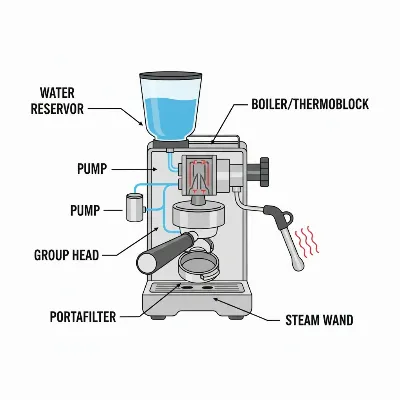
For many coffee lovers, the daily ritual of brewing a perfect espresso is a cherished moment. That rich aroma, the creamy crema, and the robust flavor are all testament to a well-loved machine. Yet, a silent saboteur lurks within every espresso maker, gradually undermining its performance and diminishing your coffee’s taste: limescale. Understanding how to safely descale your espresso machine at home is not just about maintenance; it’s about preserving your investment and ensuring every cup continues to deliver that exceptional experience.
What is Espresso Machine Descaling?
At its core, an espresso machine works by heating water and forcing it through finely ground coffee. The water we use, especially hard water, contains dissolved minerals like calcium and magnesium. Over time, as this water is heated, these minerals solidify and cling to the internal components of your machine, forming what is known as “limescale” or “mineral buildup.” This chalky deposit is the same substance you might see in an old kettle.
Descaling is the critical process of removing this limescale using an acidic solution. Why is it so crucial? Limescale acts as an insulator, making your machine’s heating element work harder and less efficiently to reach the optimal brewing temperature. This can lead to lukewarm coffee, reduced steam pressure, and inconsistent extraction, resulting in a sour or bland taste. Furthermore, unchecked limescale can clog water pathways, leading to slower water flow, strange noises, and eventually, costly damage to your machine’s internal parts, including pumps and boilers. Regular descaling extends the lifespan of your machine, maintains optimal performance, and ensures the continued excellence of your espresso.
Understanding Descaling Solutions
Choosing the right descaling solution is paramount for both effectiveness and the safety of your espresso machine. While commercial descalers are widely available, many home users opt for DIY alternatives.
Commercial Descalers
|
Our Picks for the Best Espresso Machine in 2026
As an Amazon Associate I earn from qualifying purchases.
|
||
| Num | Product | Action |
|---|---|---|
| 1 | Espresso Machine, 20Bar Compact Stainless Espresso Maker, With Milk Frother Steam Wand, 57.5OZ Removable Water Tank, Displays Making Time & Water Temperature, Cold Brew & Cappuccino, Silver |

|
| 2 | Espresso Machine with Milk Frother, 20 Bar Pressure Espresso Maker, with 44OZ Removable Tank, Compact Stainless Steel Coffee Machine for Home, Office, Latte, Cappuccino, Gift for Women or Men |
|
| 3 | Chefman CraftBrew Espresso Machine, 15-Bar Pump Digital Espresso Maker w/Steam Wand for Latte & Cappuccino, Compact Espresso Coffee Machine w/ 1.5L Removable Water Reservoir - Stainless Black |
|
| 4 | Breville Barista Touch Espresso Machine BES880BSS, Brushed Stainless Steel |
|
| 5 | Gevi Commercial Espresso and Coffee Makers, Professional 20 Bar Espresso Maker with Milk Frother, Stainless Steel Expresso Coffee Machines for Home, Compact Cappuccino Machine, Great Gift |
|
| 6 | 20Bar Espresso Machine, Compact Espresso Maker with Milk Frother, Stainless Steel Coffee Machine for Cappuccino&Latte, 42oz Water Tank, Visible Pressure Gauge, Home&Office, Silver |
|
| 7 | Espresso Machine 20 Bar with Milk Frother, Stainless Steel Coffee Maker with 42 oz Removable Water Tank for Cappuccino, Latte&Cold Brew, Home&Office, Silver |
|
| 8 | Espresso Machine, 20 BAR Pump Temperature Control, Compact Espresso Maker with Steam Milk Frother, Professional Coffee Makers for Home, Cappuccino, Latte, Gifts for Coffee Lover, Black |
|
| 9 | SHARDOR Espresso Machine 20 Bar, Professional Espresso Machine with Milk Frother and Touchscreen, Expresso Coffee Machines with Adjustable Temperature,for Cappuccino, Latte |
|
| 10 | 20 Bar Espresso Coffee Machine with LED Touch Screen, Espresso Maker with Self-Cleaning Function & Milk Frother, Compact Cappuccino & Latte Maker for Home and Office |
|
Many espresso machine manufacturers produce their own descaling solutions or recommend specific universal descalers. These products are typically formulated with acids like citric acid or lactic acid, designed to be effective against limescale without harming the machine’s internal components. They often come with precise instructions for dilution and use, making them a convenient and generally safe choice, especially for machines still under warranty. Always check your machine’s manual for recommended descalers.
DIY Options
For those preferring a more natural approach, several common household acids can be used, though with varying degrees of effectiveness and safety concerns.
-
Citric Acid: This is a popular and highly recommended DIY descaling agent. Found naturally in citrus fruits, citric acid is effective at breaking down limescale, is food-grade, environmentally friendly, and significantly less odorous than vinegar. It’s generally safer for most internal machine materials, posing less risk of corrosion than harsher acids. For a DIY solution, a common dilution is one tablespoon of citric acid powder per liter of water.
-
White Vinegar (Acetic Acid): White vinegar is a readily available and inexpensive option. While it is effective at dissolving limescale, it comes with significant drawbacks. Its strong acetic acid content can be harsh and corrosive to certain internal components, particularly aluminum parts found in some espresso machines, potentially leading to damage and voiding warranties. Additionally, vinegar leaves a strong, lingering odor that requires extensive rinsing to eliminate completely, often impacting the taste of subsequent espresso shots. Many manufacturers explicitly advise against using vinegar for descaling.
-
Lemon Juice: Similar to citric acid powder, lemon juice contains citric acid and can be used as a mild descaler. It’s easily accessible and has a more pleasant scent than vinegar. However, it may not be as potent for heavy scale buildup and requires proper dilution (e.g., equal parts lemon juice and water) and thorough rinsing.
Descaling Solution Comparison
| Feature | Commercial Descaler | Citric Acid Powder | White Vinegar (Acetic Acid) |
|---|---|---|---|
| Effectiveness | Very High | High | High |
| Safety for Machine | High (machine-specific) | High | Low (can be corrosive) |
| Odor | Low | Low (mild citrus) | High (strong, lingering) |
| Cost | Moderate to High | Low | Very Low |
| Availability | Online, specialty stores | Grocery, online, health stores | Grocery stores |
| Manufacturer Recommended | Often | Sometimes | Rarely (often discouraged) |
> “While household acids can be effective, always prioritize solutions recommended by your espresso machine’s manufacturer to ensure compatibility and avoid potential damage.” – Renee Anderson, Espresso Machine Technician, reviewrenee.com
Descaling Frequency and Best Practices
How often you need to descale your espresso machine largely depends on two main factors: the hardness of your water and how frequently you use the machine. Hard water, rich in minerals, will lead to faster limescale buildup than soft water.
For most home espresso machines used daily:
- Hard Water Areas (over 300 ppm TDS): Consider descaling every 4-6 weeks, or at least every 2-3 months.
- Moderate Water Areas (150-300 ppm TDS): Descale every 6-8 weeks, or quarterly (every 3 months).
- Soft Water Areas (under 150 ppm TDS): You might extend descaling to every 10-12 weeks, or every 3-4 months.
If you use your machine only occasionally (2-3 times per week), you can generally extend these intervals by 50-75%. However, consistency is key; neglecting descaling for too long, even with soft water, can lead to stubborn buildup that’s harder to remove.
To significantly reduce limescale formation, consider using filtered water or bottled soft mineral water in your machine. Water filters can remove some of the minerals responsible for scale, slowing down the buildup process and extending the time between descaling cycles. Even with filtered water, descaling remains a necessary part of your machine’s maintenance routine.
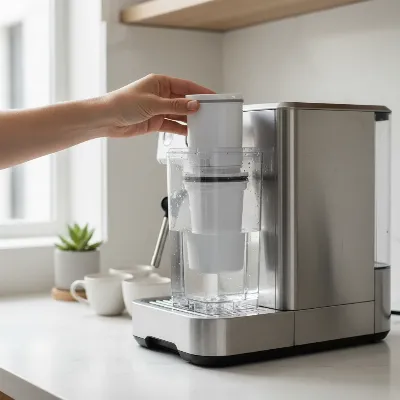 A person preparing an espresso machine for descaling, removing a water filter from the reservoir
Step-by-Step DIY Descaling Process
Descaling your espresso machine at home is a straightforward process, but thoroughness is key. Always consult your machine’s user manual first, as some models have specific descaling instructions or automated cycles.
-
Prepare the Machine:
- Ensure the machine is cool and turned off.
- Remove any water filters from the water tank; descaling solutions can damage them.
- Empty and clean the drip tray and any spent coffee grounds from the portafilter or brew basket.
-
Prepare the Descaling Solution:
- For commercial descalers, follow the manufacturer’s instructions for dilution with water.
- For citric acid, mix one tablespoon of citric acid powder with one liter of warm water until fully dissolved. Avoid using vinegar due to potential damage and lingering odor.
-
Fill the Water Reservoir:
- Carefully pour the prepared descaling solution into the machine’s empty water reservoir.
-
Initiate the Descaling Cycle:
- For machines with an automatic descaling program: Follow your machine’s manual to start the descaling cycle. This will typically guide the machine through dispensing the solution at intervals.
- For manual or semi-automatic machines:
- Place a large heat-resistant container under the group head (where coffee normally dispenses) and another under the steam wand/hot water spout.
- Turn the machine on and let it heat up to operational temperature.
- Run about half of the descaling solution through the group head by pressing the brew button (without any coffee in the portafilter).
- Open the steam valve or hot water tap and dispense the remaining solution through the steam wand/hot water spout until the reservoir is nearly empty.
-
Soak (If Applicable):
- After running the solution, turn the machine off and let it sit for about 20-30 minutes. This “soaking” period allows the acidic solution to further break down stubborn limescale deposits inside the boiler and pipes.
-
Thorough Rinsing (Crucial Step!):
- This is the most important part to prevent any residual descaler taste or chemical residue.
- Empty and thoroughly rinse the water tank with clean, fresh water.
- Fill the reservoir completely with clean, cold water.
- Place large containers under the group head and steam wand.
- Turn the machine on and let it heat up.
- Run the entire tank of clean water through the machine, alternating between the group head and the steam wand, until the tank is empty.
- Repeat this rinsing process at least two to three more times with fresh tanks of clean water to ensure all descaling solution and loosened scale particles are completely flushed out.
-
Post-Descaling Tips:
- After the final rinse, wash the portafilter, filter basket, and group head thoroughly with warm, soapy water.
- Consider pulling a “sacrificial shot” using some old coffee grounds. This helps re-season the machine and ensures any lingering taste is flushed out before brewing your next perfect espresso.
- Wipe down the exterior of the machine with a damp cloth.
Essential Tools and Supplies for Descaling
Having the right tools on hand makes the descaling process efficient and safe.
- Descaling Solution: Whether you choose a commercial descaler specifically designed for espresso machines or food-grade citric acid powder, ensure you have enough for your machine’s capacity.
- Large Heat-Resistant Containers: You’ll need at least two containers to catch the descaling solution and rinse water from the group head and steam wand/hot water spout. Bowls or pitchers work well.
- Clean Cloths/Sponges: For wiping down the machine and cleaning removable parts.
- Your Machine’s Manual: Always the most critical “tool” for specific instructions.
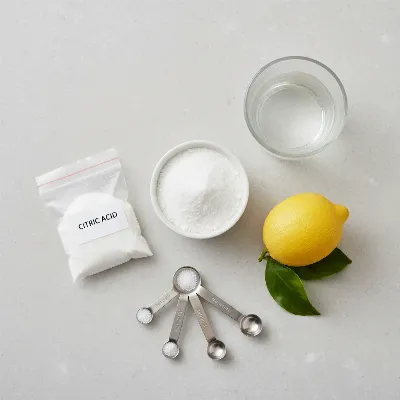 Various DIY descaling solutions including citric acid powder and measuring spoons on a kitchen counter
Troubleshooting Common Descaling Issues
Even with careful execution, you might encounter a few minor issues.
- Lingering Taste or Smell: If your espresso still tastes off or has a faint chemical smell after descaling, it’s a sign that the rinsing phase wasn’t thorough enough. Repeat the rinsing process with multiple tanks of clean water until the taste and smell are completely gone. A sacrificial shot can also help clear any final residue.
- Weak Water Flow Post-Descale: This could indicate that some larger scale particles broke loose but didn’t flush out, causing a minor clog. Repeating the descaling and rinsing process might help, focusing on slowly running water through affected areas. If the problem persists, it may require professional inspection.
- Machine Not Turning On: Ensure all removable parts are correctly reinstalled, and the water reservoir is properly seated. Check the power connection. If the machine remains unresponsive, consult your manual for troubleshooting or contact customer support.
Conclusion
Descaling your espresso machine is an indispensable part of its maintenance, ensuring not only its longevity but also the consistent quality of your beloved coffee. By understanding the importance of removing limescale, choosing appropriate descaling solutions like citric acid, and following a methodical step-by-step process, you empower yourself to keep your machine in peak condition. This DIY guide offers a pathway to safely and effectively maintaining your espresso maker, allowing you to continue savoring every rich, aromatic cup. So, isn’t it time you gave your Espresso Machine the care it deserves?
Frequently Asked Questions
How often should I descale my home espresso machine?
The frequency depends on your water hardness and how often you use the machine. For daily use, consider descaling every 6-12 weeks. If you live in a hard water area, aim for every 4-6 weeks, while soft water areas might allow for 10-12 weeks between descales.
Can I use vinegar to descale my espresso machine?
While vinegar can dissolve limescale, it is generally not recommended. Its acetic acid can be corrosive to internal machine parts, particularly aluminum, and it leaves a strong, lingering odor that is difficult to rinse out and can affect coffee taste. Citric acid is a safer and more effective DIY alternative.
What are the signs that my espresso machine needs descaling?
Common signs include slower water flow, reduced steam pressure, the machine taking longer to heat up, unusual noises during operation, or a noticeable change in your coffee’s taste (e.g., more bitter or sour). You might also see visible white, chalky buildup on removable parts.