The aroma of freshly brewed espresso, the rich crema, and the velvety microfoam of a perfectly steamed latte – these are the hallmarks of a truly exceptional coffee experience. Owning an espresso machine transforms your daily ritual, bringing the café experience right into your home. However, this sophisticated piece of equipment demands consistent care to deliver peak performance and extend its lifespan. Neglecting maintenance not only compromises the taste of your beloved brew but can also lead to costly repairs down the line. This comprehensive guide will walk you through everything you need to know about your espresso machine, from understanding its inner workings and choosing the right model to mastering essential maintenance practices that ensure every shot is as perfect as the first.
Understanding Your Espresso Machine: A Comprehensive Overview
At its core, an espresso machine is designed to force hot, pressurized water through finely-ground coffee to extract a concentrated, flavorful shot. This process, perfected over a century ago, relies on a delicate balance of temperature, pressure, and precision.
The journey of an espresso machine began in the early 20th century, evolving from steam-driven devices to the sophisticated pump-driven systems we use today. The goal has always been consistent: to rapidly produce a small, intense coffee drink topped with a beautiful, reddish-brown crema.
Key components work in harmony to achieve this:
- Boiler System: Heats water to the precise brewing temperature (typically 195-205°F or 90-96°C) and often generates steam for milk frothing. Single boiler machines use one boiler for both, requiring a temperature switch, while dual boiler systems offer dedicated boilers for simultaneous brewing and steaming.
- Pump: Generates the high pressure (around 9 bars) needed to push water through the compacted coffee grounds.
- Group Head: The component through which hot water flows into the portafilter and extracts the espresso. It’s crucial for temperature stability.
- Portafilter: A handle with a basket that holds the ground coffee. It locks into the group head.
- Steam Wand: A nozzle used to steam and froth milk for lattes and cappuccinos.
- Drip Tray: Collects excess water and spent coffee, needing regular emptying and cleaning.
- Water Reservoir: Holds the water supply for the machine. Using filtered water is paramount for both taste and preventing scale buildup.
The basic operating principle involves the pump drawing water from the reservoir, heating it in the boiler, and then forcing it through the group head into the portafilter at high pressure. This rapid, high-pressure extraction is what defines espresso, creating its characteristic intensity and rich crema.
Exploring Common Espresso Machine Types
The world of espresso machines offers a diverse range of options, each catering to different skill levels, preferences, and budgets. Understanding the distinctions between these types is crucial when selecting the ideal machine for your needs.
Manual Espresso Machine (Lever Espresso Machine)
Manual lever machines are the most traditional, offering complete hands-on control over every aspect of the brewing process. The barista physically pulls a lever to build and apply pressure, pushing hot water through the coffee grounds.
- Pros: Unmatched control over pressure and extraction time, allowing for highly customized shots and a deep understanding of the craft. Offers a deeply traditional and engaging brewing experience.
- Cons: Features a steep learning curve, requiring significant practice and skill to achieve consistent results. Less convenient for quick drinks.
- Best Suited For: Coffee purists and enthusiasts who enjoy the ritual and challenge of manual brewing and seek ultimate control over their espresso.
|
Our Picks for the Best Espresso Machine in 2026
As an Amazon Associate I earn from qualifying purchases.
|
||
| Num | Product | Action |
|---|---|---|
| 1 | Espresso Machine 20 Bar with Milk Frother, Stainless Steel Coffee Maker with 42 oz Removable Water Tank for Cappuccino, Latte&Cold Brew, Home&Office, Silver |

|
| 2 | SHARDOR Espresso Machine 20 Bar, Professional Espresso Machine with Milk Frother and Touchscreen, Expresso Coffee Machines with Adjustable Temperature,for Cappuccino, Latte |
|
| 3 | Espresso Machine with Milk Frother, 20 Bar Pressure Espresso Maker, with 44OZ Removable Tank, Compact Stainless Steel Coffee Machine for Home, Office, Latte, Cappuccino, Gift for Women or Men |
|
| 4 | Espresso Machine, 20Bar Compact Stainless Espresso Maker, With Milk Frother Steam Wand, 57.5OZ Removable Water Tank, Displays Making Time & Water Temperature, Cold Brew & Cappuccino, Silver |
|
| 5 | Gevi Commercial Espresso and Coffee Makers, Professional 20 Bar Espresso Maker with Milk Frother, Stainless Steel Expresso Coffee Machines for Home, Compact Cappuccino Machine, Great Gift |
|
| 6 | Breville Barista Touch Espresso Machine BES880BSS, Brushed Stainless Steel |
|
| 7 | Espresso Machine, 20 BAR Pump Temperature Control, Compact Espresso Maker with Steam Milk Frother, Professional Coffee Makers for Home, Cappuccino, Latte, Gifts for Coffee Lover, Black |
|
| 8 | Chefman CraftBrew Espresso Machine, 15-Bar Pump Digital Espresso Maker w/Steam Wand for Latte & Cappuccino, Compact Espresso Coffee Machine w/ 1.5L Removable Water Reservoir - Stainless Black |
|
| 9 | 20Bar Espresso Machine, Compact Espresso Maker with Milk Frother, Stainless Steel Coffee Machine for Cappuccino&Latte, 42oz Water Tank, Visible Pressure Gauge, Home&Office, Silver |
|
| 10 | 20 Bar Espresso Coffee Machine with LED Touch Screen, Espresso Maker with Self-Cleaning Function & Milk Frother, Compact Cappuccino & Latte Maker for Home and Office |
|
Semi-Automatic Espresso Machine
Semi-automatic machines strike a popular balance between manual control and automated convenience. Users grind and tamp the coffee, then initiate and stop the brewing process, while the machine handles water temperature and pressure regulation.
- Pros: Provides a good level of control for developing barista skills without being overly complex. Offers consistent brewing temperature and pressure.
- Cons: Still requires some manual effort and skill in grinding, dosing, and tamping to achieve optimal results.
- Best Suited For: Home baristas who want to actively participate in the espresso-making process and fine-tune their shots, blending precision with ease of use.
Automatic Espresso Machine
Automatic espresso machines take the guesswork out of shot timing. They operate similarly to semi-automatics but include a built-in flow meter that measures the exact amount of water for each shot, automatically stopping extraction once the programmed volume is reached.
- Pros: Offers consistency with a single button press, minimal user intervention needed for shot volume, and precise temperature control.
- Cons: Provides less control over extraction variables compared to semi-automatic machines.
- Best Suited For: Busy households or smaller commercial settings that prioritize consistent quality and convenience without needing extensive barista skills.
Super-Automatic Espresso Machine
Super-automatic machines are the epitome of convenience, automating nearly every step of the espresso-making process from bean to cup. They typically feature integrated grinders, automatic dosing, tamping, brewing, and often automatic milk frothing.
- Pros: Effortless, one-touch operation, integrated grinding, automatic milk frothing, and programmable drink settings. Delivers high-quality drinks with minimal user effort.
- Cons: Generally the most expensive category, offers the least control over individual brewing variables, and can be more complex to maintain due to internal mechanics.
- Best Suited For: Users seeking luxury, ultimate convenience, and café-quality drinks at home or in an office environment with minimal manual involvement.
Capsule Espresso Machine (Pod Espresso Machine)
Capsule or pod machines prioritize speed and simplicity. They use pre-packaged, single-serving coffee capsules or pods, eliminating the need for grinding, measuring, or tamping.
- Pros: Quick preparation time, consistent brewing quality, easy cleanup, and a wide variety of flavor options. Requires no specialized barista skills.
- Cons: Limited to proprietary capsules, which can be more expensive per serving, and offer virtually no control over extraction variables. Flavor choices are restricted to available pods.
- Best Suited For: Individuals who value speed, convenience, and consistent results above customization and the hands-on brewing experience.
Comparison of Espresso Machine Types
| Feature | Manual | Semi-Automatic | Automatic | Super-Automatic | Capsule |
|---|---|---|---|---|---|
| Control Level | Very High | Medium | Low | Very Low | Very Low |
| Complexity | High | Medium | Medium | Low | Very Low |
| Price Range | Medium | Medium | High | Very High | Low |
| Maintenance | Medium | Medium | Medium | Easy | Easy |
| Coffee Quality | Potentially Very High | High | Good | Good | Consistent |
| Effort | High | Medium | Low | Very Low | Very Low |
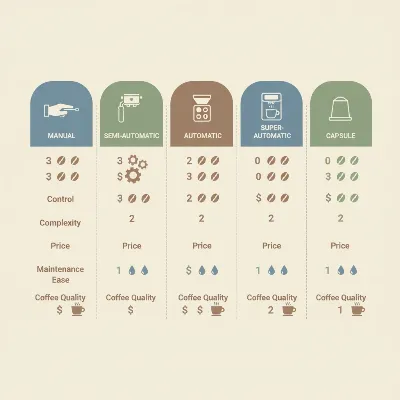 A clean, modern infographic comparing different types of espresso machines (Manual, Semi-Automatic, Automatic, Super-Automatic, Capsule) with icons for control, complexity, price, maintenance, and coffee quality. The background is light and inviting, with a subtle coffee theme.
Your Guide to Buying the Perfect Espresso Machine
Choosing a new espresso machine is an exciting endeavor, but with countless models and features, it can also feel overwhelming. A thoughtful approach ensures you invest in a machine that perfectly complements your lifestyle and coffee preferences.
1. Define Your Usage Needs
Consider who will be using the machine and how often.
- Home Use: For a single user or a small family, a compact semi-automatic or automatic machine might suffice. If you’re hosting frequently, a dual boiler or a super-automatic might be better for speed.
- Office Use: Durability, ease of use, and quick turn-around for multiple users are key. Super-automatic machines are often ideal here.
- Café/Commercial Use: Requires robust, high-volume machines with multiple group heads and excellent temperature stability, designed for continuous operation.
2. Set Your Budget
Espresso machines range widely in price, from a few hundred dollars to several thousand.
- Entry-Level ($200-$300): Often compact and beginner-friendly, prioritizing convenience. Expect lighter internal components and less repairability. Good examples include some De’Longhi Dedica models.
- Mid-Range ($400-$700): Offers improved consistency, better materials, and sometimes built-in grinders. The Breville Barista Express often falls into this category.
- Enthusiast/Prosumer ($700+): Focuses on durability, commercial-grade components (like brass boilers), and advanced control features (e.g., PID temperature control, dual boilers). Machines like the Gaggia Classic Pro or Rancilio Silvia are popular here.
Remember to allocate part of your budget for a good grinder if your chosen machine doesn’t have one integrated. A high-quality grinder is as crucial as the machine itself for excellent espresso.
3. Identify Essential Features
Consider which functionalities are non-negotiable for your brewing style:
- Steam Wand: If you love milk-based drinks, a powerful and controllable steam wand is essential. Manual wands offer more control for latte art, while some machines provide automatic frothing.
- Integrated Grinder: A built-in burr grinder simplifies your setup and ensures fresh grounds, but it can also add mechanical complexity and limit advanced grind precision.
- Boiler Configuration:
- Single Boiler: More affordable, but requires a wait time between brewing espresso and steaming milk as the temperature adjusts.
- Dual Boiler/Heat Exchange: Allows simultaneous brewing and steaming, significantly improving workflow and temperature consistency, especially for multiple milk drinks.
- Programmable Settings: Features like programmable shot volumes, temperature control (PID), and pre-infusion can enhance consistency and allow for experimentation.
- Water Reservoir Capacity: A larger reservoir means less frequent refilling, which is convenient for higher usage.
4. Research Brands and Reviews
Reputable brands often have a track record of quality and good customer support. Look for reviews focusing on:
- Durability and Repairability: Machines with simpler internals and widely available parts (e.g., Rancilio Silvia, Gaggia Classic Pro) tend to last longer.
- Performance Consistency: How reliably the machine produces good shots and steams milk.
- Usability and Maintenance: How easy the machine is to operate and clean regularly.
5. Consider Size and Design
Measure your counter space carefully. Some machines require overhead clearance for water tank access. Choose a design that fits your kitchen’s aesthetic, as your espresso machine will likely be a prominent feature.
6. Understand Technical Specifications
- Wattage (Power): Higher wattage generally means faster heat-up times.
- Pressure (Bars): 9 bars is the industry standard for optimal espresso extraction. Most machines will advertise this.
- Water Filtration: Using filtered or softened water is crucial to prevent limescale buildup and enhance taste. Some machines have built-in filters, or you might need an external pitcher system. Avoid distilled water, which lacks necessary minerals for extraction.
7. Check Warranty and Support
A good warranty and accessible customer support are invaluable, especially for more complex machines. Understanding the repair ecosystem for your chosen model can save headaches in the long run.
Ultimately, the best espresso machine for you is one that balances your desired level of involvement, fits your budget and space, and consistently produces coffee you love.
Top 3 Espresso Machines: A Quick Overview
For those looking to invest in a new espresso machine, several models consistently receive high praise for their performance, durability, and user experience. Here are a few top picks across different categories, offering a blend of convenience, control, and reliability, based on reviews from early 2026.
1. Breville Bambino Plus (Best for Beginners & Compact Design)
The Breville Bambino Plus is a standout choice for beginners and those with limited counter space. It offers a surprising array of features in a compact footprint, making quality espresso accessible.
- Pros:
- Ultra-Fast Heat-Up: Ready in just 3 seconds, perfect for busy mornings.
- Automatic Milk Frothing: A rare feature at this size, it automatically textures milk to your desired temperature and foam level, simplifying latte and cappuccino preparation.
- Stable Pressure and Temperature: Delivers consistent extraction despite its small size.
- Compact Stainless Design: Sleek and space-efficient.
- Cons: Less repairable than modular setups and some users report the drip tray is small. Does not include a built-in grinder.
- Price: Mid-range entry-level.
2. Breville Barista Express (Best All-in-One Espresso Setup)
For those seeking an integrated solution, the Breville Barista Express combines a burr grinder with a capable espresso machine in one stainless steel unit. It’s a hugely popular choice worldwide for a reason.
- Pros:
- Integrated Burr Grinder: Ensures fresh grounds for every shot, simplifying the workflow.
- Stable Pressure: Delivers consistent shots, making it easier to dial in your espresso.
- Strong Value: Offers an excellent balance of features for its price compared to buying a separate machine and grinder.
- User-Friendly Controls: Intuitive interface for beginners to learn on.
- Cons: The integrated grinder might not offer the same precision as a high-end standalone grinder, and advanced users might desire more control over extraction parameters. Less repairable than modular systems.
- Price: Mid-range.
3. Gaggia Classic Pro (Best for Repairability & Long-Term Ownership)
The Gaggia Classic Pro is a legendary machine, cherished by enthusiasts for its commercial-grade components and robust, repairable design. It offers excellent value for long-term ownership.
- Pros:
- Durable Build: Features a stainless steel housing and a brass boiler, built to last for many years.
- Strong Repair Ecosystem: Parts are widely available, and it’s relatively easy for users to service and modify, promoting longevity.
- Simpler Electronics: Less prone to complex electronic failures compared to more automated machines.
- Excellent Espresso Potential: With a good grinder and practice, it can produce exceptional quality espresso.
- Cons: Manual operation requires a learning curve, and the steam power can be moderate for creating advanced microfoam compared to higher-end machines. It also lacks a built-in grinder.
- Price: Mid-range.
These machines represent a cross-section of what’s available, catering to different priorities, from convenience and budget to durability and manual control. Your choice will depend on what matters most for your daily coffee routine.
Usage and Essential Maintenance Tips for Your Espresso Machine
Bringing home a new espresso machine is just the beginning. To truly enjoy its full potential and ensure its longevity, proper usage and consistent maintenance are paramount. Think of it as a small ritual that guarantees delicious coffee, cup after cup.
Correct Usage Guidelines
Before pulling your first shot, familiarize yourself with these fundamental steps:
- Read Your Manual: This is the golden rule. Every machine has unique features and specific instructions for setup, operation, and cleaning. Don’t skip it!
- Initial Cleaning and Setup: Upon unboxing, wipe down the exterior and all removable parts with a damp cloth. Rinse the water tank, portafilter, and drip tray thoroughly to remove any manufacturing residues.
- Use Filtered Water: Water quality significantly impacts both taste and machine health. Use filtered or softened water to minimize mineral buildup (limescale), which can clog pipes and heating elements. Avoid distilled water, as it lacks minerals necessary for proper extraction.
- Prime the Pump: For new machines or after refilling the water tank, you’ll need to prime the pump to ensure water flows smoothly through the system. This often involves running water through the steam wand or group head until a steady stream appears.
- Season Grinder Burrs (if applicable): If your machine has a built-in grinder or you have a new standalone grinder, run a pound or two of stale coffee beans through it. This smooths out burr imperfections, leading to more consistent grind sizes and better-tasting espresso.
- Master Dosing, Leveling, and Tamping: These are crucial steps for even extraction.
- Dosing: Use a coffee scale to measure the precise amount of ground coffee (e.g., 18-20g for a double shot).
- Leveling: Distribute the grounds evenly in the portafilter basket to prevent channeling, where water flows through paths of least resistance, leading to uneven extraction. A WDT (Weiss Distribution Technique) tool or a distribution tool can help.
- Tamping: Apply firm, even pressure (around 30 pounds) to compress the coffee puck. A high-quality metal tamper that fits your basket exactly is a worthwhile upgrade over standard plastic tampers.
- Adjust Grind Size: This is the most critical variable for espresso extraction.
- Too Coarse: Water flows too quickly, resulting in weak, sour, or under-extracted espresso. Adjust finer.
- Too Fine: Water struggles to flow, leading to a choked shot, bitter, or over-extracted espresso. Adjust coarser.
- Aim for an extraction time of 25-30 seconds for a double shot.
- Evaluate Your Shot: Pay attention to visual cues (crema color and thickness, flow rate) and taste. A balanced shot has a mix of sweetness, acidity, and bitterness, with a velvety texture.
- Steam Milk Like a Pro: For milk-based drinks, start with cold milk. Purge the steam wand before and after use. Introduce air for microfoam, then submerge the wand to create a whirlpool effect, aiming for a temperature of 140-155°F (60-68°C). Practice is key!
Essential Cleaning and Maintenance Schedule
Regular cleaning not only preserves the taste of your coffee but also prevents costly repairs and extends the life of your machine.
Daily Cleaning: The Non-Negotiables (5-10 minutes)
- Purge and Wipe the Steam Wand: Immediately after each use, purge a small burst of steam to clear milk residue, then wipe the wand with a damp cloth. This prevents dried milk from clogging the wand and harboring bacteria.
- Backflush the Group Head (with water): If your machine has a 3-way solenoid valve, insert a blind filter (a non-perforated basket) into the portafilter and run a blank shot. This forces water back through the group head to remove loose coffee grounds and oils.
- Empty and Rinse the Portafilter and Basket: Remove used coffee grounds (the “puck”) and rinse the portafilter and filter basket under warm water. Coffee oils can quickly accumulate and affect flavor.
- Clean the Drip Tray and Water Tank: Empty and rinse the drip tray and water tank daily to prevent mold, bacterial growth, and stale smells.
- Wipe Down the Exterior: Use a soft, damp cloth to wipe down all external surfaces, removing coffee splashes and fingerprints.
Weekly Deep Clean: Keeping Things Fresh (15-30 minutes)
- Backflush with Detergent: Once a week, use an espresso machine cleaning detergent (like Cafiza) with your blind filter to backflush the group head. This breaks down stubborn coffee oils and residues that water alone can’t remove. Follow product instructions carefully.
- Soak Portafilters, Baskets, and Shower Screens: Remove the portafilter baskets and the shower screen from the group head. Soak them in hot water mixed with espresso cleaner. Scrub any remaining residue with a dedicated brush.
- Thorough Steam Wand Cleaning: For manual wands, soak the tip in warm water with a milk system cleaning solution to remove hidden milk buildup. Use a small pin or paperclip to clear any clogged holes.
- Clean Group Head Gasket: Wipe around the group head gasket to remove hardened coffee residue, which can affect the seal and cause leaks.
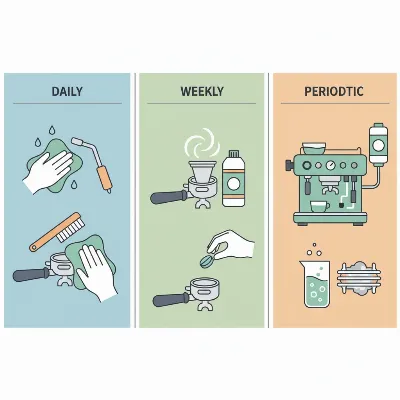 A step-by-step visual guide to daily, weekly, and periodic cleaning tasks for an espresso machine, showing tools like a brush, blind filter, and descaling solution. The image focuses on different parts of the machine being cleaned.
Monthly / Bi-Monthly / Quarterly Descaling: Fighting Limescale (30-60 minutes)
- Descale Regularly: Limescale, mineral deposits from water, is the enemy of internal components. It clogs pipes, reduces temperature stability, and can ruin heating elements. Depending on your water hardness and usage, descale every 2-3 months, or more frequently if you have very hard water.
- Follow Manufacturer Instructions: Always use a descaling solution compatible with your machine and follow its specific instructions for the descaling process.
- Thorough Rinsing: After descaling, flush the machine thoroughly with several cycles of clean water to remove any chemical residue and prevent aftertastes.
Semi-Annual to Annual Check-ups: Proactive Care
- Check and Replace Wear Parts:
- Group Head Gasket: Inspect for cracks or wear. Replace every 6-12 months, or if you notice water leaking from the group head during extraction.
- Shower Screen and Filter Baskets: Clean regularly and replace if clogged, damaged, or showing signs of uneven water dispersion.
- Professional Servicing: Consider a professional service appointment once a year or as recommended by the manufacturer. A technician can inspect internal components, check seals, and address any issues you might have missed, ensuring your machine remains in optimal condition.
Troubleshooting Common Espresso Machine Issues
Even with regular maintenance, problems can arise. Here are quick tips for common issues:
- Weak or Sour Shots: Often due to too coarse a grind, under-dosing, or low brewing temperature. Adjust grind finer, increase dose, or ensure machine is fully heated.
- Bitter or Over-Extracted Shots: Typically caused by too fine a grind, over-dosing, or excessive brewing temperature/time. Adjust grind coarser, reduce dose, or shorten extraction.
- No Water Flow or Slow Flow: Check if the water tank is full and correctly seated. Descaling is often the solution if mineral buildup is restricting flow. Check for clogged filter baskets.
- Leaks Around the Group Head: Usually indicates a worn or damaged group head gasket that needs replacement.
- Poor Steam Performance: Often due to a clogged steam wand tip from dried milk. Thorough cleaning and purging are essential.
Recognizing these signs early and addressing them promptly will keep your machine running smoothly and your espresso tasting great.
Essential Accessories for Your Espresso Machine Setup
While your espresso machine is the star, a few key accessories are indispensable for unlocking its full potential, ensuring consistency, and simplifying maintenance.
-
Tamper: Upgrade from the basic plastic tamper often included with machines. A heavy, well-fitting metal tamper (typically 58mm, 53mm, or 49mm depending on your portafilter) is crucial for applying consistent, even pressure, which is vital for proper extraction. Self-leveling or calibrated tampers can further aid consistency.
-
Milk Pitcher: If you enjoy milk-based drinks, a stainless steel milk frothing pitcher is a must.
- Size: 12oz for single drinks, 20oz for multiple servings.
- Material: Stainless steel conducts heat well and is easy to clean.
- Spout Shape: A narrower, pointed spout offers better control for latte art.
-
Knock Box: Provides a convenient and mess-free way to dispose of used coffee pucks. Look for one with a rubber-covered bar to protect your portafilter.
-
Cleaning Supplies:
- Espresso Machine Detergent (e.g., Cafiza): Essential for backflushing and soaking parts to break down coffee oils.
- Group Head Brush: Helps scrub away coffee grounds and residues from the group head and shower screen.
- Descaling Solution: Specifically designed to remove mineral buildup from internal components.
- Cleaning Cloths: Microfiber cloths are ideal for wiping down surfaces and the steam wand.
-
Blind Filter (Backflush Basket): A non-perforated filter basket used for backflushing the group head with water and detergent, crucial for machines with a 3-way solenoid valve.
-
Coffee Grinder (if not built-in): A high-quality burr grinder (not blade grinder) is arguably the most important accessory. It allows you to grind fresh beans to the precise, consistent fineness required for espresso, which significantly impacts flavor.
Optional, but Highly Recommended Accessories:
- Coffee Scale: A precision scale (accurate to 0.1g) is invaluable for consistent dosing of coffee grounds and measuring liquid espresso yield, dramatically improving shot consistency. Many come with built-in timers.
- Distribution Tool / WDT Tool: These tools help evenly distribute coffee grounds in the portafilter before tamping, preventing channeling and improving extraction uniformity.
- Espresso Cups: Small, thick-walled ceramic cups (demitasse for singles, slightly larger for doubles) retain heat better and showcase the crema.
- Tamping Mat: Protects your countertops and provides a stable, non-slip surface for tamping.
- Spare Gaskets / Shower Screens: Having these on hand can prevent downtime if your current ones wear out.
Investing in these accessories will not only elevate your espresso quality but also make the daily ritual of brewing and maintaining your machine more enjoyable and efficient.
Conclusion
Embarking on the journey of home espresso brewing is a rewarding experience, transforming your daily coffee routine into an art form. The key to consistently achieving that perfect shot, complete with rich crema and balanced flavors, lies not just in the initial investment in a quality machine, but in the diligent care and attention you provide thereafter. Understanding the various types of espresso machines available, making an informed choice based on your needs and skill level, and equipping yourself with essential accessories are all foundational steps.
However, it is the ongoing commitment to regular maintenance that truly protects your investment and ensures years of exquisite coffee enjoyment. From the quick daily rituals of cleaning the steam wand and backflushing the group head to the more intensive weekly detergent cleans and periodic descaling, each step plays a vital role in preventing buildup, maintaining optimal performance, and extending your machine’s lifespan. By embracing these essential maintenance tips, you not only safeguard your equipment but also guarantee that every cup you brew is a testament to quality and passion. Your espresso machine is a finely-tuned instrument; treat it with the care it deserves, and it will reward you with unparalleled coffee experiences, time and time again.
What new espresso ritual will you establish to keep your machine in pristine condition and your coffee tasting its best?
Frequently Asked Questions
How often should I descale my espresso machine?
Descaling frequency depends on your water hardness and usage, but generally, it should be done every two to three months. If you live in an area with very hard water or use your machine frequently, you may need to descale more often. Always use filtered water to minimize scale buildup.
What happens if I don’t clean my espresso machine regularly?
Neglecting regular cleaning can lead to several problems: coffee oils and milk residues will accumulate, causing your espresso to taste bitter or rancid, and the machine’s performance will degrade due to clogged components. This can result in inconsistent shots, poor steam pressure, and ultimately, costly repairs.
Can I use regular dish soap to clean my espresso machine parts?
While some detachable parts like the drip tray can be washed with regular dish soap, internal components that come into contact with coffee oils (like the portafilter basket and group head) require specialized espresso machine detergent. These detergents are formulated to break down coffee oils effectively without leaving residues that could affect flavor.
Is a built-in grinder better than a separate one for an espresso machine?
A built-in grinder offers convenience and a streamlined setup, saving counter space. However, separate grinders typically offer greater precision, finer adjustment capabilities, and often more durable burrs, which are crucial for dialing in the perfect espresso shot. For optimal quality and control, a dedicated standalone burr grinder is generally preferred.
How can I improve the lifespan of my espresso machine?
To significantly extend your Espresso Machine’s lifespan, consistently follow a regular cleaning and maintenance schedule, including daily, weekly, and periodic descaling. Use filtered water to prevent mineral buildup, check and replace wear parts like gaskets and shower screens as needed, and consider annual professional servicing. Proper care is key to protecting your investment.