Embarking on the journey of home espresso brewing can be as simple as pressing a button or as intricate as a scientific experiment. For those who find joy in the latter, seeking ultimate control and unparalleled quality, the Lelit Bianca V3 Espresso Machine stands as a beacon. This isn’t just a machine; it’s a meticulously crafted instrument designed to empower the home barista, transforming the daily ritual into an art form. We delve into the Lelit Bianca V3, examining its sophisticated engineering, robust build, and exceptional performance, to see how it truly elevates the home espresso experience.
What is an Espresso Machine?
An espresso machine is a specialized coffee brewer that forces hot, pressurized water through finely ground coffee to produce a concentrated shot of espresso. Originating in Italy in the early 20th century, these machines were designed to brew coffee quickly, providing a potent and aromatic beverage. The fundamental principle involves a pump pushing water heated to a precise temperature through a “puck” of coffee grounds, typically at around 9 bars of pressure. This process extracts the complex flavors and oils, creating the rich, creamy beverage known for its distinct crema. Key components generally include a water reservoir or connection, a heating element (boiler), a pump, a group head where the coffee is brewed, and often a steam wand for milk frothing.
Types of Espresso Machines
The world of espresso machines offers a spectrum of options, each catering to different levels of user involvement and desired outcomes. Understanding these categories helps in appreciating where a sophisticated machine like the Lelit Bianca V3 fits into the landscape.
-
Manual Espresso Machine: These machines require the barista to manually control the water pressure, often via a lever. They offer the highest degree of control, appealing to purists who enjoy a hands-on approach and the ability to fine-tune every aspect of the extraction. However, they demand significant skill and consistency.
-
Semi-Automatic Espresso Machine: The most common type for home baristas, semi-automatics automate the pump operation but require the user to grind the coffee, tamp the portafilter, and start/stop the shot. This blend of automation and manual control offers a great balance for those seeking quality without full manual labor. Many high-end prosumer machines fall into this category, allowing for a creative yet manageable brewing process.
-
Automatic Espresso Machine: These machines take automation a step further by automatically dispensing a pre-programmed amount of water for each shot once initiated. While still requiring manual grinding and tamping, they reduce the variability of shot timing, making them slightly easier to use than semi-automatics.
-
Super-Automatic Espresso Machine: Designed for ultimate convenience, super-automatic machines handle everything from grinding beans to brewing and even frothing milk at the touch of a button. They feature integrated grinders and often offer a wide range of pre-programmed beverages. While incredibly easy to use, they typically offer less control over the brewing variables and can produce a less refined espresso compared to their manual or semi-automatic counterparts.
-
Capsule Espresso Machine: These machines use pre-packaged coffee capsules or pods, providing unparalleled speed and ease of use. They are compact and require minimal cleanup, making them ideal for casual coffee drinkers or those with limited counter space. However, they limit bean choice, can be more expensive per serving, and generally produce a simpler espresso lacking the depth and complexity achievable with fresh grounds.
Comparison Table of Espresso Machine Types
|
Our Picks for the Best Espresso Machine in 2026
As an Amazon Associate I earn from qualifying purchases.
|
||
| Num | Product | Action |
|---|---|---|
| 1 | Espresso Machine, 20Bar Compact Stainless Espresso Maker, With Milk Frother Steam Wand, 57.5OZ Removable Water Tank, Displays Making Time & Water Temperature, Cold Brew & Cappuccino, Silver |

|
| 2 | SHARDOR Espresso Machine 20 Bar, Professional Espresso Machine with Milk Frother and Touchscreen, Expresso Coffee Machines with Adjustable Temperature,for Cappuccino, Latte |
|
| 3 | Espresso Machine, 20 BAR Pump Temperature Control, Compact Espresso Maker with Steam Milk Frother, Professional Coffee Makers for Home, Cappuccino, Latte, Gifts for Coffee Lover, Black |
|
| 4 | 20Bar Espresso Machine, Compact Espresso Maker with Milk Frother, Stainless Steel Coffee Machine for Cappuccino&Latte, 42oz Water Tank, Visible Pressure Gauge, Home&Office, Silver |
|
| 5 | 20 Bar Espresso Coffee Machine with LED Touch Screen, Espresso Maker with Self-Cleaning Function & Milk Frother, Compact Cappuccino & Latte Maker for Home and Office |
|
| 6 | Chefman CraftBrew Espresso Machine, 15-Bar Pump Digital Espresso Maker w/Steam Wand for Latte & Cappuccino, Compact Espresso Coffee Machine w/ 1.5L Removable Water Reservoir - Stainless Black |
|
| 7 | Breville Barista Touch Espresso Machine BES880BSS, Brushed Stainless Steel |
|
| 8 | Espresso Machine with Milk Frother, 20 Bar Pressure Espresso Maker, with 44OZ Removable Tank, Compact Stainless Steel Coffee Machine for Home, Office, Latte, Cappuccino, Gift for Women or Men |
|
| 9 | Espresso Machine 20 Bar with Milk Frother, Stainless Steel Coffee Maker with 42 oz Removable Water Tank for Cappuccino, Latte&Cold Brew, Home&Office, Silver |
|
| 10 | Gevi Commercial Espresso and Coffee Makers, Professional 20 Bar Espresso Maker with Milk Frother, Stainless Steel Expresso Coffee Machines for Home, Compact Cappuccino Machine, Great Gift |
|
| Feature | Manual Espresso Machine | Semi-Automatic Espresso Machine | Automatic Espresso Machine | Super-Automatic Espresso Machine | Capsule Espresso Machine |
|---|---|---|---|---|---|
| Control Level | High | Medium | Low | Very Low | Low |
| Complexity | High | Medium | Medium | Low | Low |
| Price Range | Medium | Medium-High | High | Very High | Low |
| Maintenance Effort | High | Medium | Medium | Easy | Easy |
| Coffee Quality | Very High | High | Medium | Medium | Medium |
Espresso Machine Buying Guide
Choosing the right espresso machine is a significant investment that impacts your daily coffee ritual. With so many options available, it’s crucial to consider several factors to ensure you select a machine that perfectly aligns with your needs and preferences.
-
Determine Usage Needs: First, consider who will be using the machine and how often. Is it for a single enthusiast at home, a busy office, or a high-volume café? A family that enjoys lattes might prioritize simultaneous brewing and steaming, while a solo espresso drinker might focus on shot control.
-
Set Your Budget: Espresso machines range widely in price, from a few hundred to several thousand dollars. Defining your budget early helps narrow down choices, allowing you to focus on machines that offer the best value within your financial comfort zone. Remember to account for essential accessories like a quality grinder.
-
Identify Essential Features: Beyond the basic brewing function, what specific features are important to you? Do you need a powerful steam wand for latte art, precise temperature control (PID), the ability to directly plumb the machine, or programmable shot volumes? Machines like the Lelit Bianca V3 prioritize advanced control, offering flow profiling and dual boilers for optimal performance.
-
Research Reputable Brands: Investigate brands known for their quality, reliability, and customer support. Reading reviews and testimonials from other users can provide valuable insights into real-world performance and durability. Look for brands that offer robust warranties and readily available spare parts.
-
Consider Size and Design: An espresso machine can be a prominent kitchen appliance, so its physical footprint and aesthetic are important. Measure your available counter space and consider a design that complements your kitchen décor. Machines with flexible water tank placements, like the Lelit Bianca V3, can be advantageous for tighter spaces.
-
Understand Technical Specifications: Pay attention to details such as boiler type (single, heat exchanger, dual), boiler material (brass, stainless steel), pump type (vibratory, rotary), and water tank capacity. These specs directly influence temperature stability, noise levels, and overall machine performance. For example, dual boilers and rotary pumps, as found in the Bianca V3, signify high-end performance and quiet operation.
-
Evaluate Warranty and Support: A comprehensive warranty and accessible technical support are crucial, especially for higher-end machines. Understand the length of the warranty, what it covers, and the process for obtaining service if needed. A good support system can save considerable hassle in the long run.
Review: Lelit Bianca V3 Espresso Machine
The Lelit Bianca V3 stands out in the crowded prosumer market as an Italian-designed and built masterpiece, specifically tailored for the ambitious home barista who craves unparalleled control and consistently high-quality espresso. Far from a simple “press-and-go” appliance, the Bianca V3 is a sophisticated tool that rewards engagement and experimentation.
At its core, the Bianca V3 boasts a dual boiler system, featuring an 0.8-liter stainless steel brew boiler and a 1.5-liter stainless steel steam boiler. This configuration allows for simultaneous espresso brewing and milk steaming without any temperature fluctuations or recovery time, a game-changer for those making multiple milk-based drinks. The inclusion of PID temperature control ensures precise and stable brew water temperature, which is critical for consistent extraction and unlocking the full flavor potential of various coffee beans. For even greater accuracy, the V3 includes an offset adjustment, allowing baristas to fine-tune the display’s temperature reading to match the actual temperature at the group head.
The most defining feature, and arguably the Bianca V3’s primary allure, is its manual flow control paddle located atop the E61 group head. This innovative needle valve system grants the user real-time control over the water flow rate entering the coffee puck during extraction. By manipulating the paddle, baristas can manually adjust pressure profiling, enabling slow pre-infusion, mid-shot pressure ramps, or gentle pressure drops at the end of the shot. This level of direct influence significantly impacts the flavor profile, allowing for nuanced extractions that can highlight specific characteristics of different roasts, especially lighter ones. A dedicated group head pressure gauge provides immediate feedback on the pressure at the puck, complementing the paddle control.
The V3 model introduces several thoughtful updates, enhancing both performance and user experience. These include quicker warm-up times, an electronic low-flow mode that can simulate paddle profiles without manual intervention, and four new power-saving modes (Always On, Standby, Sleep, and Eco Mode) for improved energy efficiency. The machine’s LCC (Lelit Control Center) with a high-resolution OLED graphic display makes it easy to set brew temperature, pre-infusion times, shot timers, and activate low flow modes.
In terms of build quality, the Lelit Bianca V3 is exceptional. It features a polished stainless steel body with precise craftsmanship and durable materials. The iconic walnut wood accents on the knobs, lever, paddle, and feet not only add a touch of luxury but also enhance ergonomic comfort. This robust construction ensures longevity and a premium aesthetic suitable for any modern kitchen or coffee bar. The machine’s rotary pump is remarkably quiet, offering the flexibility of a 2.5-liter water reservoir or direct plumbing for a continuous water supply. The water tank itself is ingeniously designed to be repositionable on three sides of the machine, making it adaptable to various counter setups.
The steam wand is another highlight, delivering powerful and consistent steam for creating silky microfoam ideal for latte art. It’s a “no-burn” multidirectional stainless steel wand, adding to both safety and usability. The machine also comes with a generous accessory kit, including bottomless and double-spouted walnut portafilters, various filter baskets, a Lelit tamper, a water softener, cleaning tools, and a braided plumb-in line.
> “The Lelit Bianca V3 is not merely an espresso machine; it’s a barista’s dream, offering an unparalleled level of control that transforms coffee brewing into a truly customizable art form.” – Admin of reviewrenee.com, Espresso Machine Technician
While the Bianca V3 is lauded for its advanced features, it demands a certain level of commitment. The extensive controls and manual nature of flow profiling mean there’s a steep learning curve for beginners. Users consistently report that mastering the machine requires genuine time investment and research, but the rewards in terms of shot quality are tenfold. For those who enjoy the methodical process and the satisfaction of technical precision, the Bianca V3 delivers on its promises. However, for users prioritizing speed and convenience, it might be overwhelming.
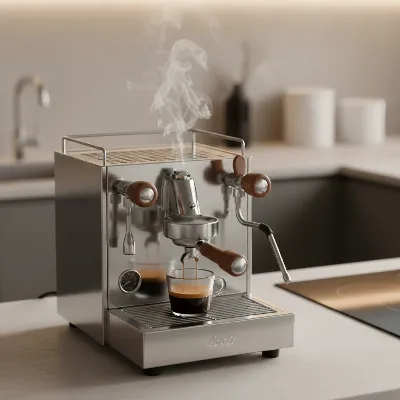 A Lelit Bianca V3 espresso machine on a kitchen counter with steam and coffee flowing, emphasizing its elegant design and functional control paddle, realistic style.
Lelit Bianca V3 Usage and Maintenance
Maximizing the lifespan and consistent performance of your Lelit Bianca V3 requires diligent usage and a regular maintenance routine. This high-end machine, while robustly built, benefits significantly from proper care.
Using Your Lelit Bianca V3:
- Warm-up Time: Allow a solid 20-25 minutes for the machine to fully heat up. This ensures both boilers reach their stable temperatures and the E61 group head is saturated and hot, which is crucial for temperature stability during extraction.
- Paddle Control Mastery: The flow control paddle is the Bianca’s star feature. Experiment with different flow profiles to understand how they affect the taste of your espresso. Start slowly, allowing for a gentle pre-infusion, then ramp up pressure, and perhaps taper off at the end for a smoother finish. The group head pressure gauge is your guide for real-time feedback.
- Water Quality: Good water quality is paramount. Hard water can lead to mineral buildup (scale), especially in stainless steel boilers, affecting performance and potentially damaging internal components. Invest in a good water filter or use softened water. The machine comes with an in-tank water softener, which should be replaced every 2-3 months or every 70 liters of water used.
- LCC Display: Familiarize yourself with the Lelit Control Center (LCC) for programming pre-infusion, low-flow modes, brew temperatures, and setting energy-saving options.
Maintaining Your Lelit Bianca V3:
- Daily Cleaning: After each use, wipe down the exterior surfaces, steam wand (immediately after steaming milk to prevent residue hardening), and drip tray with a soft, damp cloth.
- Backflushing: Perform regular backflushing using a blind filter. For general cleanliness, backflush with just water daily or every few days. For a deeper clean, use an espresso machine cleaning detergent (like Puly Caff) with the blind filter weekly to remove accumulated coffee oils from the group head and internal valves.
- Group Head and Shower Screen Cleaning: The shower screen and group head gasket should be removed and cleaned regularly, ideally weekly or every few days, to remove coffee grounds and oils. While some advice suggests replacing the gasket and screen every 6-12 months, many experienced users find that thorough cleaning can extend their lifespan significantly, with replacement only needed when wear is evident.
- Descaling: This is a crucial, yet less frequent, task. The frequency depends on your water hardness, but typically every few months. Use a recommended descaling solution to dissolve mineral buildup in the boilers and water lines. Neglecting descaling can lead to inconsistent temperatures and damage.
- Water Tank Cleaning: The water tank and its rubber components can accumulate slimy residue, especially with the use of water filters. Thoroughly wash the tank and rubber parts when replacing the water filter.
- Flow Control Paddle Lubrication: The O-rings within the flow profiling mechanism might require lubrication every 3-6 months, depending on usage, to ensure smooth operation and prevent wear. Tutorials can be found online for this specific task.
Common Issues and Troubleshooting:
- Inconsistent Extraction: Often linked to grind size, tamping consistency, or issues with the flow control. Ensure your grinder is correctly dialed in and your tamp is even. Adjusting the flow control paddle can also help find the optimal extraction profile.
- Pump Not Priming: Some users report that on the first use of the day, the pump may need the lever pulled 10-20 times before it properly engages. This typically resolves itself after the initial use.
- Squeaky E61 Lever: After backflushing with detergent, the E61 lever might squeak because natural coffee oils that lubricate it have been removed. Brewing a few espressos or applying specialized food-grade lubricant (like Molly Coat grease) can resolve this.
Essential Espresso Machine Accessories
Beyond the Lelit Bianca V3 itself, a few key accessories can significantly enhance your espresso brewing workflow and the quality of your final cup.
- Precision Coffee Grinder: This is perhaps the most critical accessory. A high-quality burr grinder capable of consistent, fine espresso grind is non-negotiable for excellent espresso. The Lelit William PL72 is often recommended as a good pairing.
- Tamper: While the Bianca V3 comes with a Lelit tamper, a precision tamper with a comfortable handle and a snug fit for your portafilter basket can improve consistency in puck preparation.
- Milk Pitcher (Ca Đánh Sữa): Essential for steaming milk for lattes and cappuccinos. Look for stainless steel pitchers with a good spout for pouring latte art.
- Knock Box: A convenient container to dispose of spent coffee pucks from your portafilter.
- Cleaning Brushes and Tools: Group head brushes, portafilter cleaning brushes, and steam wand cleaning tools are crucial for daily maintenance.
- Microfiber Cloths: For wiping down the machine, steam wand, and general cleanup.
- Espresso Machine Cleaning Detergent: Specialized backflushing powder or liquid (e.g., Puly Caff) for deep cleaning the group head and internal components.
- Descaling Solution: For periodic removal of mineral buildup to protect your machine’s internals.
- Precision Scale: A digital scale accurate to 0.1 gram is invaluable for weighing coffee grounds (dose) and extracted espresso (yield) to achieve repeatable, consistent shots.
- WDT Tool (Weiss Distribution Technique): A tool with fine needles used to break up clumps and evenly distribute coffee grounds in the portafilter, reducing channeling and improving extraction uniformity.
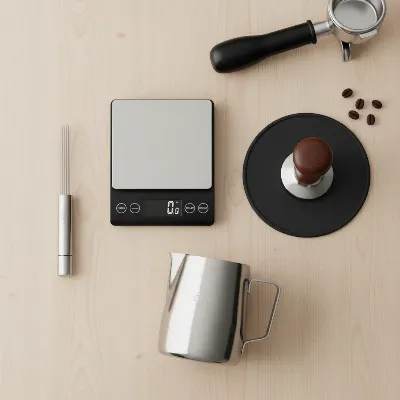 Essential barista accessories for Lelit Bianca V3, including tamper, scale, milk pitcher, and WDT tool, on a wooden surface, detailed and clean style.
Conclusion
The Lelit Bianca V3 Espresso Machine is a formidable choice for the dedicated home barista, offering a blend of exquisite craftsmanship, advanced features, and a level of control typically reserved for commercial machines. Its dual boiler system, PID temperature control, and most notably, the manual flow control paddle, empower users to sculpt their espresso extractions with unparalleled precision. While it demands a commitment to learning and a passion for the process, the Bianca V3 consistently delivers professional-grade results and a deeply satisfying brewing experience.
For those ready to delve into the nuanced world of espresso, to experiment with different roasts, and to truly master the art of extraction, the Lelit Bianca V3 stands as an investment that promises rich rewards in every cup. Are you prepared to take your espresso journey to the next level?
Frequently Asked Questions
Is the Lelit Bianca V3 suitable for beginners?
While the Lelit Bianca V3 is user-friendly enough for beginners to start with, its advanced features like flow control offer a steep learning curve. It’s best suited for those who are enthusiastic about experimenting and investing time to master their espresso technique, rather than those seeking quick, push-button convenience.
What are the main differences between the Lelit Bianca V3 and earlier versions?
The V3 introduces quicker warm-up times, an electronic low-flow mode that can mimic paddle profiles, and four new energy-saving power modes (Always On, Standby, Sleep, Eco Mode). It also features slightly longer hot water and steam taps for improved ergonomics.
How often should I descale my Lelit Bianca V3?
The frequency of descaling depends largely on the hardness of your water. With soft water or a good filtration system, you might descale every few months. If you have very hard water, more frequent descaling might be necessary, but always monitor your machine’s performance and consult the manual.
Can the Lelit Bianca V3 be plumbed into a water line?
Yes, the Lelit Bianca V3 comes equipped with a rotary pump and includes a braided plumb-in line, allowing it to be directly connected to a water supply for continuous operation without needing to refill the reservoir. This adds convenience, especially for higher volume usage.
What kind of grinder pairs best with the Lelit Bianca V3?
To truly leverage the Lelit Bianca V3’s capabilities, a high-quality, espresso-specific burr grinder with precise grind adjustment is essential. Grinders like the Lelit William PL72 or other premium conical or flat burr grinders that offer consistent, fine particle distribution are recommended to match the machine’s performance.
