For many coffee enthusiasts, the daily ritual of brewing espresso is more than just making a drink; it’s an art form, a science, and a passion. If you’ve outgrown your basic home espresso maker and dream of crafting cafe-quality shots with precision and control, a prosumer espresso machine is your next essential investment. These sophisticated machines bridge the gap between commercial power and home convenience, offering advanced features and robust construction that elevate your home barista game. This comprehensive guide will navigate you through everything you need to know about prosumer espresso machines, helping you choose, use, and maintain the perfect brewing companion for your coffee journey.
Understanding Prosumer Espresso Machines
A “prosumer” espresso machine is a hybrid, blending the high performance and durability of professional-grade equipment with a design accessible and manageable for home use. Unlike entry-level models, these machines incorporate commercial-grade components and advanced technologies, providing serious coffee lovers with the tools to achieve exceptional espresso consistently.
What truly defines a prosumer machine are its core characteristics: superior build quality, enhanced control over brewing parameters, and robust components designed for longevity. Many feature precise PID (Proportional-Integral-Derivative) temperature controllers, commercial-grade group heads, and often a choice between advanced heat exchanger or dual boiler systems, all contributing to unparalleled temperature stability and extraction quality. While they demand a higher initial investment than basic home machines, their durability means they are built to last 10-15 years or more with proper care, offering significant long-term value for dedicated home baristas.
Choosing a prosumer machine means embracing a world of benefits. You gain the ability to produce espresso that rivals specialty cafes, complete with rich crema and balanced flavors, thanks to superior control over grind size, water temperature, and extraction time. The professional steam wands on these machines create silky microfoam, essential for exquisite lattes and cappuccinos, a stark contrast to the often bubbly foam from simpler frothers. Beyond the cup, these machines foster skill development, allowing you to experiment, learn, and truly master the craft of espresso making.
Key Technologies and Types of Prosumer Machines
The heart of any prosumer espresso machine lies in its heating system and internal components, which dictate its performance and capabilities. Understanding these technologies is crucial for selecting the right machine for your brewing style.
Boiler Systems
- Single Boiler (SB): These machines use one boiler for both brewing and steaming. While often equipped with PID for temperature stability, they require you to heat the boiler to steaming temperature, then cool it down for brewing, making simultaneous operation impossible. Machines like the Lelit Victoria or a Rancilio Silvia with an added PID are popular examples, offering robust performance for their price point, especially for those who primarily drink black coffee or have patience for milk drinks.
- Heat Exchanger (HX): A significant step up, HX machines feature a single, larger boiler primarily maintained at steaming temperature. A copper tube, or “heat exchanger,” runs through this hot water, heating the brew water as it passes through. This clever design allows for simultaneous brewing and steaming, making milk-based drinks more efficient to prepare. However, some HX machines may require a “cooling flush” before brewing to bring the group head to the optimal espresso temperature. The Lelit Mara X and Rocket Appartamento are well-known HX models.
- Dual Boiler (DB): Representing the pinnacle of temperature control and simultaneous workflow, dual boiler machines have two independent boilers: one dedicated to brewing and another for steaming. This configuration allows for precise, independent temperature control for each function, eliminating the need for cooling flushes and ensuring optimal conditions for both espresso extraction and milk texturing. Dual boiler machines are typically more expensive but offer unparalleled consistency and efficiency for high-volume home use. The Rancilio Silvia Pro X and Profitec Pro 600 are prime examples of this technology.
- Thermoblock Systems (modern PID): While traditionally associated with entry-level machines, modern prosumer thermoblocks, especially those with PID control, have evolved significantly. These systems rapidly heat water on demand, offering quick heat-up times and the ability to brew and steam simultaneously. The Ascaso Steel DUO PID utilizes dual thermoblocks, providing excellent temperature stability and responsiveness, making them a compelling choice for some enthusiasts.
|
Our Picks for the Best Espresso Machine in 2026
As an Amazon Associate I earn from qualifying purchases.
|
||
| Num | Product | Action |
|---|---|---|
| 1 | 20 Bar Espresso Coffee Machine with LED Touch Screen, Espresso Maker with Self-Cleaning Function & Milk Frother, Compact Cappuccino & Latte Maker for Home and Office |

|
| 2 | Espresso Machine with Milk Frother, 20 Bar Pressure Espresso Maker, with 44OZ Removable Tank, Compact Stainless Steel Coffee Machine for Home, Office, Latte, Cappuccino, Gift for Women or Men |
|
| 3 | SHARDOR Espresso Machine 20 Bar, Professional Espresso Machine with Milk Frother and Touchscreen, Expresso Coffee Machines with Adjustable Temperature,for Cappuccino, Latte |
|
| 4 | Espresso Machine, 20 BAR Pump Temperature Control, Compact Espresso Maker with Steam Milk Frother, Professional Coffee Makers for Home, Cappuccino, Latte, Gifts for Coffee Lover, Black |
|
| 5 | 20Bar Espresso Machine, Compact Espresso Maker with Milk Frother, Stainless Steel Coffee Machine for Cappuccino&Latte, 42oz Water Tank, Visible Pressure Gauge, Home&Office, Silver |
|
| 6 | Espresso Machine, 20Bar Compact Stainless Espresso Maker, With Milk Frother Steam Wand, 57.5OZ Removable Water Tank, Displays Making Time & Water Temperature, Cold Brew & Cappuccino, Silver |
|
| 7 | Breville Barista Touch Espresso Machine BES880BSS, Brushed Stainless Steel |
|
| 8 | Chefman CraftBrew Espresso Machine, 15-Bar Pump Digital Espresso Maker w/Steam Wand for Latte & Cappuccino, Compact Espresso Coffee Machine w/ 1.5L Removable Water Reservoir - Stainless Black |
|
| 9 | Gevi Commercial Espresso and Coffee Makers, Professional 20 Bar Espresso Maker with Milk Frother, Stainless Steel Expresso Coffee Machines for Home, Compact Cappuccino Machine, Great Gift |
|
| 10 | Espresso Machine 20 Bar with Milk Frother, Stainless Steel Coffee Maker with 42 oz Removable Water Tank for Cappuccino, Latte&Cold Brew, Home&Office, Silver |
|
Other Critical Features
Beyond the boiler system, several other features distinguish prosumer machines and offer fine-tuned control for the discerning barista:
- PID Temperature Control: A Proportional-Integral-Derivative controller is a digital system that maintains extremely stable water temperature in the boiler, often within a fraction of a degree. This precision is vital for consistent espresso extraction, as even slight temperature fluctuations can drastically impact flavor. Many prosumer machines allow users to adjust the PID, enabling experimentation with different temperatures for various coffee beans.
- Pump Types:
- Vibratory Pumps: Compact, common in many home and some prosumer machines, these pumps are affordable but can be louder and have a shorter lifespan.
- Rotary Pumps: Found in higher-end prosumer and commercial machines, rotary pumps are significantly quieter, more durable, and capable of drawing water directly from a plumbed-in line, offering consistent pressure delivery which is crucial for perfect espresso shots.
- Group Head: The group head is where the water meets the coffee. The E61 group head is iconic in prosumer machines, known for its thermal stability, robust design, and pre-infusion capabilities. Other machines may feature saturated group heads (an extension of the boiler for quick heating) or electronically heated group heads, offering different thermal characteristics and heat-up times.
- Pre-infusion & Pressure Profiling: Pre-infusion gently saturates the coffee grounds with low-pressure water before full extraction begins, allowing the coffee bed to expand evenly and reducing the risk of channeling. This leads to a more balanced and flavorful shot. More advanced prosumer machines offer pressure profiling, which allows the barista to precisely control the pump pressure throughout the extraction, opening up vast possibilities for experimenting with different flavor profiles and enhancing specific bean characteristics.
Comparison: Prosumer vs. Other Espresso Machine Types
Understanding where prosumer machines fit in the broader landscape of espresso makers can clarify their unique value proposition.
| Feature | Entry-Level Home Espresso | Prosumer Espresso Machine | Commercial Espresso Machine |
|---|---|---|---|
| Price Range | $100 – $500 | $1,000 – $4,000+ | $5,000 – $20,000+ |
| Build Quality | Often plastic, lighter components | High-grade stainless steel, brass, copper boilers | Heavy-duty, industrial-grade steel and internal components |
| Control Over Brewing | Limited (pre-set temperature/pressure) | Extensive (PID, adjustable pressure/flow, pre-infusion) | Full barista control (multiple group heads, advanced programming, precise adjustments) |
| Internal Components | Basic thermoblocks or single boilers, vibratory pumps | Commercial-grade (HX or DB boilers, PID, vibratory or rotary pumps, E61 group heads) | Industrial-grade, multi-boiler systems, rotary pumps, advanced electronics |
| Durability/Lifespan | 2-5 years | 10-15+ years (with maintenance) | 15-20+ years (designed for constant use) |
| Volume Capability | Low (1-2 shots per session) | Medium-low (several shots/milk drinks consecutively) | High (continuous, multiple orders) |
| Simultaneous Brew/Steam | Rarely | Often (HX/DB models) | Always |
| Skill Required | Low | Medium to High | High (professional training) |
Your Buying Guide to the Perfect Prosumer Espresso Machine
Selecting the ideal prosumer espresso machine is a personal journey, influenced by your preferences, budget, and lifestyle. Approach this decision with careful consideration to ensure your investment brings years of brewing pleasure.
Define Your Needs & Budget
Start by honestly assessing your coffee habits. Do you primarily drink black espresso, or are milk-based beverages like lattes and cappuccinos your daily ritual? How many drinks do you make per day, and for how many people? Your answers will guide your choice of boiler system. For instance, if you make multiple milk drinks back-to-back, a dual boiler or a robust heat exchanger machine will be more suitable.
Prosumer machines typically range from $1,000 to over $4,000. While tempting to prioritize the machine, remember that a high-quality grinder is equally, if not more, important for excellent espresso. Allocate a significant portion of your budget to a good burr grinder, as it directly impacts extraction quality.
Prioritize Key Features
- Boiler System: As discussed, dual boilers offer ultimate control and simultaneous operation, while heat exchangers provide a balance of capability and cost. Single boiler PIDs are great for black coffee lovers or those with smaller budgets.
- PID Temperature Control: This is non-negotiable for consistency. Ensure your chosen machine has PID or can be easily upgraded with one.
- Pump Type: For quieter operation and the option to plumb in (if available and desired), a rotary pump is superior. Vibratory pumps are common and effective but noisier.
- Group Head: E61 group heads are a popular and reliable choice for their thermal stability and pre-infusion capabilities.
- Pre-infusion and Pressure Profiling: If experimenting with flavor extraction is a high priority, look for machines that offer adjustable pre-infusion or even full pressure profiling.
Consider Size, Design, and Workflow
Prosumer machines, while smaller than commercial units, can still be substantial. Measure your available counter space and overhead clearance. Think about the water reservoir access (top-loading vs. side-loading) and drip tray size, as these impact daily workflow and convenience. Beyond practicality, consider the aesthetics. Many prosumer machines feature sleek stainless steel finishes and classic designs that can become a focal point in your kitchen.
Research Brands and After-Sales Support
Invest in reputable brands known for quality, such as Rocket Espresso, Rancilio, Lelit, ECM, Profitec, and Ascaso. Read reviews from other coffee enthusiasts and watch videos to see machines in action. Crucially, research the brand’s warranty, customer service, and the availability of parts and authorized repair centers. A prosumer machine is a long-term investment, and knowing you have reliable support is invaluable.
Top 5 Prosumer Espresso Machines for Home Baristas
Navigating the market for prosumer espresso machines can be daunting, so here are five highly-regarded models that stand out for their features, performance, and value in the home barista community.
- Rancilio Silvia Pro X: An evolution of a classic, the Silvia Pro X is a dual boiler machine with dual PID controllers, offering exceptional temperature stability for both brewing and steaming. It includes a programmable pre-infusion function and a built-in shot timer, making it a powerhouse for consistent espresso and milk-based drinks. Its commercial-grade components promise durability and reliability, perfect for the serious home barista.
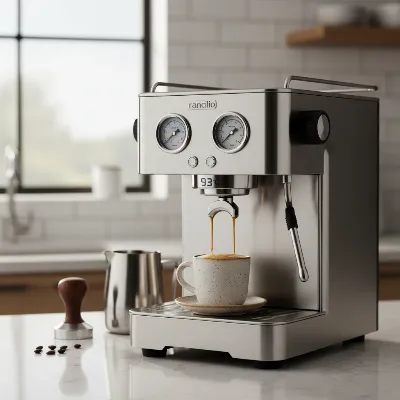 Rancilio Silvia Pro X, a powerful dual boiler prosumer espresso machine, in a modern kitchen setting.
 - Ascaso Steel DUO PID: This machine is a marvel of modern engineering, featuring dual PID-controlled thermoblocks that provide rapid heat-up times and the ability to brew and steam simultaneously without waiting. Its solid stainless steel construction and customizable settings for pre-infusion and shot times make it a favorite for those seeking both performance and a striking design. The Ascaso Steel DUO PID is an excellent value for its capabilities.
- Lelit Mara X: For those seeking heat exchanger performance in a compact footprint, the Lelit Mara X is a standout. It features an innovative PID system that intelligently prioritizes brew or steam temperature, minimizing the typical HX temperature surf. The E61 group head ensures thermal stability, and its relatively small size makes it suitable for various kitchen spaces. It’s a fantastic option for those who want simultaneous brew and steam without the dual boiler price tag.
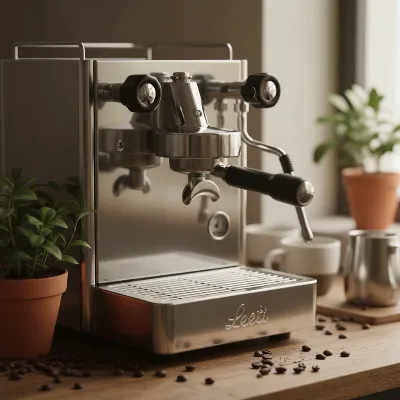 Lelit Mara X, a compact prosumer heat exchanger espresso machine, in a cozy home coffee nook.
 - Rocket Espresso Appartamento: Instantly recognizable by its iconic circular cut-outs, the Rocket Appartamento is a compact heat exchanger machine that brings Italian craftsmanship and design to the home. While it doesn’t have an external PID display, its robust construction and excellent steam power make it a beloved choice for those who value aesthetics and reliable performance for milk drinks. It embodies the classic prosumer experience.
- Profitec Pro 600: The Profitec Pro 600 offers the best of both worlds: a dual boiler system with PID control, allowing precise temperature management for both espresso and steam. This machine is lauded for its German engineering, excellent build quality, and optional flow control paddle for advanced pressure profiling. It’s a workhorse that provides incredible consistency and extensive control for the serious home barista ready to explore every nuance of espresso.
Mastering Your Machine: Usage and Maintenance Essentials
A prosumer espresso machine is an investment that, with proper care, can provide delicious coffee for well over a decade. Regular usage and maintenance are key to preserving its performance and longevity.
Daily Cleaning Routine
Consistency in daily cleaning prevents oil buildup and ensures optimal flavor. After every shot, purge and flush the group head to remove residual coffee grounds and oils. Clean the portafilter and basket thoroughly with water and a brush. Immediately after frothing, wipe and purge the steam wand to prevent milk residue from hardening and causing blockages. Empty the drip tray and water tank daily to prevent mold and stale odors, and give the exterior a quick wipe to keep it looking pristine.
Weekly Deep Cleaning
Once a week, dedicate time for a more thorough cleaning. If your machine supports it, backflush with a specialized espresso detergent (like Cafiza) using a blind filter to clear internal oils from the group head and three-way solenoid valve. Soak the portafilters, baskets, and shower screens in a cleaning solution. It’s also a good practice to clean your grinder with brushes or cleaning pellets to remove coffee oils and fines. Regularly check your water quality and filtration system, as good water is crucial for both taste and machine health.
Annual Descaling & Professional Servicing
Mineral scale buildup from water can significantly reduce your machine’s efficiency and lifespan. Descale your machine semi-annually or annually, depending on your water hardness and usage, following the manufacturer’s instructions. Furthermore, consider professional servicing once a year. A technician can inspect internal components, replace worn gaskets and seals, and diagnose any potential issues before they become costly problems, ensuring your machine remains in top condition for years.
The Importance of Water Quality
The quality of water you use directly impacts both the taste of your espresso and the health of your machine. Hard water, rich in minerals, leads to scale buildup, which can clog pipes and heating elements. Always use filtered or softened water to minimize scale and protect your internal components. Many home baristas invest in water filtration systems or specific water recipes to optimize their water for espresso.
Essential Accessories for Your Prosumer Setup
A prosumer espresso machine is the centerpiece, but a suite of high-quality accessories is what completes the home barista experience, enabling precision and elevating your workflow.
- High-Quality Burr Grinder: This is arguably the most critical accessory. A stepless, burr grinder (either conical or flat burr) provides the fine, consistent grind size essential for optimal espresso extraction. Pre-ground coffee quickly loses its flavor, making a dedicated grinder indispensable for freshness and adjustability.
- Precision Tamper: Upgrade from any plastic tamper that came with your machine. A weighty, well-fitting tamper (typically 58mm for prosumer machines) ensures even compression of coffee grounds, which is vital for preventing channeling and achieving consistent extraction.
- Knock Box: This simple yet essential tool provides a clean and convenient way to dispose of used coffee pucks, keeping your workspace tidy.
- Milk Frothing Pitcher: For milk-based drinks, a stainless steel frothing pitcher with a precise spout is necessary for texturing milk and pouring latte art.
- Coffee Scale: Precision is paramount in espresso. A sensitive coffee scale allows you to accurately weigh your coffee dose (in grams) and the espresso yield (in grams), enabling repeatable results and precise dialing in.
- Distribution Tool (WDT – Weiss Distribution Technique): A WDT tool uses fine needles to evenly distribute coffee grounds in the portafilter basket before tamping. This breaks up clumps and fills voids, significantly reducing the likelihood of channeling and promoting a more uniform extraction.
- Cleaning Supplies: Stock up on essential cleaning items including backflush detergent (e.g., Cafiza), various brushes for cleaning the group head and grinder, descaling solution, and fresh microfiber cloths for wiping surfaces and the steam wand.
Conclusion
Investing in a prosumer espresso machine is more than just buying an appliance; it’s an investment in a journey of culinary craftsmanship and an unparalleled coffee experience right in your home. These machines offer the durability, control, and commercial-grade performance that empower coffee geeks to explore the intricate world of espresso, moving beyond mere consumption to true creation. With their advanced boiler systems, precise PID controls, and robust construction, prosumer machines promise years of consistent, café-quality shots and the satisfaction of mastering a truly rewarding skill.
Are you ready to elevate your morning ritual and unlock the full potential of your coffee beans? The world of prosumer espresso machines awaits, promising not just exceptional coffee, but a deeper connection to the craft.
Frequently Asked Questions
Is a prosumer espresso machine worth the investment?
For serious coffee enthusiasts who prioritize quality, consistency, and control, a prosumer espresso machine is absolutely worth the investment. These machines offer superior build quality, advanced features, and significantly longer lifespans compared to entry-level models, providing café-quality espresso and the opportunity to develop advanced barista skills at home.
What’s the difference between a heat exchanger and a dual boiler?
A heat exchanger (HX) machine uses a single boiler for steaming, with a tube passing through it to heat brew water, allowing simultaneous brewing and steaming. A dual boiler (DB) machine has two separate boilers, one for brewing and one for steaming, offering independent and precise temperature control for each function, making it ideal for high-volume milk drinks with ultimate consistency.
How often should I descale my prosumer machine?
The frequency of descaling depends on your water hardness and usage. Generally, it’s recommended to descale your prosumer machine every 6 to 12 months. Using filtered water can reduce the frequency needed, but regular descaling is crucial to prevent mineral buildup and maintain optimal machine performance.
Do I need a special grinder for a prosumer espresso machine?
Yes, a high-quality burr grinder is essential for a prosumer espresso setup. It allows you to achieve the consistent and fine grind necessary for proper espresso extraction. Investing in a good grinder with adjustable settings is as important as the espresso machine itself for achieving café-quality results.
Can I plumb in a prosumer espresso machine?
Many higher-end prosumer espresso machines, particularly those with rotary pumps, offer the option to be plumbed directly into your home’s water line. This eliminates the need to refill a water reservoir and provides consistent water pressure, offering a more convenient and commercial-like experience.
How long do prosumer espresso machines typically last?
With proper care, regular cleaning, and routine maintenance, prosumer espresso machines are designed to be highly durable and can last between 10 to 15 years, or even longer. Their robust construction with commercial-grade components makes them a long-term investment.
What is PID control and why is it important?
PID (Proportional-Integral-Derivative) control is a digital temperature regulation system in espresso machines that maintains extremely stable water temperature within the boiler. This precision is critical because even minor temperature fluctuations can drastically impact the flavor and consistency of your espresso extraction.
